Washington’s inability to subjugate Iran is an example of how it is trying to preserve a regional order that no longer exists, argues RAMZY BAROUD


 Latest editorial

The diverging paths of Europe’s communists
While Italy’s communist tradition remains fragmented and politically marginal, France’s party is attempting to re-establish itself as an independent force rooted in working-class organisation, says NICK WRIGHT
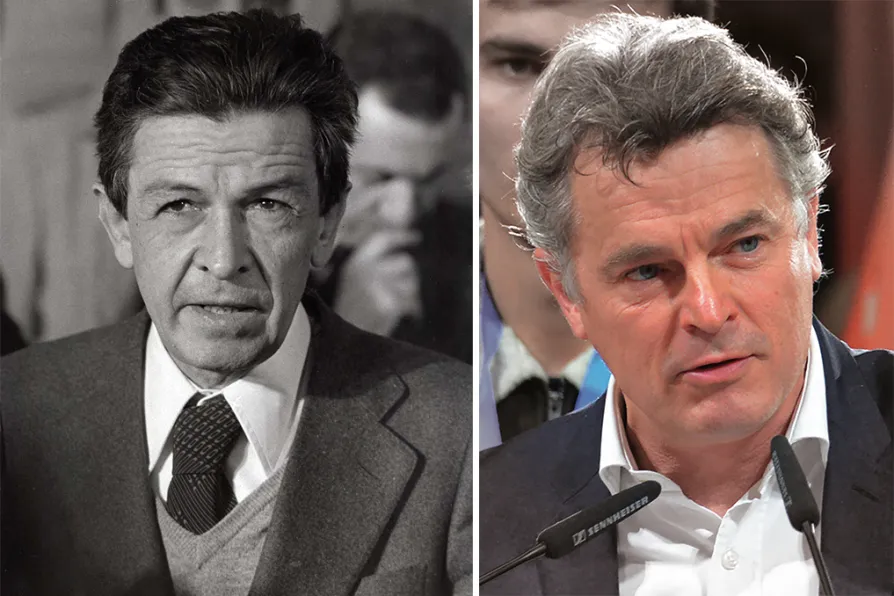 Enrico Berlinguer (left), who was leader of the Italian Communist Party from 1972 to 1984 and (right) French communist leader Fabien Roussel [Pic: Zouhair Nakara/ Creative Commons]
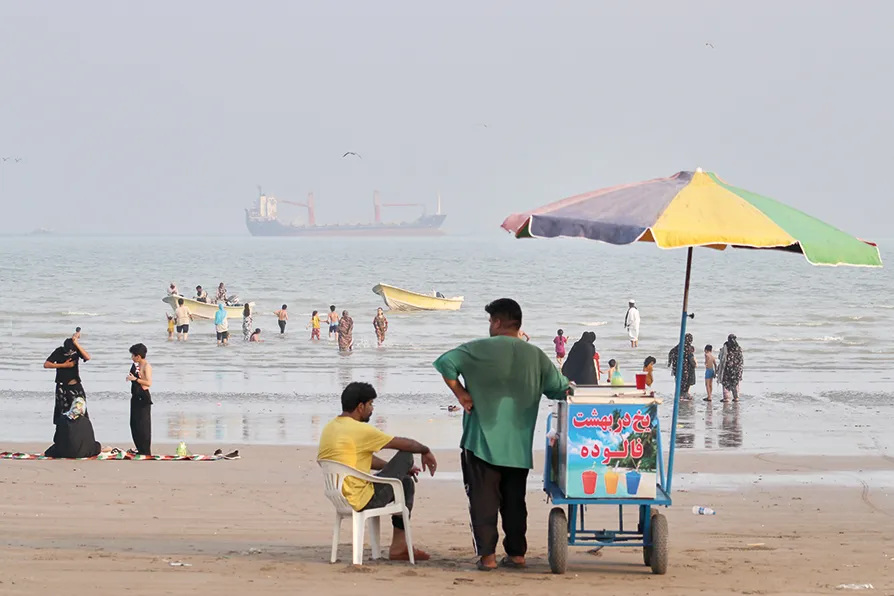
US financial instability is exposing the limits of a dollar-dominated global economy — and giving the Global South a historic chance to build an alternative, says MURAD QURESHI
DOUG NICHOLLS says the parasitic finance markets must be challenged or another British government could be toppled
The late country singer’s Imagination Library has put hundreds of millions of books into children’s hands. We should build on that legacy by defending the libraries at the heart of our communities, says BRENDA AITCHISON
Deprivation is a fundamental factor in criminal behaviour that must be addressed but, KENNY MacASKILL argues, there needs to a major rethink in sentencing to tackle overcrowding
MML director MEIRIAN JUMP outlines the recently refreshed library’s busy autumn schedule that ranges from book sales, archival exploration, community work with online education and the ever popular site tours
TONY BURKE surveys the shifting political landscape and the challenges Labour needs to address if it is to prevail in the 2028 federal elections





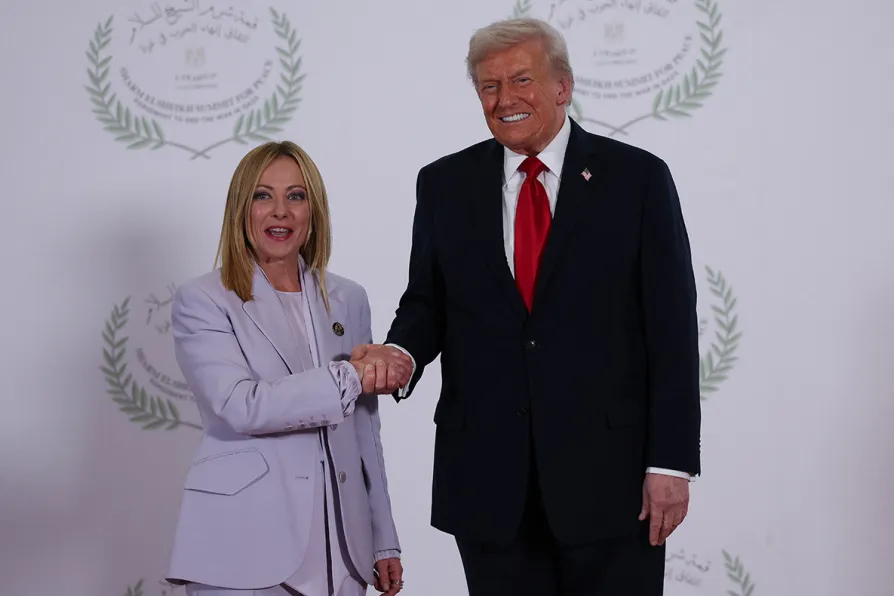
WHEN Italian Prime Minister Giorgia Meloni visited the exhibition marking the anniversary of the death of Italian Communist Party leader Enrico Berlinguer, her remarks, respectful in form but polemical in content, resulted in a sharp exchange with opposition figures.
In recalling that Giorgio Almirante — the leader of Italy’s post-war continuation of Mussolini’s fascist formation — too had marked the death of his ideological opposite with respectful language, Meloni was accused of an historical rewriting — a “sdoganamento” or retrospective normalisation — of Almirante by presenting him as of equal standing to Berlinguer.
Berlinguer died of a cerebral haemorrhage on June 7 1984. He fell making a campaign speech for the European election in Padua and lay in a coma for four days.
A million mourners attended his funeral and a huge wave of emotion propelled the PCI to a historic victory. Today he remains a reference point for, most especially, the Partito Democratico and for the revived Partito Comunista Italiano, if not for the half-a dozen other contenders for the support of Italy’s communists.
The old joke has it that irrespective of their politics, Italian film directors belonged to the historic PCI. This illuminates a tradition in which the PCI stood at the centre of Italian cultural and intellectual life as well as standing for the working class in every aspect of post-war life.
It also the subject of much wry comment on the left that perhaps the biggest party in Italy is the party of former communists.
The main outlines of the Italian road to socialism and the political practice which followed on from the 1956 PCI congress centred on the party’s leading role in the resistance to the nazi-fascisti and its co-operation with middle-class, Catholic and bourgeois forces in this endeavour that allowed the PCI to participate in framing the Italian constitution — founded on the values of labour — and the establishment of the republic.
It was this that earned it a centrality in Italian politics.
Today the picture is very different. Latest polling puts Meloni’s Fratelli d’Italia on around 29 per cent, Partito Democratico about 21 per cent, the centre-left populist Movement Five Star on about 13 per cent, the remnants of Silvio Berlusconi’s Forza Italia on 8 per cent, Lega about 6 per cent, Matteo Renzi’s Blairite formation Italia Viva under 3 per cent, the Green Left AVS hovering around 6.5 per cent and the fragmented communists unrepresented.
The new force destabilising Meloni’s bid to reconstitute the centre right is a fast-rising effort to inflect sovereigntist sentiment in fascist colours, the Futuro Nazionale of paratroop general Roberto Vannacci.
Berlinguer’s project — the “compromesso storico” — far from negating opposition to the PCI’s Italian road to socialism, has resulted in an abandonment of any notion of working-class state power as the road to the negation of capitalist relations of production.
With Italy firmly integrated into the EU regime of fiscal rectitude and social spending subordinate to an increased “defence” budget, the notion of a “rupture” seems far away.
While some in the fragmentary communist movement see a certain continuity with Berlinguer’s model, others root the strategic problems of the working-class movement to the end of the war when the PCI was simultaneously the decisive force in the partisan movement in the north imbued with the sense that the party’s policy of national unity was the precursor to an insurrectionary breakthrough, while in the south it was bogged down in the routines of its participation in a governmental regime as the allied armies advanced up Italy.
“The ‘allies’ were the real masters, the Italian government counted little, yet it was all a governmental business and even ours had been inserted in this ministerial-parliamentary work for a year,” noted Pietro Secchia, now free to fight as a partisan after a decade and more in a fascist prison.
There is a sense in this discussion that the tactical choices that created a large measure of unity in ending fascism became solidified into a strategic choice that closed off any prospect of a “rottura” — a decisive rupture in the way Italy was to be ruled.
While this is an interesting historical discussion among Italian communists, it has not impelled any successful and practical moves to reconstitute themselves as a decisive political force, notwithstanding the energetic, even heroic, efforts in the many struggles in present-day Italy.
French communists seek a return to class politics
The French Communist Party held its congress in Lille this month. The party congress is preceded by a widespread discussion of competing texts which crystallise the competing ideological trends in the party.
Naturally the PCF, which has a long and positive tradition in local government, suffers somewhat from what an Italian comrade, drawing on the PCI’s strength in the commune, told me is “the problem of power.”
One protagonist in the PCF pre-congress discussion remarked tartly that “municipal communism” has never slowed down the reformist drift in the party.
Go back to 2018 when, at the 38th congress, Andre Chassaigne, the deputy for Clermont Ferrand and president of the communist group in the National Assembly, noted that for the first time in the party’s history the text presented by the leadership fell to an alternative which gathered a plurality of 41 per cent.
This congress and the 39th marked a decisive but not total defeat for a frankly revisionist trend in the party. Former party leaders have abandoned the PCF, joined, or created, other political initiatives, while the party reflects on a complex political situation in which the success of an electoral alliance which brought together the PCF with Jean-Luc Melenchon’s La France Insoumise, the Greens and a much-chastened and reduced Socialist Party has dissolved.
Partly this is to do a sharp right-wing turn by the Parti Socialiste and much to do with Melenchon’s penchant for grand gestures unconstrained by any sense that his political vehicle, La France Insoumise, has any coherent or effective internal mechanisms or that alliance entails respect for allies.
While LFI performs impressively in elections, it is neither hegemonic among any section of workers nor able to escape the imperious style of its leader. Essentially a mixture of different ideological trends and disparate social groups, it expresses the anger and disenchantment of a largely urban and predominately younger electorate.
There was a sense at the Lille congress that while the electoral struggle is important, the recovery of the PCF as the decisive force in the working-class movement necessarily entails both a focus on collective struggles in the communities and a reconstitution of the PCF in the workplace.
One element in the party is inclined to accept the unilateral declaration by Melenchon that he will be the candidate of the left in the forthcoming presidential election.
This ran counter to a widespread sense among delegates that the recovery of the PCF’s role in political struggle necessarily entails a more assertive presentation of its more profound analysis of the French capitalist crisis as a component part of the specifically European and global political situation.
It is around the personality of Fabien Roussel, the party’s leader, that an intervention in the presidential election, is seen by a decisively wide range of opinion in the party as part of this reassertion of the PCF’s role in French politics.
That this must involve a reversal of “the mutation” — the dissolution of the party’s positions inside the workplaces, in the trade union movement, the weakening of l’Humanite, the disappearance of party cells — underlies the new mood among French communists.
The sense that the two-round French presidential electoral system is both an opportunity but also a trap for the left informs a new and more hard-headed approach.
Melenchon’s pre-emptive move was predicated on the assumption that in order to ensure that a left candidate makes it to the second round, everyone opposed both to Emmanuel Macron’s presidency and to the bid by Marine Le Pen’s extreme right will row in behind Melenchon in the first round.
The PCF said no to this presumption. This turn by the PCF is long in the making. The party’s 1970s participation in the Common Programme government with Francois Mitterrand was a bruising experience and brought out more clearly the ideological differences that were growing in the communist movement, and not just in France.
In France this mutation proceeded in stages, each marked by electoral compromise but now having resulted in a broad commitment to reconstitute the party as a decisive force among working people.
In contrast, the Italian experience was a sharp break with the revolutionary impulse, leading to the abandonment of the communist identity, splits, ruptures and dead ends — the experience of which means the reorganisation and political unity of Italian communists remains incomplete while the Partito Democratico, the “legal” heir to the PCI, is but a shadow of the party which led the liberation.

Similar stories
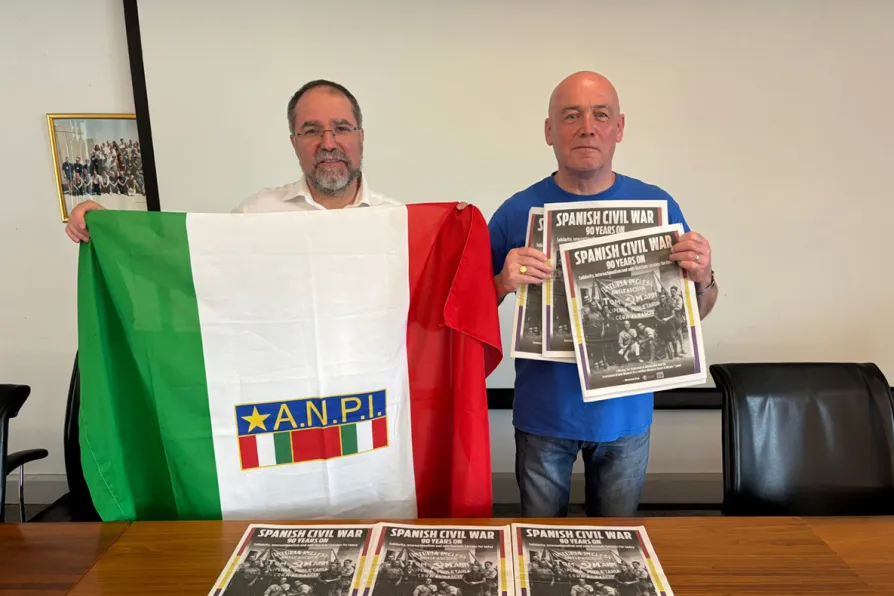
Merseyside’s proud tradition of internationalism is being kept alive through events organised by trade unionists and allies in the region, writes ROBERT MACDONALD
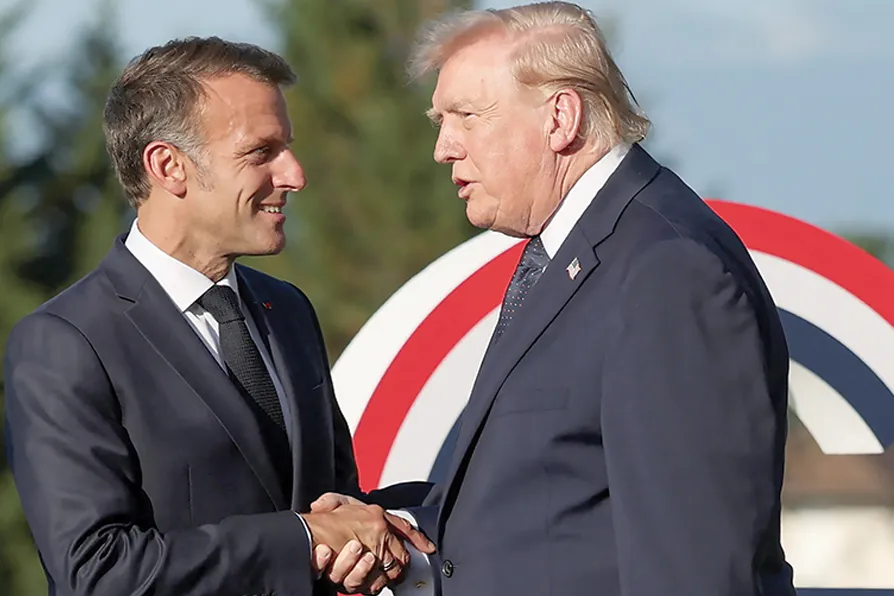
While millions face poverty and public services are squeezed, France is committing billions to defence spending and weapons production, in a dangerous shift towards permanent preparation for war, says CONOR BOLLINS
NICK WRIGHT continues his series analysing the trends in European politics
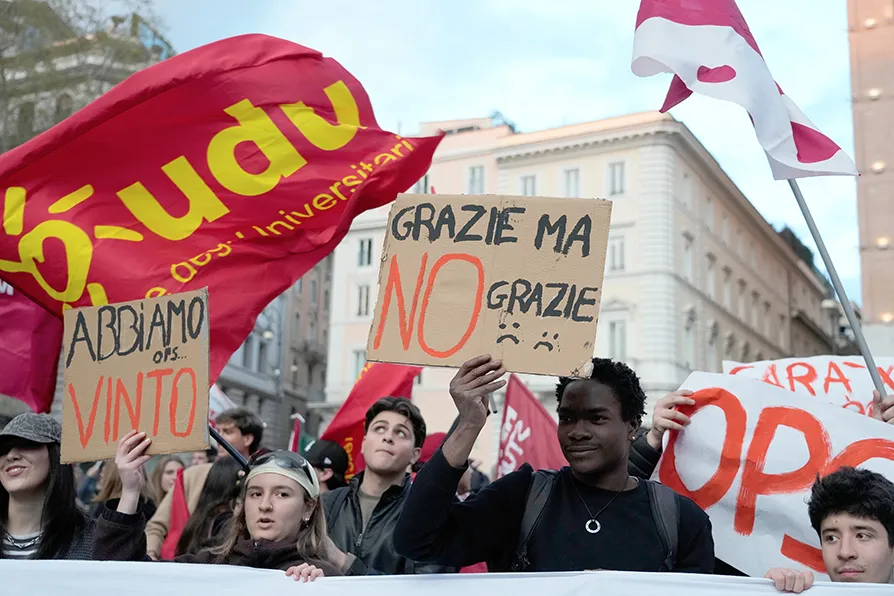
Italians reject controversial judiciary reforms in a referendum that boosts the left, reports NICK WRIGHT