
PETER MASON applauds the revival, 39 years later with the same team and cast, of Manfred Karge’s version of Brecht’s 100-year-old play, Mann Ist Mann

A classic of New York fiction
DOUGLAS FIELD relishes the hard-boiled language, satire and humour of the third and last of the Harlem trilogy
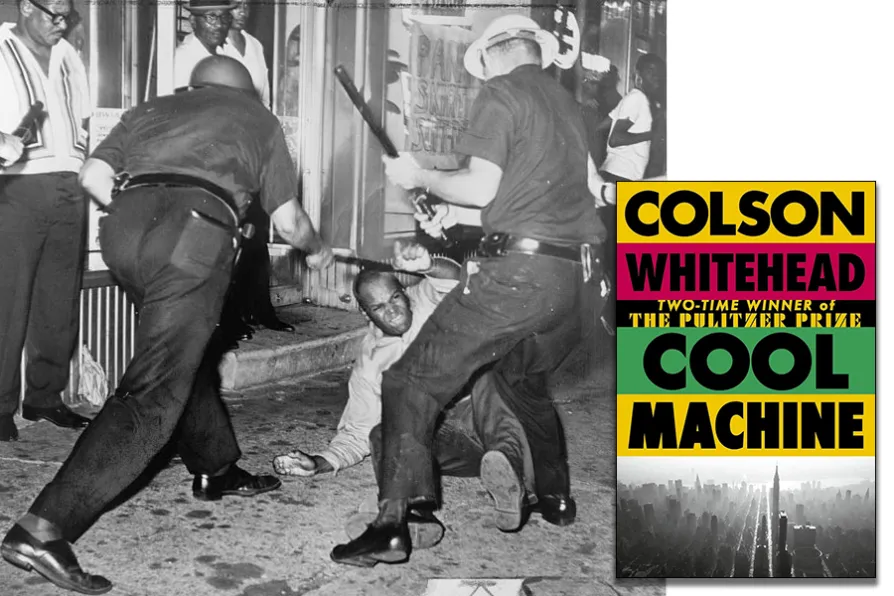
 Incident at 133rd Street and Seventh Avenue during the Harlem Riots of 1964. [Pic: Dick DeMarsico, New York World Telegraph & Sun/CC]
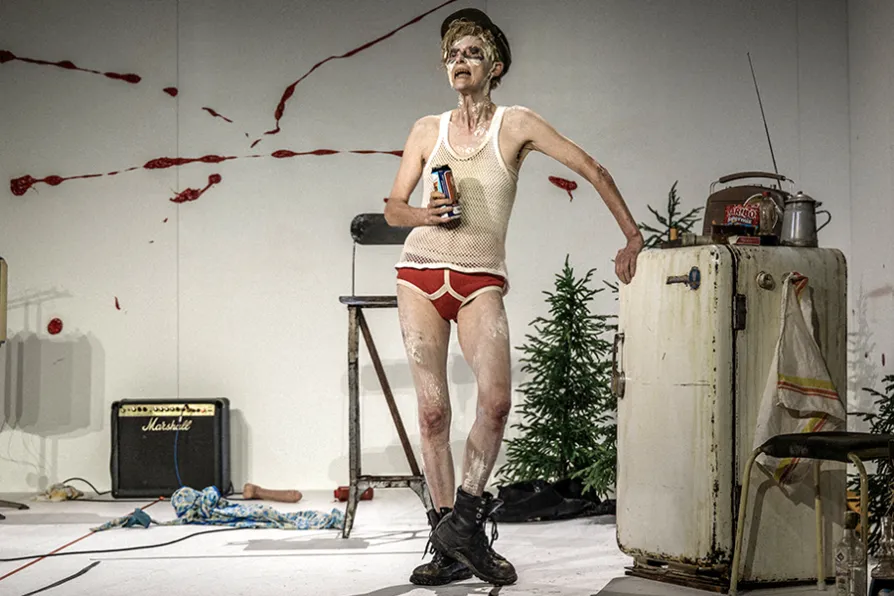
New releases from Biita Houdei, The Mary Wallopers, and The Tubs
New releases from Biita Houdei, The Mary Wallopers, and The Tubs
MAYER WAKEFIELD applauds a fearless attempt to bring to the stage the 1984 toxic gas disaster in Bhopal, India
ALEX HALL applauds the account of a dogged, traumatic and punishing campaign for justice that has lasted from 1998 to the present day
NICK WRIGHT laments the political bias of an epic attempt to tell the history of the liberation of France from the Nazis, that excludes both the decisive contribution of the Soviet Red Army, and of the French communist party itself





Cool Machine
Colson Whitehead, Fleet, £22
Cool Machine is the last book in Colson Whitehead’s Harlem Trilogy. Across three decades, the series has followed the furniture dealer and family man Ray Carney as he navigates the changing cultural and political landscapes of New York City.
We meet Carney in Harlem Shuffle, which is set in the late ’50s and early ’60s. At this point, Carney is trying to stay straight in a world that turned many of his family members into criminals. However, try as he might, he can’t avoid getting dragged into the criminal underworld. In Crook Manifesto, set in the ’70s, Carney is embroiled in crime as a secret fence (someone who sells on stolen goods) and living a double life.
Cool Machine picks up the story in the 1980s, when Carney is winding down his side criminal side hustle. Like Carney, the city of New York is in transition. Fuelled by president Ronald Reagan’s neoliberal economy, the city is “spectacularly alive” to the sound of “jackhammering and rasp of steel beams across concrete” as new skyscrapers transform the cityscape.
In counterpoint to the promise of prosperity heralded by Reagan’s tax cuts — manifest in the advent of yuppies and gentrification — the “primitive language” of graffiti on the subway walls points to an alternative grammar of crime and poverty, mirroring Carney’s dual roles as an award-winning furniture dealer and experienced criminal.
“He’d always blamed other people for dragging him into their messes,” Whitehead explains, “but all bullshit aside he chose the chaos himself. Deep down he loved the chaos as much as the next crooked soul.”
As with Harlem Shuffle and Crook Manifesto, Cool Machine unfolds across three interlocking stories spanning different years. The first instalment takes place in 1981, shortly after Carney has been awarded Sterling Furniture’s Dealer of the Month, the first African-American to do so.
When his wife, Elizabeth, is refused a loan to expand her travel business company, Carney embarks on a final heist with the legendary gangster Uncle Rich, staging a daring raid at the Waldorf Astoria. The caper involves stealing a gold medal that belonged to the famed African-American Olympian Jesse Owens.
“You can be the fastest man in the world,” Uncle Rich points out, “but you can’t outrun the white man.”
Part two, the most engaging section of the novel, shifts to 1983. It follows Carney’s friend, Pepper, an ageing thief with an agitated gut, who is working as a bodyguard for a nervous art dealer in possession of an invaluable African mask. Pepper is 64 but does not look his age: the “gray hair and wrinkles had made only tentative inroads, as if further trespass might piss him off.”
When the mask goes missing, Pepper attempts to track it down, crossing paths with “The Melancholy Hitman,” hired by a wealthy Dutch collector to retrieve the artefact. Here and elsewhere, Whitehead draws attention to the plundering of African works of art that circulate in Western auction houses.
“Those white people had pulled the biggest heist of all time,” he writes, “and there was always going to be another mask or statue or what-have-you to save.”
The novel concludes with a story set in 1986, focusing on Carney’s attempts to save his deceased cousin’s son, Robert, who is being framed for the murder of a corrupt lawyer. Teaming up with Pepper (now on a strict macrobiotic diet), Carney draws on his criminal underworld connections, including hordes of homeless people living in tunnels beneath the city, to save Robert.
While the theme of a con seeking to relinquish criminal life is well established, Whitehead’s hard-boiled language, satire and humour drive the novel forward.
In one scene, an African-American character observes how Alfred Hitchcock’s The Birds (1963) was released during the civil rights movement.
He notes: “You’d have to be a dunce not to take [the birds’] anxious squawking as desegregation fears, for upset over black nationalism.”
In novels such as the Pulitzer prize-winning The Underground Railroad (2016), Whitehead established himself as a master of historical fiction. In Cool Machine, which is indebted to Chester Himes’s Harlem Detective series — including A Rage in Harlem (1957) — Whitehead extends the genre in a language that is marked by economy, witty dialogue and sharp observations of black/white relations in 1980s New York City.
“Up in the lobby, they had both kinds of white people,” Whitehead describes the guests at the Waldorf Astoria, “the ones who flinch when they see you and the ones who look right through you.”
While the plot and pace are uneven across the three parts of Cool Machine, Whitehead’s evident enjoyment of the form carries this fitting conclusion to his trilogy, which is a superlative contemporary New York novel.
Douglas Field is lecturer in 20th century American literature at the University of Manchester.
This article is republished from TheConversation.com under a Creative Commons licence
Please DO NOT REMOVE. —><img src=”https://counter.theconversation.com/content/286906/count.gif?distributor=republish-lightbox-basic” alt=”The Conversation” width=”1” height=”1” style=”border: none !important; box-shadow: none !important; margin: 0 !important; max-height: 1px !important; max-width: 1px !important; min-height: 1px !important; min-width: 1px !important; opacity: 0 !important; outline: none !important; padding: 0 !important” referrerpolicy=”no-referrer-when-downgrade” /><!— End of code.

Similar stories

In a season of Greek mythology NIAMH THORNTON looks at an intriguing relocation of Medea to contemporary Mexico

Hot and dry conditions are threatening British species unequipped for drought, explains PAUL ASHTON
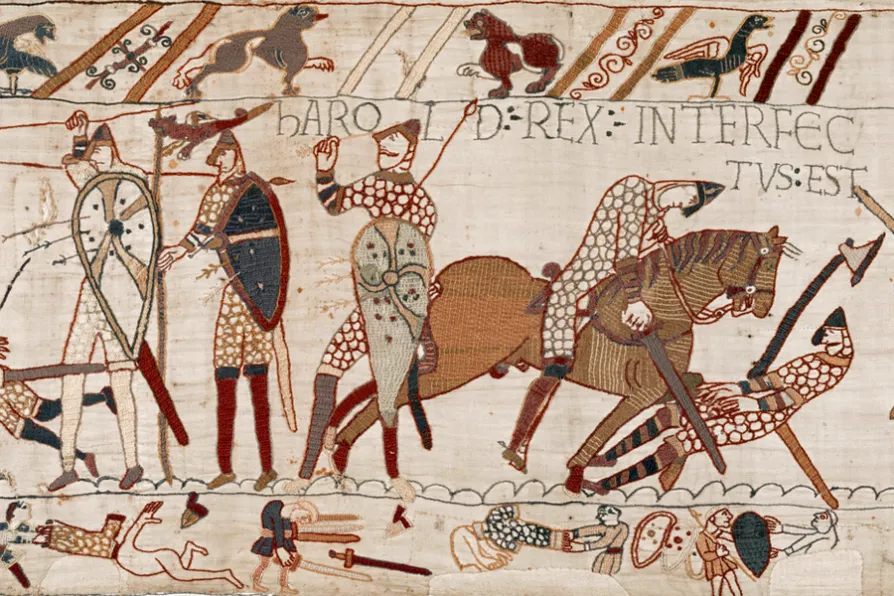
STEPHANIE BROWN draws attention to the hidden labour of the female embroiderers, and how a 19th century replica made no such error

JULIA TOPPIN recommends Patti Smith’s eloquent memoir that wrestles with the beauty and sorrow of a lifetime