
PETER MASON applauds the revival, 39 years later with the same team and cast, of Manfred Karge’s version of Brecht’s 100-year-old play, Mann Ist Mann

Who made the Bayeux tapestry?
STEPHANIE BROWN draws attention to the hidden labour of the female embroiderers, and how a 19th century replica made no such error
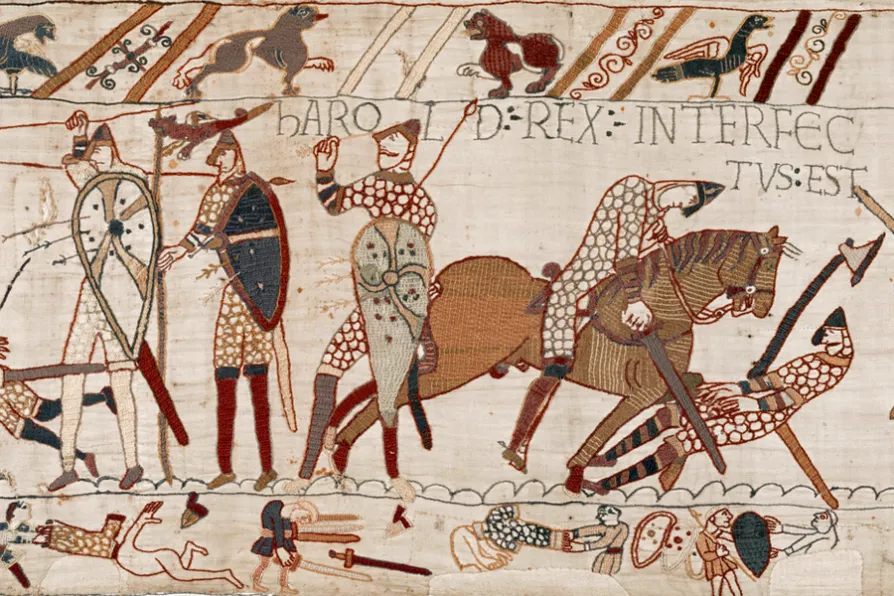
 BRUTALITY OF WAR: The Bayeux Tapestry, made between 1066 and 1083, linen, wool and embroidery [Pic: Public Domain]
New releases from Biita Houdei, The Mary Wallopers, and The Tubs
New releases from Biita Houdei, The Mary Wallopers, and The Tubs
MAYER WAKEFIELD applauds a fearless attempt to bring to the stage the 1984 toxic gas disaster in Bhopal, India
ALEX HALL applauds the account of a dogged, traumatic and punishing campaign for justice that has lasted from 1998 to the present day
NICK WRIGHT laments the political bias of an epic attempt to tell the history of the liberation of France from the Nazis, that excludes both the decisive contribution of the Soviet Red Army, and of the French communist party itself





FOR the first time in nearly 1,000 years, the Bayeux tapestry is returning to Britain. The 70-metre embroidery will be displayed at the British Museum from September. The tapestry depicts the Norman Conquest of 1066 and the battle of Hastings. In comic-strip form, it tells the story of Harold II and William the Conquerer.
For centuries, the tapestry has been read as the ultimate example of “great-man” history. But, like most embroidery in the medieval period, the tapestry was almost certainly made by women.
In writing about the tapestry, this fact is often acknowledged only briefly, before attention returns to elite men — particularly Odo of Bayeux, who is widely thought to have commissioned it.
This oversight is a familiar historical pattern in which men are remembered as patrons and decision-makers, while the labour that produced the object itself fades from view. The absence of named makers matters. It shapes how we understand the tapestry as a story of conquest and power, rather than a display of collective skill.
There is a full-scale Victorian replica of the Bayeux tapestry in Reading Museum. This British tapestry tells the same story of 1066 — but this time the makers are visible.
In 1885, the pioneering embroiderer Elizabeth Wardle set out to create a full-scale copy. She was the founder of the Leek Embroidery Society, which won awards for its high-quality needlework and received commissions from all over the country.
Wardle travelled to Bayeux to study the original and became convinced that England should have its own version. Working from tracings made from images held by what is now the Victoria and Albert Museum, she coordinated a team of 35 women to recreate the entire tapestry.
Image
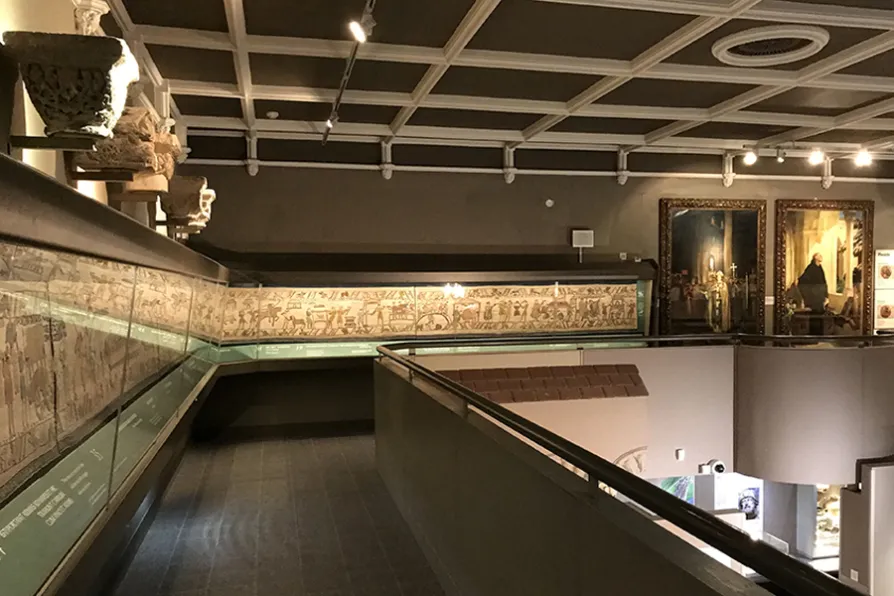
The women worked carefully to reproduce the original, but a few distinctly Victorian changes remain. In the borders of the original work there are several nude figures. In the Reading version, one has been given trousers. This change is often attributed to the embroiderers, but they were in fact copying images already altered by male staff at the South Kensington Museum (now the V&A), who had censored the photographs for Victorian audiences.
The project took around a year to complete. It is an extraordinary object in its own right — not simply a copy, but a record of 19th century artistic practice, collaboration and historical imagination.
Some people are against the plans to transport the original medieval tapestry from Bayeux to London, calling it a “heritage crime.” Critics feel that the tapestry is too fragile and precious to be moved and that taking such a risk is madness.
The Victorian copy is much more widely travelled than its medieval cousin. After its completion, it toured British towns and cities and as well as going on display in Germany and the US. It was also shown at Windsor Castle for Queen Victoria after it was acquired by Reading Museum in 1895. Before its permanent installation at Reading in 1993, it continued to tour Britain and overseas until the outbreak of the second world war.
Each woman who worked on the Victorian tapestry signed her contribution, stitching her name into the lower border. These signatures transform the object. What was once anonymous labour is here personal, traceable and proudly acknowledged.
The contrast between the two tapestries is striking. One obscures the identities of its creators; the other insists upon them. Together, they reveal how easily women’s work can be overlooked — and how that invisibility can be both produced and challenged.
This matters not only for how we understand the past, but for how we interpret the objects that survive it. The Bayeux tapestry has long been treated as a narrative of male conquest and power. However, it is also a product of skilled, collaborative female labour. Recognising this only enriches its historical significance.
With this new chapter in the tapestry’s history, there is an opportunity to tell a fuller story: not just of kings and battles, but of the women who stitched those stories into being. Women are always present in history. Sometimes, we just need to look a little more closely to see them.
Stephanie Brown is lecturer in criminology at the University of Hull.
This article is republished from TheConversation.com under a Creative Commons Licence.
Please DO NOT REMOVE. —><img src=”https://counter.theconversation.com/content/280871/count.gif?distributor=republish-lightbox-basic” alt=”The Conversation” width=”1” height=”1” style=”border: none !important; box-shadow: none !important; margin: 0 !important; max-height: 1px !important; max-width: 1px !important; min-height: 1px !important; min-width: 1px !important; opacity: 0 !important; outline: none !important; padding: 0 !important” referrerpolicy=”no-referrer-when-downgrade” /><!— End of code.
Public Domain

Similar stories

Comics are not just superheroes and spandex – it can be public art, telling public stories, suggests HARRIET EARLE
In a season of Greek mythology NIAMH THORNTON looks at an intriguing relocation of Medea to contemporary Mexico
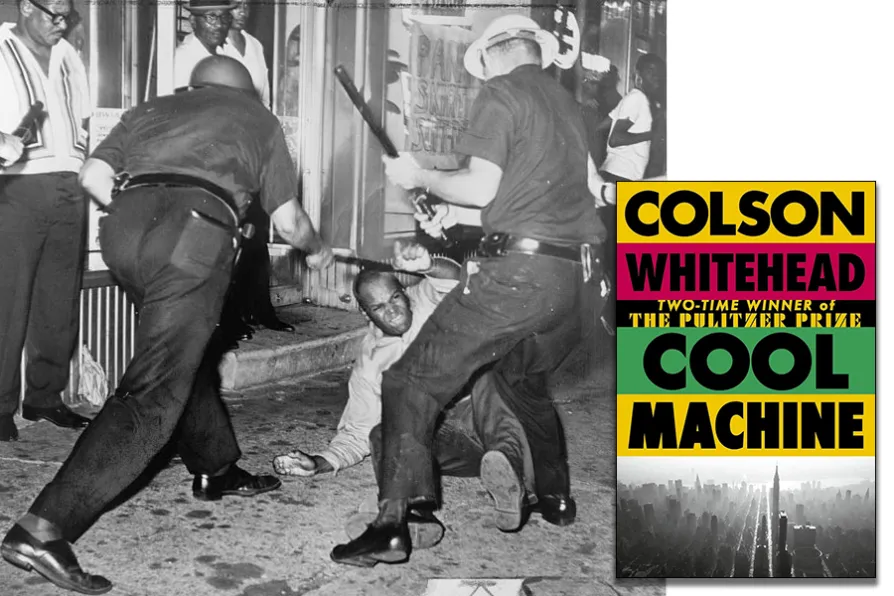
DOUGLAS FIELD relishes the hard-boiled language, satire and humour of the third and last of the Harlem trilogy
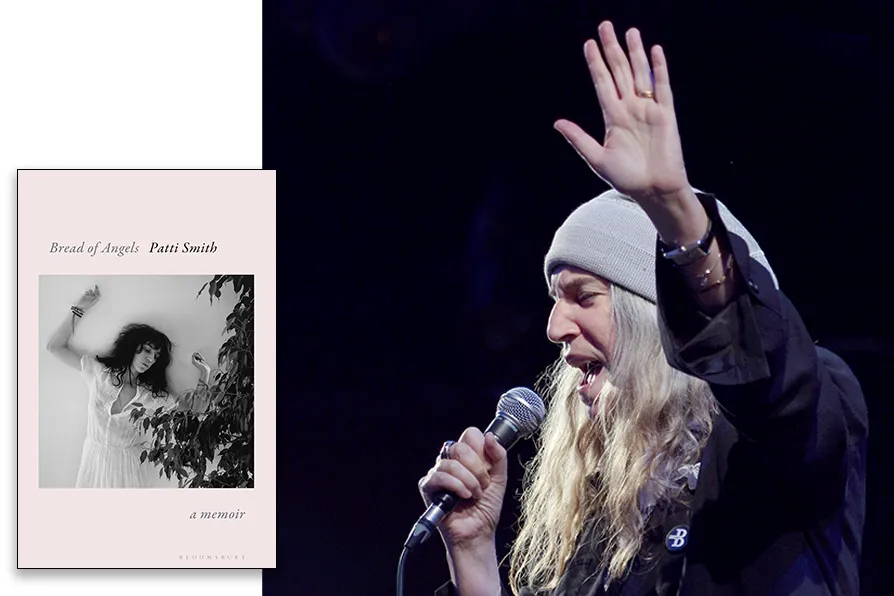
JULIA TOPPIN recommends Patti Smith’s eloquent memoir that wrestles with the beauty and sorrow of a lifetime