ROB WARZYNIAK wades knee deep through a pile of ‘dead canaries’ of Trumpist policies which exacerbated the horrors of US capitalism domestically


 Latest editorial

Remembering Winston Pinder: communist, campaigner, youth worker
A lifelong communist and community organiser, Pinder helped shape anti-racist and anti-colonial activism in Britain while dedicating himself to youth work and collective struggle, writes David Horsley
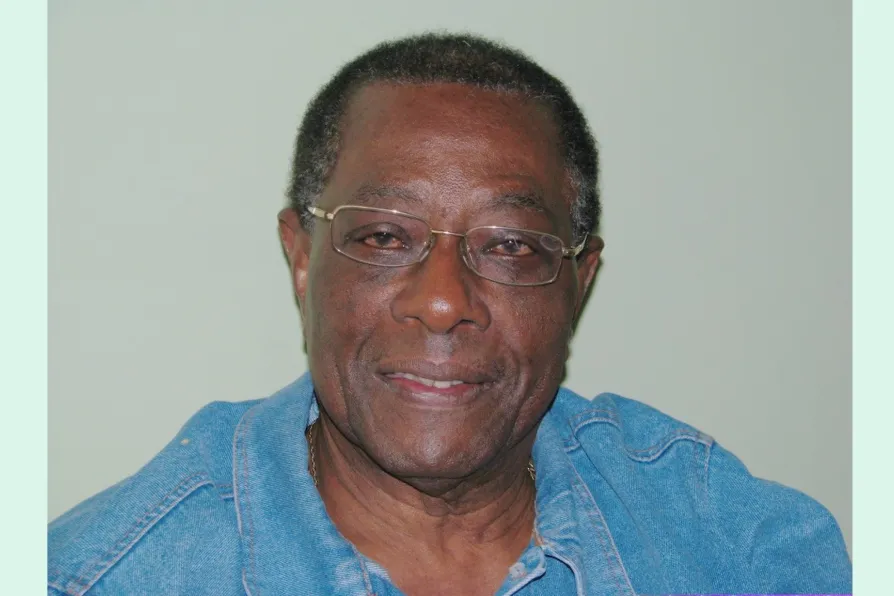 Winston Pinder
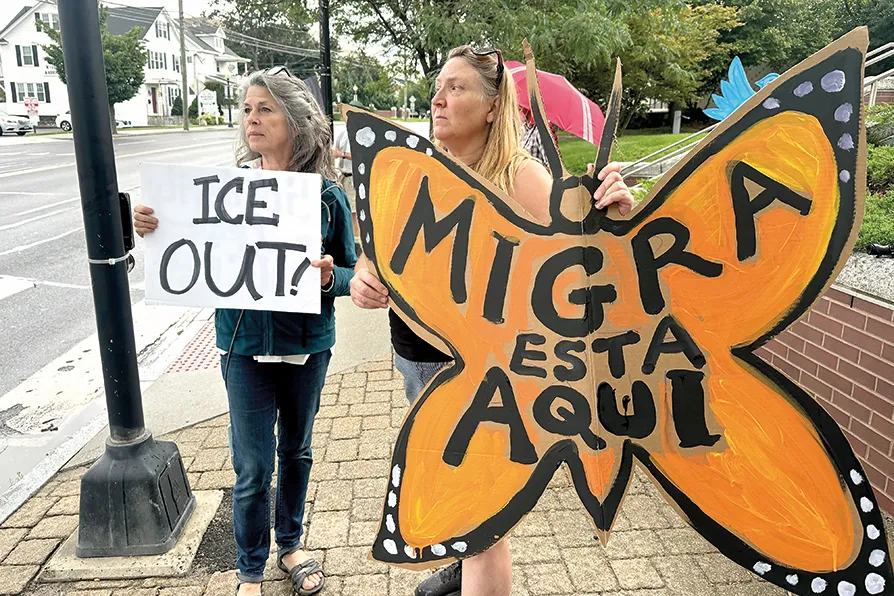
Without evidence or Nato consultations Berlin’s answer to the Leipzig incident is a rupture of relations. SEVIM DAGDELEN examines why
FRANCISCO DOMINGUEZ introduces the background to a conference on defending Latin America’s sovereignty
The glacier collapse in Nepal is yet another warning that a warming planet is making Himalayan disasters more frequent and destructive – but the countries facing the greatest risks are often those least responsible, says LI YANG
Nick Blair is set to benefit from a hugely lucrative contract to ‘virtually’ train the British army for its next war. Like father, like son, writes SOLOMON HUGHES
Even when tragedy strikes, Western media cannot resist the opportunity to turn it into a sordid propaganda opportunity, as the Nepal-China border tragedy shows, writes CARLOS MARTINEZ
Trade unions should be at the heart of the anti-racist push for reparations for the historic legacy and continuing impact of slavery, writes ROGER McKENZIE





WINSTON PINDER, who passed away in London on May 16 2026 aged 93, was born in 1933 in Barbados.
After leaving school Winston received a bursary to train with the Barbados telephone company. He was sent to (then) British Guiana to work on the Demerara telephone exchange being built by the Bookers company where he became interested in trade unionism and the anti-colonial struggle taking place throughout the Caribbean, exemplified by the Guyanese left-wing, pro-independence movement led by Cheddi Jagan who had won the first elections held under universal suffrage in 1953 and was ousted by a British military coup after 133 days.
Returning to Barbados in 1954 he spent a few months at home and then in the same year, like many of his generation, he sailed to Britain, where he met his mentor Billy Strachan, a Jamaican who after serving in the Royal Air Force during WWII, joined the Communist Party in 1947 and remained a steadfast communist until his last days.
Winston followed his mentor’s example, joining the Communist Party of Great Britain (CPGB) and remaining a member until its dissolution in 1991.
Like several other young Carribbean Communists, Winston also joined the Caribbean Labour Congress, established in 1948 in London by Billy Strachan.
When I first met Winston in 2019, I was immediately struck by his modesty, dignity and friendly attitude and we continued to meet regularly over the next few years.
Not only was Winston Pinder a close friend of Billy Strachan, whose biography I was researching, but Winston also worked closely with Claudia Jones when she arrived in Britain on December 15 1955, having been deported from the United States under the Smith Act for her Communist Party activism.
The CPGB despatched Winston Pinder, Billy Strachan and Trevor Carter as a reception committee to meet Claudia on her arrival at Victoria Station off the boat train from Southampton. Winston remained a close comrade of Claudia Jones and regularly sold the paper she created and edited, the West Indian Gazette, Britain’s first black-owned and run newspaper.
In common with other black Communists in the post-war years, Winston was not only engaged in party and union work, but also at the Movement for Colonial Freedom (today Liberation) and especially with helping black people suffering racism in London.
Observing the very difficult situation for black youths, some of whom were homeless and being harassed on the streets by the police, Winston began inviting them to the house where he lived with his wife and young family. Since he worked full time as a telephone engineer, this voluntary work was often done in the evenings.
This experience led to him becoming a youth worker in Camden. With the assistance of a grant from Ken Livingstone’s Greater London Council, Winston was able to lease a building in King’s Cross, which he and the youths named Paul Robeson House.
Winston also formed the Afro-Caribbean Organisation, which provided education and discussion classes with people like Tony Benn, Billy Strachan, the wonderful Jamaican poet Elean Thomas and many others conversing with the young people. During the 1984/5 miners’ strike, they raised money and presented the donations to Yorkshire miners at a special reception.
Perhaps the most important fundraising carried out by Winston and his youth group was to raise funds to create a gravestone for the outstanding Trinidadian Communist Claudia Jones who had been buried at Highgate Cemetery next to the grave of Karl Marx following her early death at the age of 49 in December 1964.
Claudia’s grave lay unmarked for several years and when Winston and a couple of veteran communists enquired, they were told by the grave’s owner not to erect a gravestone.
Nevertheless, they persevered and after years of neglect Winston and his Afro-Caribbean youth organisation decided go ahead to raise funds for the gravestone.
A veteran pensioner contributed his pension and both the Cuban and Chinese embassies gave donations, so that eventually a gravestone with an inscription at last marked the grave of Claudia Jones. It stands to this day remarked on by many of the thousands of visitors to Marx’s grave and it should be remembered that without Winston Pinder’s dedicated efforts it would not exist.
Winston was involved in running the Kentish Town Youth Club in Camden, which as his longtime friend, the journalist Angela Cobbinah wrote, “provided a lifeline for many.”
Winston went on to become the chief youth worker for Hackney Council, continuing the outstanding pioneering work he had started years earlier as a part-time volunteer for homeless young people.
In the Communist Party, Winston always strove for unity. As Bob Newland, one of the ANC London Recruits, wrote, “Winston understood the importance of unity and was also a loyal disciplined party member.”
Winston always worked tirelessly both in the Communist Party and in the Movement for Colonial Freedom (Liberation) for anti-colonial and anti-apartheid causes, becoming close friends with those engaged in struggles in the Caribbean, the African continent and Latin America.
During the Grenadian Revolution led by Maurice Bishop, he gave total support to the New Jewel Movement and campaigned for Frelimo (Frente de Libertacao de Mocambique) in Mozambique and the MPLA in Angola during and after the wars of independence from Portugal. Wherever the struggle, Winston gave his time and effort.
Perhaps Winston Pinder will be remembered most for his inspirational work among young people over many years. His role in organising education workshops at Ruskin College, Oxford, was mentioned in a tribute to him paid by Emeritus Professor Marjorie Mayo who knew him since the 1970s.
Personally, I will never forget the occasion of the first annual commemoration of Winston’s great mentor Claudia Jones held at Highgate cemetery and organised by the Communist Party on the 107th anniversary of her birth on February 21 2022. Old friends and comrades turned out in atrocious weather not just for the event, but to meet again the man who had mentored them many years before.
Recalling the occasion when he had welcomed Claudia Jones to London in December 1955, Winston Pinder told the graveside crowd: “We heard that she was not in good health because she had been in prison for some time but when we met her the first thing she said was ‘I am ready to work’.”
“She was a beautiful person in so many ways but very quiet about it. Long may she live in our hearts.”
For all who were there, it was such an inspiration to see people who had travelled great distances to pay tribute to the person who had helped so much in their own lives.
I count it an honour to have known Winston Pinder and called him a friend. Last year my friend and colleague, journalist Angela Cobbinah and I contacted as many people who had been affected by Winston’s work as possible, asking them to write about their connection to Winston. We produced a small booklet, Winston Pinder: Mentor, Comrade and Friend. A few of us were fortunate enough to present it to him and family members recently.
For more details please contact David Horsley Email: ukdavid.d@gmail.com.

Similar stories
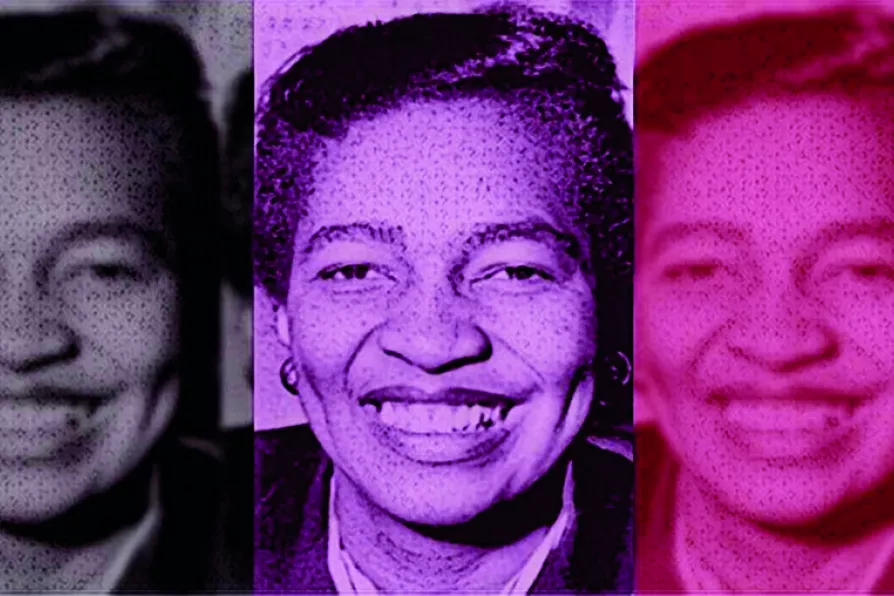
The pioneering activist understood that freedom could only be won through solidarity across communities. Her legacy offers vital lessons at a time when progressive politics risks losing that shared purpose
The Morning Star republishes PRAGNA PATEL’s speech at the annual commemoration of Claudia Jones on February 22 2026
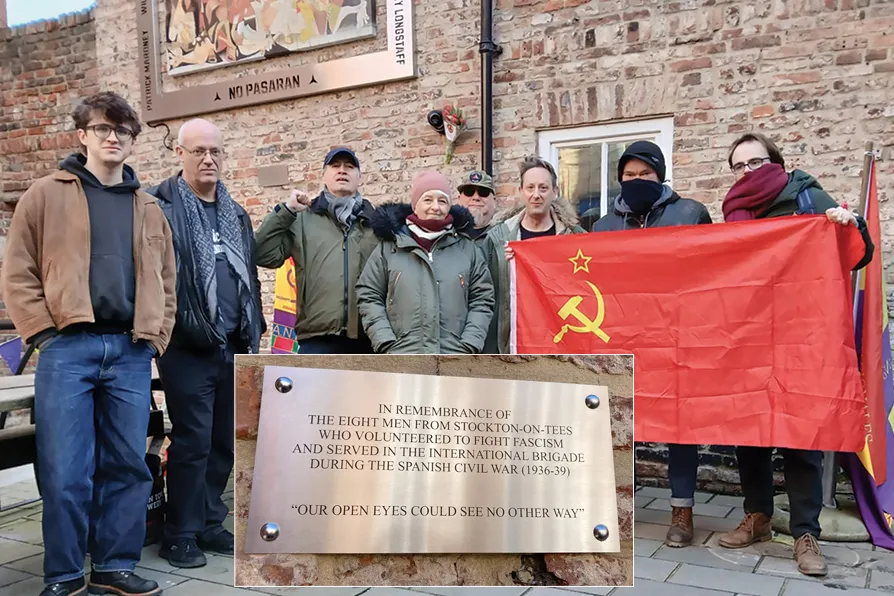
TONY FOX reports from a commemoration of the legendary Battle of Jarama in which four Stockton-on-Tees volunteers fell
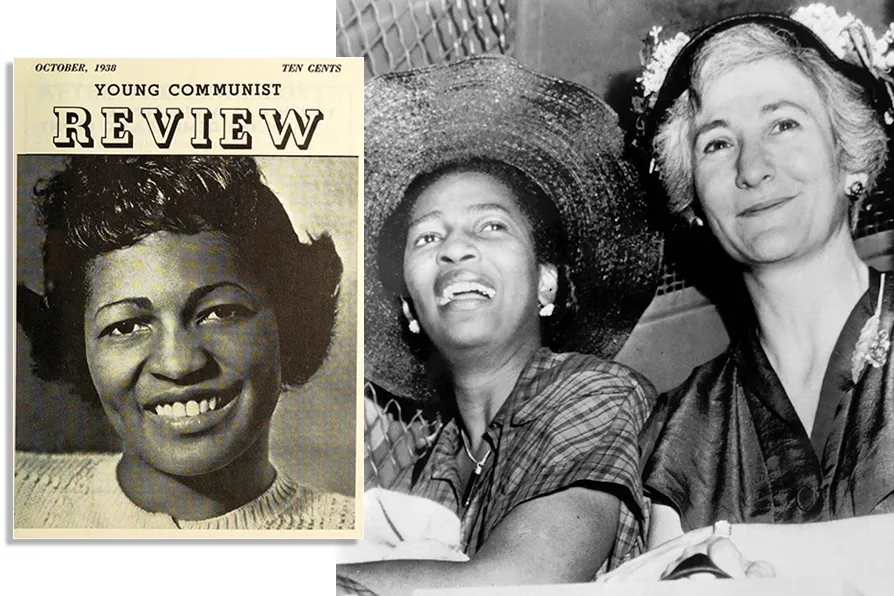
On the 121st anniversary of communist Claudia Jones’s birth ROGER McKENZIE looks at political events that shaped her, and those she helped shape
Maggie Bowden was a trailblazing campaigning lawyer at Birnberg and Thompsons, women’s organiser of the Communist Party, and general secretary of Liberation