ANDY HEDGECOCK and MARIA DUARTE review Late Fame, The Death of Robin Hood, Leviticus, and Gail Daughtry and the Celebrity Sex Pass


 Latest editorial

How the media abets Israel’s crime
GAVIN O’TOOLE recommends a methodical unmasking of the US media’s complicity in the Israeli genocide, that should be a template for what’s needed to bring Britain’s corporate media to book
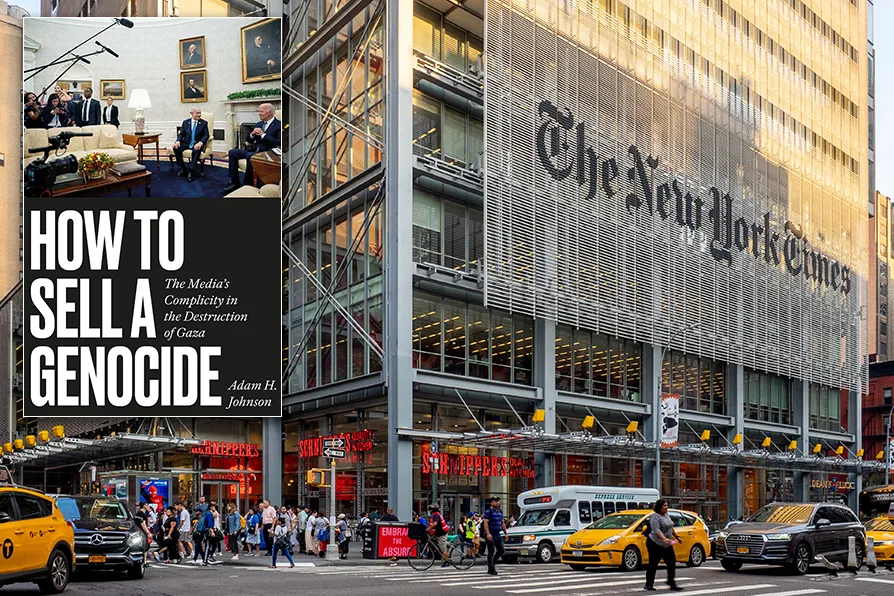 The New York Times Building in Midtown Manhattan, New York [Pic: Ajay Suresh/CC]

GORDON PARSONS enjoys Kant’s ‘mind-boggling’ theory of human reality: that we create the reality we experience
DAVID RABY welcomes a biography that emphasises how Fidel’s unique characteristics became hallmarks of the ongoing Cuban revolutionary process
IAN SINCLAIR recommends a readable, if partisan, account of the astonishing campaign of New York's new mayor
MATTHEW HAWKINS witnesses a contemporary ballet that represents human life as subjected to artificial intelligence
by Marwa Paikan





How to Sell a Genocide: The Media’s Complicity in the Destruction of Gaza
Adam H Johnson, Pluto Press, £6.99
JULIUS STREICHER was something of a pioneer, in the worst sense of the word. He set a precedent that Western media — clearly as complicit in the Gaza genocide as Israel’s bloodthirsty military — would be wise to reflect upon.
As a publisher not a soldier, Streicher may have believed he would escape justice for his role in the Holocaust, disseminating poison through his Nazi newspaper Der Sturmer. Judges at Nuremberg thought otherwise, convicting him of crimes against humanity and, specifically, finding him guilty of having continued his vile antisemitic propaganda even when he was well aware that Jews were being exterminated.
The case of Streicher — and others since in Rwanda — confirm that calling oneself a “journalist” and hiding behind a facade of corporate credibility provides no protection against legal accountability for genocide.
If we ever get to the stage where Western media are held to account for knowingly disseminating Israeli lies, justifying crimes against humanity, stripping Palestinians of their humanity, and wilfully blocking public understanding about the Gaza genocide, Adam Johnson’s research will make it a similarly open and shut case.
In How to Sell a Genocide, he has compiled unambiguous evidence based on hard data to prove beyond doubt media complicity in Israel’s live-streamed mass murder by justifying, downplaying or ignoring industrial-scale slaughter. He examines, through thousands of articles and TV segments, the output of nine outlets in the US centre-left, liberal, legacy or mainstream media, from CNN and MSNBC to Axios and the Washington Post.
It is admittedly a study confined to the US, purposefully zooming in on media popular with Democrats precisely because Israel’s genocide was enabled by the presidency of Joe Biden. Nonetheless, in the UK the mechanisms Johnson identifies to allow the average media consumer and worker to cope with undeniable war crimes will immediately be recognisable.
He situates the media’s pernicious role within a theoretical model called the “Moats of Rationalisation” — an “elaborate framework of excuse-making, deflection, faux-savvy realpolitik, orientalist tropes, and glaring double standards.” This turned its primary objective away from accurately conveying a bloody reality towards making liberals feel better about their inaction in the face of heinous crimes.
Johnson writes: “It was to rationalise, negotiate, obscure and, ultimately, deny the most inconvenient of truths: a genocide carried out, defended, and authored by elite liberals and liberal institutions.”
He begins with the deliberate fiction propagated by Israel that Hamas fighters beheaded 40 babies in their attack on October 7, which set the scene for the “Isis-ification” of the group. This both primed the US public for unrestrained revenge while bolstering Israel’s insistence that any negotiation with an “ontologically evil” organisation was simply impossible.
Johnson provides numerous examples of the application of emotive language and double standards, and traces the openly ideological zionist activism of media executives. He is particularly scathing about Biden, listing the techniques by which the liberal media provided cover for a weak president’s historical error backing Benjamin Netanyahu.
The author coins valuable phrases for sins of commission and omission — from mournful liberal “Oh Dearism” to the “natural disaster-ising of Israeli war crimes.” He is highly critical of the role played by the New York Times in Israel’s demolition of UNRWA and the one-sided, ahistoric “agenda setting” by TV news slots and editorial boards.
He identifies the prime suspects in cases of “doxxing” (releasing private information online with malicious intent), character assassination and vengeful discrimination among pro-Israel lobby groups, and how elite organisations from PEN America and Harvard university were brought to heel.
Above all, he lays bare the weaponisation of antisemitism to discredit support for Palestine that we are familiar with in Britain — and prominent right now in coverage of the Nakba commemorations.
We are bombarded into submission by overwhelming evidence such that, by the end of this book, we are left asking: will we ever see the media bigwigs held to account? Johnson thinks not, concluding bleakly that history is unlikely to look poorly on those who supported the genocide.
His work at least offers a template for the research desperately needed to bring Britain’s corporate media to book for complicity in the crime of the century.

Similar stories
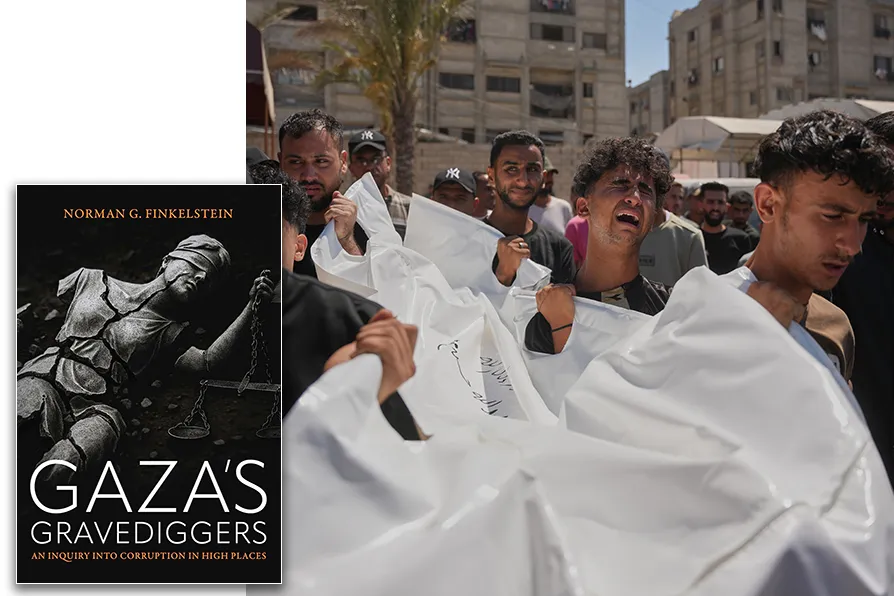
ALEX HALL treasures a meticulous examination of international institutions that have given in to Israeli pressure during their still unfolding campaign of genocide

As antisemitism grows, the labour movement must recommit to defence of minorities while navigating the complexities of Gaza and global politics, argues NICK WRIGHT

Washington and its Western allies decry human rights abuses while arming and shielding Israel, turning contradiction into policy, argues RAMZY BAROUD
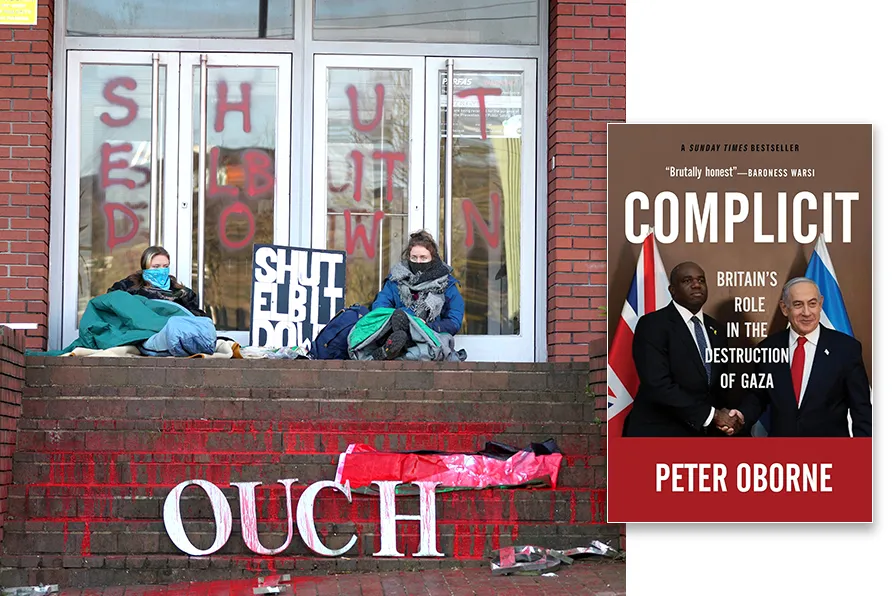
GAVIN O’TOOLE welcomes, and recommends a a candid, evidence-based record of Britain’s role in the slaughter visited by Israel upon the Palestinians