DAVE WARD of the Communication Workers Union says unions must step up to meet the challenges of a transformed world of work


 Latest editorial
Unity builds the power of NHS workers to change the system
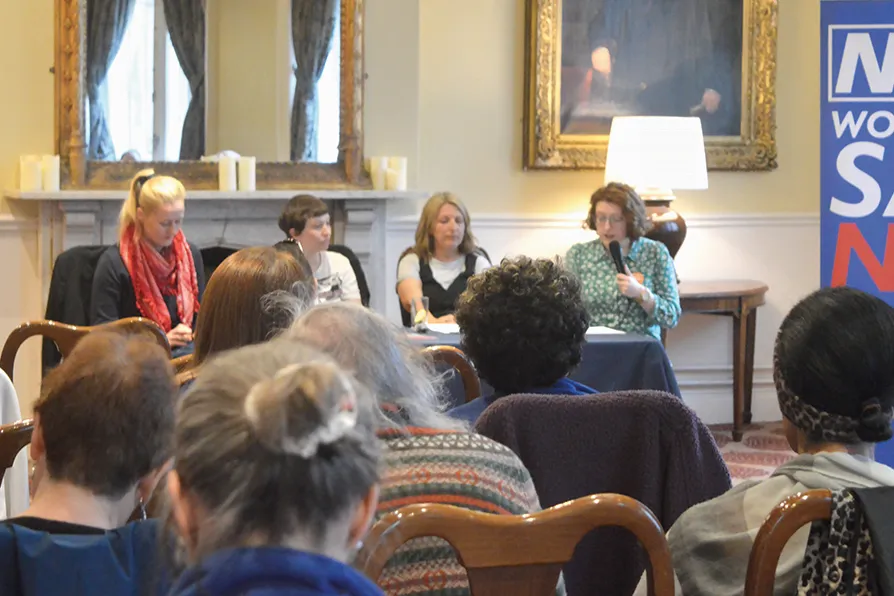
HOLLY TURNER, DR EMMA RUNSWICK, JORDAN RIVERA and PAULA DUNNE reflect on their joint union fringe meeting at this week’s Royal College of Nursing Congress in Liverpool
 Pic: Henry Fowler/Strike Map
Live music and musical education are both under attack and threaten to impoverish our culture. The Musicians’ Union seeks allies in the fightback, writes NAOMI POHL
Who should the trade union movement be fighting for: pimps or marginalised women, asks ANNA FISHER
This summer’s fire outbreaks highlighted once again the deadly cost of job, equipment and funding cuts to the fire service. Ten years after the Grenfell tragedy, serious lessons still need to be learned, says STEVE WRIGHT
As Cuba faces the most dangerous moment in its recent history, Britain must do more than condemn the US blockade at the United Nations, writes KEVIN COURTNEY, chair of the Cuba Solidarity Campaign
The events of 9/11 reverberated across the United States and then the world. JOHN WIGHT remembers the eerie atmosphere that exposed racial divisions at the heart of Hollywood





AT THE height of the 2022-23 strike “wave,” nurses, paramedics, doctors, civil servants, teachers and many others took part in the largest surge of industrial action seen in decades.
What distinguished this period from previous waves of struggle was the number of workers taking action for the first time. Entire generations of nursing staff, many of whom had never before stood on a picket line, found themselves at the forefront of a fightback against the deepening cost of living crisis.
The political atmosphere of the moment gave this movement an even greater significance.
With the Conservative government in freefall, there was a growing sense that organised workers and their unions had an historic opportunity — not only to defend pay and conditions, but to challenge the direction of the country itself.
This year marks an important anniversary: 100 years since the 1926 General Strike, the greatest demonstration of cross-union and cross-sector solidarity in British history.
The Baldwin government believed it could impose devastating cuts on one section of workers, the miners, only to be met with an unprecedented wave of solidarity across the labour movement. The result was the General Strike.
It was in the context of the learning we need to take from both 1926 and the experience of 2022-23, that we organised our fringe meeting at this week’s RCN Congress: “Doctors & Nurses United: Organise. Strike. Win.” It was a call for industrial unity, an understanding that our power as workers comes from genuine joint solidarity between unions.
Although the strike wave of 2022-23 may have subsided, the need for co-ordinated industrial and political strategies has not diminished. If we are to break with the failed orthodoxy of neoliberalism and win serious investment in public services, health workers must stand together. Whether it is the BMA doctors taking action, Unison phlebotomists and healthcare assistants fighting local disputes, or the prospect of nurses balloting again, we must support one another.
That unity cannot exist only at the level of national leaderships issuing joint statements or negotiating with government and NHS trusts. It must be rooted in our workplaces.
We need deeper and more systematic collaboration between unions at hospital and healthcare provider level. That means organising more joint fringe meetings, bringing together reps across unions, fostering collaborative organising, and presenting a united front in negotiations across the whole NHS.
With a new Health Secretary now in post, uncertainty continues across the NHS industrial landscape. Resident doctors remain in dispute, while consultants, SAS doctors (specialty, associate specialist, and specialist) and other grades are also balloting and taking collective action.
At the same time, the failed economic model of neoliberalism, supercharged by the austerity imposed since 2010, continues under the current government. Nowhere is that failure felt more sharply than in our public services.
After 15 years of cuts and underinvestment, we need a fundamentally different approach: real investment, higher pay, a plan to solve the recruitment and retention crisis, and a long-term industrial strategy for the future of the NHS.
That must include defending migrant workers, who are indispensable to our health service, against punitive salary thresholds and hostile immigration policies. It also means resisting the further privatisation of healthcare.
In the lead-up to our meeting, some RCN members raised concerns about the BMA’s position on advanced nurse practitioners and their deployment. At our packed fringe meeting, we were able to discuss these tensions openly as NHS professionals working side by side to deliver the best healthcare we can and support the communities we care for.
The NHS is facing crises of staffing and funding. We cannot allow those structural failures to be redirected into divisions between healthcare workers.
The real problem is not nurses versus doctors, or one professional group against another; it is chronic underinvestment and the absence of serious workforce planning.
As trade unionists and healthcare professionals, we know the answer to these challenges lies in valuing each profession for its own skills, solidarity and collective organisation.
While the BMA is currently engaged in disputes nationally, the coming summer and autumn are likely to bring renewed economic pressures for workers across society.
The cost-of-living crisis continues to shape people’s lives, and workers will increasingly turn to trade unions to ensure they are not forced to pay for yet another economic crisis.
That anxiety is already widespread. A recent PwC survey found that 90 per cent of respondents were concerned about the cost of living, while almost 80 per cent planned to reduce spending over the next three months.
What may currently feel like uncertainty or fear about worsening global instability will soon become a concrete reality for many working people.
For NHS staff, this crisis compounds more than a decade of wage erosion. RCN’s own analysis shows that starting salaries for nursing staff are now more than £8,000 lower than they would have been had pay kept pace with inflation since 2010 — band five nurses alone have seen a real-terms pay cut of around 21 per cent.
Against this backdrop, public-sector pay review bodies continue to recommend, and governments continue to push for, below-inflation pay awards.
In contrast, the BMA’s industrial strategy has demonstrated what clear demands and sustained action can achieve.
The campaign for pay restoration led to one of the most significant settlements seen anywhere in the public sector. In 2024, following sustained industrial action, BMA resident doctor members in England voted to accept a deal delivering an average pay uplift of 22.3 per cent across 2023/24 and 2024/25, a small step towards restoring the value of doctor pay which still, after the pay rise, represents real-terms pay cuts of over 20 per cent.
The campaign continues, now including demands for secure jobs for resident doctors, who have fixed-term contracts and are increasingly the target of job losses due to funding cuts.
The question after this successful meeting is therefore simple: what comes next?
We have seen in recent years that effective industrial action can improve pay, defend public services and restore confidence in trade unionism. At the same time, the economic and political crises facing the government — including the constraints imposed by its own fiscal rules — create opportunities for organised labour.
There is space for a new approach: one centred on investment in public services, rising wages, democratic industrial planning, and trade unions playing a central role in shaping the future of the economy. Such an approach could provide not only economic stability, but hope and opportunity.
Sitting together this week in Liverpool, we were reminded of the potential power of collective action — the same power demonstrated in 1926, and glimpsed again during the strike wave of 2022-23. Workers make history.
That enduring truth remains a source of hope — and a reminder that the responsibility for winning change rests with us. Now more than ever.
Holly Turner is a learning disability and autism case manager across Norfolk and Suffolk, and has been an active member of the RCN since 2008; Dr Emma Runswick is a psychiatry resident doctor across Greater Manchester and is the deputy chair of the BMA council; Jordan Rivera, is an NHS occupational therapist and Unison branch secretary in a London hospital, elected to Unison’s national executive committee in 2023; Paula Dunne, is chair of Strike Map steering group. Previously she has been a Unite and NUJ rep in different roles in academic publishing.
