

 Latest editorial

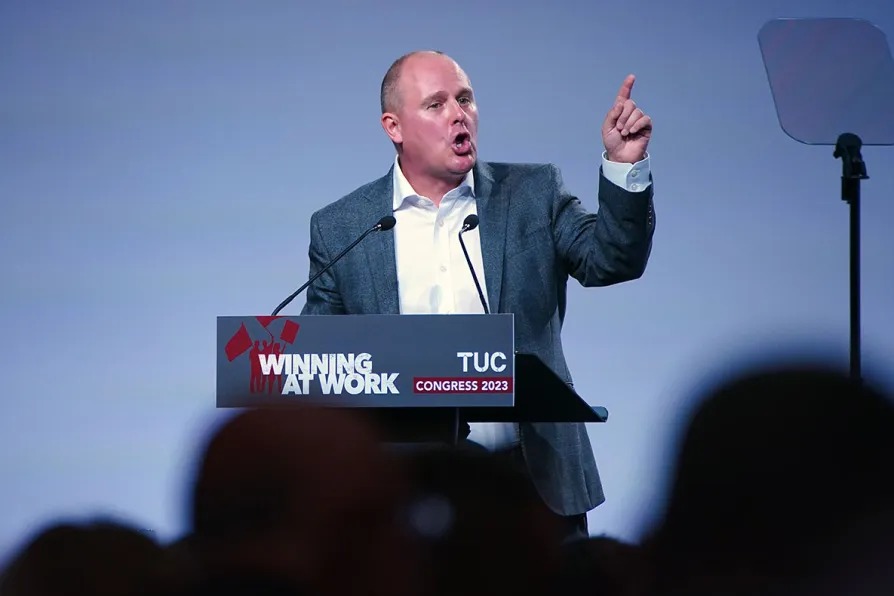 Paul Nowak, general secretary of the TUC speaking at the TUC congress at the ACC Liverpool, September 11, 2023





BLACK and ethnic minority workers have faced a “shocking” increase in explicit racism at work in recent years, new research by the TUC reveals today.
A survey of workers by the union body ahead of its black workers conference in Bournemouth today revealed that they are facing “appalling levels” of racism, bullying and unfair treatment at work.
Explicit racism at work is plaguing the labour market and getting worse, according to the TUC, with its new polling revealing that since 2020, black and ethnic minority workers say they are experiencing racism at markedly higher levels, including having their ability to speak English questioned.
The rate of racist jokes and so-called banter rose from 36 per cent to 41 per cent in the six years.
There was also a rise in racist remarks made in workers’ presence, verbal abuse, physical violence, threats and intimidation, and racist social media content shared in the workplace.
The poll also found that black workers face a range of unfair treatment at work, most common being given harder or less popular work tasks, receiving unfair criticism and being kept on temporary or fixed-term contracts.
Perpetrators of unfair treatment are more likely to be direct or other managers, while bullying is most likely to come from both direct managers and colleagues.
Explicit racism is most likely to be perpetrated by colleagues and customers, clients or patients.
TUC general secretary Paul Nowak said: “No-one should be treated unfairly or discriminated against because of their background, where they’re from or the colour of their skin.
“But black and ethnic minority workers are facing appalling and growing levels of racism and unfair treatment in Britain.
“This racism is plaguing the labour market — and it’s getting worse. The most explicit forms of racism have seen a shocking increase over recent years.”
Mr Nowak said that “enough is enough,” adding: “It’s time for action to stamp this out.
“The new duty on employers to protect workers from harassment from patients and customers — introduced through the Employment Rights Act — will be an important step forward for black and ethnic minority workers.
“Ministers should now get on with beefing up enforcement so that workers are able to exercise their rights and protections — and swiftly introduce legislation to deliver mandatory ethnicity pay gap reporting, it’s a common-sense way to deal with glaring inequalities in our labour market.”
The TUC is also calling on employers to treat racial and racialised sexual harassment as a workplace health and safety issue requiring proactive prevention measures.
Workplaces must implement comprehensive ethnicity and intersectional monitoring, training access, and disciplinary processes, embed racial equality commitments within collective bargaining agreements, and ensure flexible working opportunities are available and applied fairly across the workforce.
Some unions have taken action and campaign to ensure equality in workplaces, with Unison’s anti-racism charter listing policies designed to challenge discrimination.
Yesterday, Dorset Council became the latest employer to sign the charter, which will also enforce staff anti-racism training.
Unison South West regional secretary Tim Roberts said: “Diverse workplaces free of discrimination mean happier staff.
“That can only be a good thing for the people who use council services.
“The council’s setting an important example for other employers across the region, and sending a clear message that racism and hatred is not, and never will be, acceptable.”
