

 Latest editorial

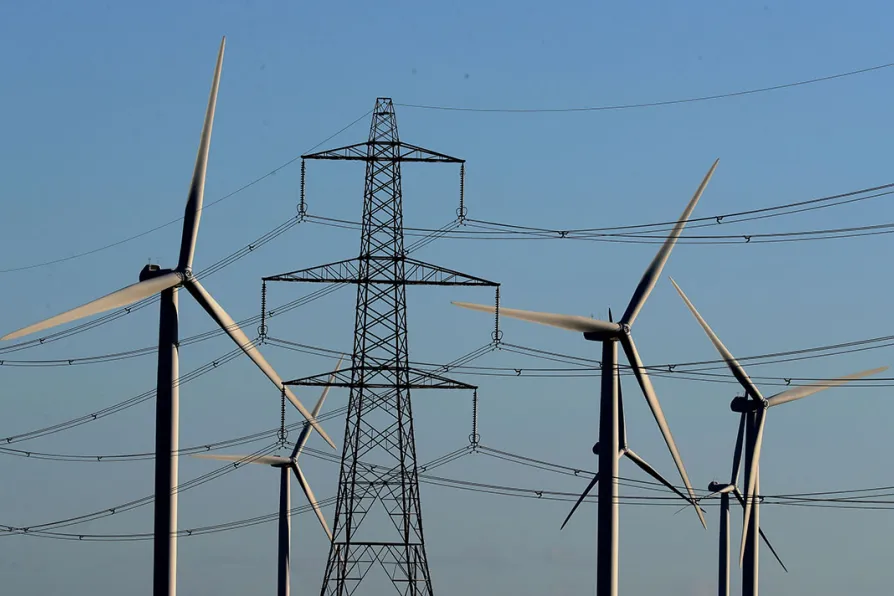 A view of the Little Cheyne Court Wind Farm amongst existing electricity pylons on the Romney Marsh in Kent





HOUSEHOLDS need support now, campaigners urged today as the government unveiled plans to weaken the link between global gas market prices and the cost of British electricity.
Energy Security and Net Zero Secretary Ed Miliband announced the plan, claiming the “era of fossil fuel security is over,” and said current measures were not enough on their own.
Chancellor Rachel Reeves will hike the government’s windfall tax on low-carbon electricity generators from 45 per cent to 55 per cent to raise funds that will be used to support consumers in the short term.
The so-called electricity generator levy was introduced in 2022 to target excess profits from nuclear, biomass and renewable energy projects built before 2017.
The government is also proposing a voluntary move by these “legacy” clean power generators onto fixed-price contracts to help protect consumers from volatile prices.
Mr Miliband vowed to “double down, not back down” on the transition to clean energy.
He said the lesson of the “second fossil fuel shock in less than five years” is “clear,” adding: “For Britain and so many other countries, clean energy is now the only route to financial security, energy security and indeed national security.”
Prime Minister Sir Keir Starmer said: “We need to get off the fossil fuel roller coaster — this will make energy bills more stable and take the pressure off family budgets.”
End Fuel Poverty Coalition co-ordinator Simon Francis said that every spike in global gas markets “feeds directly into household energy costs, and people in fuel poverty often pay the heaviest price.”
He said moves to get energy efficiency measures into homes and plans to delink gas from electricity bills cannot come soon enough.
“But until these reforms take effect, it’s clear that households will also need support with their energy costs,” he said.
“The households most exposed to that increase need support now, not just long-term structural change.
“That means help for those on low incomes, in poorly insulated homes, or relying on heating oil and [liquefied petroleum gas] outside the price cap.”
The announcement comes as consumers face high petrol prices and looming energy bill rises from July, because gas sets the wholesale price of power around 60 per cent of the time, despite supplying a decreasing share of power.
