TUC president and POA leader STEVE GILLAN speaks to Ben Chacko on the eve of Congress 2026


 Latest editorial
Strike at the museum
By Henry Fowler, co-founder of Strike Map
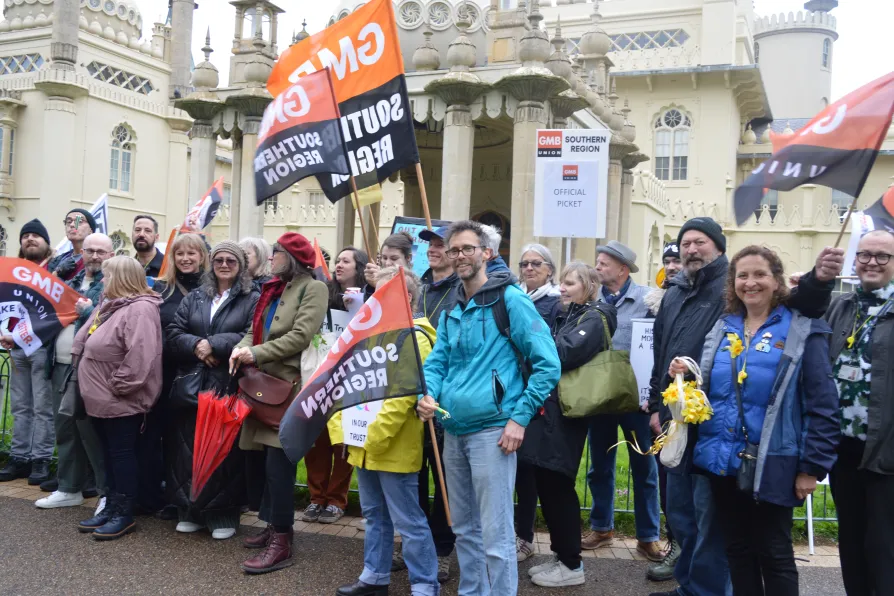 Photo: Henry Fowler

DOUG NICHOLLS welcomes a turning point at this year’s Congress, where many motions call for a co-ordinated plan to revive British industry, a perspective outlined in his new book
HOPE VIRGO of campaign Dump the Scales warns MPs voting today they should be alert to the threat legalised assisted death poses to people with eating disorders
The Together Alliance is hosting two summits, North and South, to build power and plan action against the scourge of racism peddled by the right. DANIEL KEBEDE urges mass participation
The drift toward militarisation in Europe is not inevitable, left-wing and peace movements can preserve sovereignty and prevent war, says DÁIRE HUGHES MP
Whatever differences exist among international sympathisers of the Bolivarian revolution about its current trajectory, they should unite against the imperialist power that is the source of an enforced retreat, argues ROGER D HARRIS
Trade unions need to step up and force a turn in the policies of the labour movement to effectively confront the far-right threat, argues NICK WRIGHT





WE’LL admit it: our headline is a bit misleading.
There are multiple strikes happening across our museums right now.
Workers are pushing back against worsening pay and conditions, while senior figures in the sector continue to take home big salaries.
This matters. Protecting workers matters. Protecting the history and culture of workers matters too.
One of the most significant ongoing disputes is at the National Coal Mining Museum of England (NCMME), where workers — many of them former miners from the 1984-85 dispute — have now been on strike for 238 days (continuous), making it the longest-running strike in the charity and third sector.
These workers are fighting not just for themselves, but for the preservation of a history that continues to shape the labour movement today.
Their struggle has drawn support from trade unions, MPs, and Unison’s new general secretary, Andrea Egan.
But NCMME is not alone.
Around 240 miles south, workers at Brighton & Hove Museums are also taking action. In contrast, this dispute is unfolding in the shadow of the Royal Pavilion, yet the issues are all too familiar.
Workers there have already staged two one-day strikes after the trust that runs the city’s museum services threatened to remove staff from National Joint Council (NJC, the body that negotiates pay and conditions for local government workers) terms and impose inferior contracts.
Many workers we spoke to on lively and determined picket lines had trusted earlier assurances from the trust that their conditions would be protected.
For many, this is their first time taking industrial action after years — often decades — of service.
As the dispute escalates, Unison is balloting members to join this action alongside GMB, increasing pressure on both the trust and Brighton & Hove City Council to step back from these proposals.
Connecting these struggles is crucial — and it’s something we prioritise at Strike Map.
When we visited the Brighton picket line at Preston Manor early this month (part of Brighton Museums), we filmed a powerful message of solidarity from Brighton workers to those striking at NCMME.
In turn, the NCMME strikers responded in kind. This solidarity — across workplaces, unions and regions — is powerful, and it’s something we must continue to build.
Both disputes also highlight a deeper issue. Like many cultural, historical and community spaces, these museums were once directly run by local councils as public services.
Increasingly, they’ve been shifted into the hands of semi-independent “charitable trusts” — often operating at arm’s length, sometimes still involving councillors and backed by council (and central government) money, but with reduced public accountability.
This model doesn’t just weaken democratic oversight. It raises serious questions about financial stability, working conditions and whether these institutions are still being run in the public interest.
In both Wakefield and Brighton & Hove, Labour-run councils sit closest to these disputes. Across the country, councils of all political stripes are presiding over cuts, restructures and attacks on workers.
With local elections approaching, there is little immediate indication that this trajectory will change. Predictions suggest significant gains for Reform UK, which could see them controlling a large number of councils — potentially making them a major employer in local government.
What that could mean for workers, public services and the preservation and promotion of working-class history/culture is an open question — but it adds urgency to the fights happening now.
These disputes are not just about pay and conditions. They are about defending public services, safeguarding our shared history, and resisting the continued erosion of local government after more than a decade of austerity.
That’s why it matters that the General Strike 100 partnership — a coalition marking the centenary of the 1926 General Strike — has removed NCMME from its programme.
It’s a clear recognition that you cannot celebrate the history of workers’ struggles while undermining the workers’ struggles of today.
Across the country, as councils push through further cuts — amid Westminster’s ongoing failure to restore funding and invest in local government — and unions and community groups fight back, the defence of local services remains a central battleground, both now and beyond the May elections.
In Brighton, proposed cuts have already prompted calls from the local trades council for a “people’s budget,” while recent demonstrations against library closures underline that this struggle extends well beyond museums.
With the cost-of-living crisis set to deepen, workers are increasingly unwilling to accept pay deals that fail to keep pace with inflation.
That basic demand — fair pay in the face of rising costs, especially while senior leaders’ salaries remain protected or even increase — will continue to drive disputes in the months ahead.
Workers make history. We know that, especially in this anniversary year. But history is also made through solidarity — through collective action, co-ordination and support for those on strike.
We’ll continue to stand with the workers in these museum disputes.
We urge others to do the same: share these struggles, visit picket lines and support hardship funds wherever possible.
As one striker’s sign outside the Royal Pavilion put it this week:
“History is more than a building.”
Find and visit your nearest picket via strikemap.org.
