

 Latest editorial
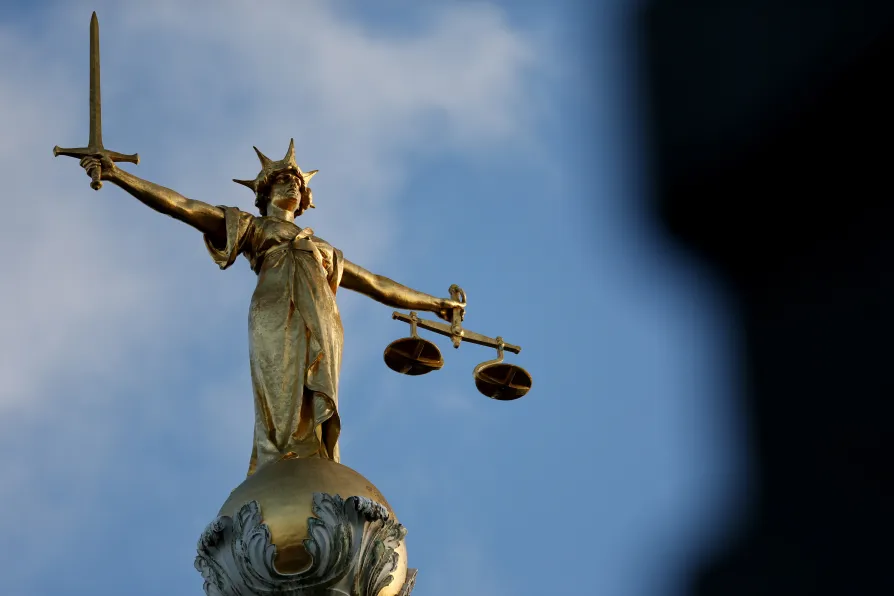 FW Pomeroy's Statue of Justice stands atop the Central Criminal Court building, Old Bailey, London





THE conviction of Palestine Solidarity and Stop the War leaders Ben Jamal and Chris Nineham is a perfect example of the way in which Establishment values underpin the functioning of the state, its coercive apparatus — the police, and the Metropolitan Police in particular — and, as clearly demonstrated today, the judicial system.
Last year’s January 18 protest was one in a series of Palestine solidarity demonstrations in response to the Gaza genocide. By and large they passed without public order incidents and the police, no doubt conscious of the huge public support for the issue, proved careful and courteous in dealing with both organisers and participants.
In this particular case, however, a different mood developed. The police and intelligence organisations know full well — through long experience and with excellent sources of information — that the solidarity movement is in the business of shifting public opinion, not causing disorder.
The charitable will put the police conduct on the day down to incompetence and confusion. The less charitable to conscious design.
Let the legal representatives of the defendants and their organisations speak to the judicial bias exhibited by the court and let us go beyond the surface appearances of bourgeois justice to see how these parts of the system work together.
At the heart of the system of mystification is the BBC. Bear in mind that is was the decision of the police to prevent protesters from assembling near Broadcasting House — and marching from and to it — that set in train the events that led to the bungled ambiguity of police instructions that itself created the conditions for the arrest of the two.
It can be a routine police tactic, invariably acting on the desires of whoever runs the Home Office, to create the most complicated and difficult conditions for people exercising their right to assemble, to speak out and to protest, if political authority so decides.
Where an issue is popularly supported, the prudent response by those acting for the Establishment is to keep things cool. In this case it appears that, by accident or design, this default failed.
It was a former Commissioner of the Metropolitan Police, now disparaged even among police officers themselves, who coined the phrase “symbolic locations” to identify places, invariably where Establishment values might be contested, to be the focus of police surveillance and the subject of a more muscular policing style than is normally deployed.
We, of course, can identify locations symbolic of unjustly constituted power and illegitimate authority. These are places where power is exercised and from which control imposed.
The British Broadcasting Corporation — motto “Nation shall speak peace unto Nation” — is one such. It dare not speak truthfully even to its own nation.
There are times when the BBC has failed to report the assembly, outside its own building, of thousands of demonstrators and it exercises this wilful blindness especially where a protest against wars on other nations, in which Britain is complicit, is under way.
In fact the police injunction preventing demonstrators from assembling near the BBC seems hardly necessary given that it is unlikely to be reported.
It is probable, as evidenced by police data and the digital record, that the pressure the police were under from several Establishment quarters to disallow the protest may have influenced operational decisions and created the ambiguity. It is also possible that it was a deliberate provocation.
What is not in doubt is the dangerous precedent now set. This dovetails neatly with the increased coercive powers of the state now in hand.
Our hard-won freedoms are under serious threat and the labour movement needs to make this cause its own.
