Committee for the Defence of the Iranian People’s Rights general secretary GAWAIN LITTLE discusses the impact of the US-Israeli war on the Iranian people and economy


 Latest editorial

Compassion out of the window as government escalates sanctions regime
DYLAN MURPHY looks at how Labour is breaking its pledge to protect the disabled and vulnerable
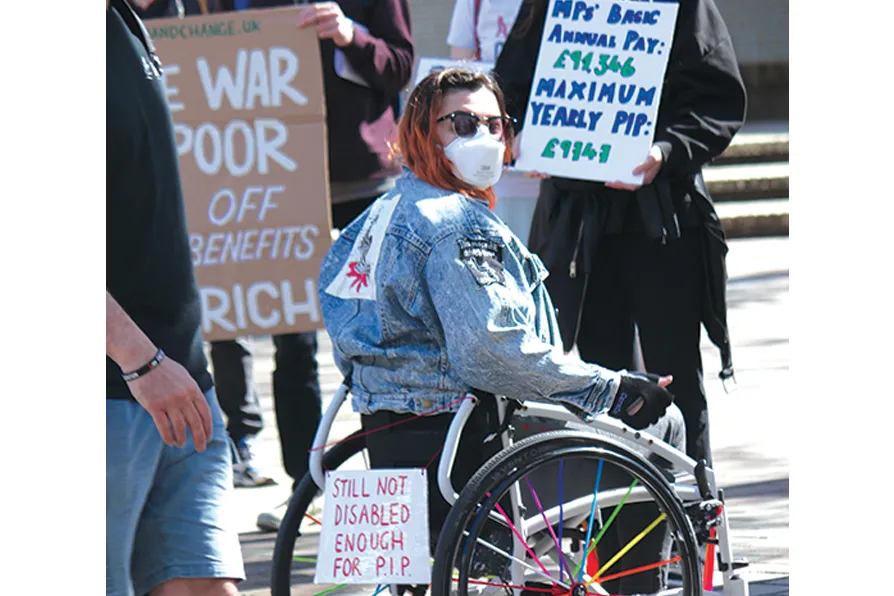 STARK REALITIES: Crips Against Cuts Portsmouth protest, in April 2025, as benefits applications are bureaucratic and often unfairly denied / Pic: Tim Sheerman-Chase/CC

Capitalism has extracted itself from crisis before, argues PRABHAT PATNAIK – but through methods no longer available. So it is turning to authoritarianism, militarism and neocolonialism
The five young men killed in the A66 crash were responsible for a devastating tragedy — but the crash should force us to ask difficult questions about wider society, argues RENATA MEDEIROS MIRRA
Britain funds the policing of black culture 16 times better than the culture itself. The Diamond Jubilee is the moment to end that, argues CLAUDIA WEBBE
Despite Andy Burnham’s declaration defending the continued partition of the island, all major international and internal trends are converging to make Irish reunification inevitable
Humans are part of the ‘animal kingdom’ – and of nature in general – but also distinct from it and labour (work) is part of what makes us unique, declared Engels. His insights 150 years ago into how our species came to be and how we differ from the rest of nature, are as important today as they were then, says the MARX MEMORIAL LIBRARY





A GOVERNMENT that came to power on a pledge to protect the disabled and vulnerable is now overseeing a significant rise in benefit sanctions.
As a disabled claimant myself, I find these figures deeply worrying. They represent not just statistics, but a betrayal of trust and a failure of compassion from a government that promised a fairer, more supportive social security system. The fear that I, and many others in my position, feel is very real.
The latest quarterly statistics from the Department for Work and Pensions (DWP) paint a grim picture. As of November 2025, the sanction rate for Universal Credit (UC) claimants had risen to 5.9 per cent, an increase over the past year.
With 2.1 million claimants in conditionality regimes where sanctions can be applied, this means approximately 123,900 people were undergoing a sanction in November 2025 alone. In October 2025, 63,000 sanction decisions were made, peaking at 65,000 in January 2025.
This is not just a continuation of previous policy; it is an escalation. Before Labour took office on July 5 2024, the previous high for monthly sanctions was 57,276 in January 2024 under the Conservative government. Labour has now well exceeded this figure, reaching 65,000 in January 2025.
Labour was elected partly on the promise of doing better, of being more compassionate, of protecting the vulnerable. Instead, it has surpassed even the Tory record for sanctions. This is a betrayal of the manifesto promises that got Labour into power.
A staggering 90 per cent of all sanctions in the last year were for “failure to attend or participate in a mandatory interview.”
For many disabled people, attending a Jobcentre appointment is not a simple matter. Someone with a physical disability may struggle with inaccessible public transport. A person with agoraphobia or severe anxiety may find the journey overwhelming. A fluctuating condition means a person may be well enough to agree to an appointment one day, but too unwell to attend on the day itself.
The current system makes little allowance for these realities. Instead of support and understanding, it offers punishment.
What makes this even more troubling is the severity and duration of these sanctions. According to the latest DWP statistics, there were 26,000 completed sanctions lasting between four and 13 weeks, and 2,800 sanctions lasting over 26 weeks — effectively six months or more.
A six-month sanction means six months without income, six months of choosing between heating and eating, six months of mounting debt and desperation.
This is not modern welfare policy; it is a Victorian attitude towards the “undeserving poor,” dressed up in 21st-century bureaucratic language. It reflects a punitive ideology that views poverty as a moral failing rather than a structural problem.
The human cost is catastrophic. The loss of income from a sanction can trigger a spiral into crisis. People are left unable to pay for rent, food, and heating. For those already struggling with a disability or illness, the stress and anxiety of a sanction can have a devastating impact on their mental and physical health.
Most shockingly, Tamara Jade Logon, a 28-year-old mum, died under this Labour government’s watch. She took her own life on May 20 2025, just weeks after the DWP incorrectly withdrew her enhanced Personal Independence Payment (PIP) allowance and communicated this decision by standard letter, despite her known vulnerabilities.
The coroner’s report concluded that this incorrect decision and the method of communication “significantly contributed” to her declining mental health and her death.
The rising sanction figures under the current Labour government suggest that the lessons from this and other tragic deaths have not been learned. The mechanisms of harm — the bureaucratic indifference, the punitive measures, the failure to recognise vulnerability — remain firmly in place.
The fear this instills among working-class claimants cannot be overstated. When a government that promised to be our champion continues to wield a weapon that has been proven to cause immense harm, it creates a climate of anxiety and mistrust.
We are left to wonder if we will be the next statistic, the next person to fall through the cracks of a system that was supposed to be our safety net.
The government’s current use of punitive benefit sanctions needs immediate action. The following three measures are a good place to start.
1. A Moratorium on Sanctions for Disabled and Vulnerable Claimants: The government should immediately halt all sanctions for claimants with documented disabilities, long-term health conditions, or mental health issues. Instead, a supportive and person-centred approach should be adopted, focusing on understanding and addressing the barriers these individuals face.
2. Investment in Specialist Support: The money saved from administering the sanctions regime should be reinvested into providing specialist employment support. This should include one-to-one support from trained advisors who understand the challenges faced by disabled people, funding for tailored training and education, and support for employers to create more inclusive workplaces.
3. A Fundamental Review of Conditionality: The entire system of conditionality needs to be reviewed. The focus should shift from monitoring and compliance to engagement and support. Mandatory appointments should be replaced with voluntary meetings that claimants can schedule at a time and in a format that works for them.
This government was elected on a promise of change. It pledged to create a social security system that treats people with dignity and respect. The rising tide of sanctions is a clear betrayal of that promise. It is not too late to change course.
We urge the government to listen to the voices of disabled people, to learn the lessons from past tragedies, and to build a system that offers a hand up, not a push down. The health, and indeed the lives, of some of the most vulnerable people in our society depend on it.
We are not asking for special treatment; we are asking for a system that is fair, compassionate, and just. We are asking for a government that keeps its promises.
Dylan Murphy is a member of Unite Community and DPAC (Stop the Disability Benefit Cuts!).
