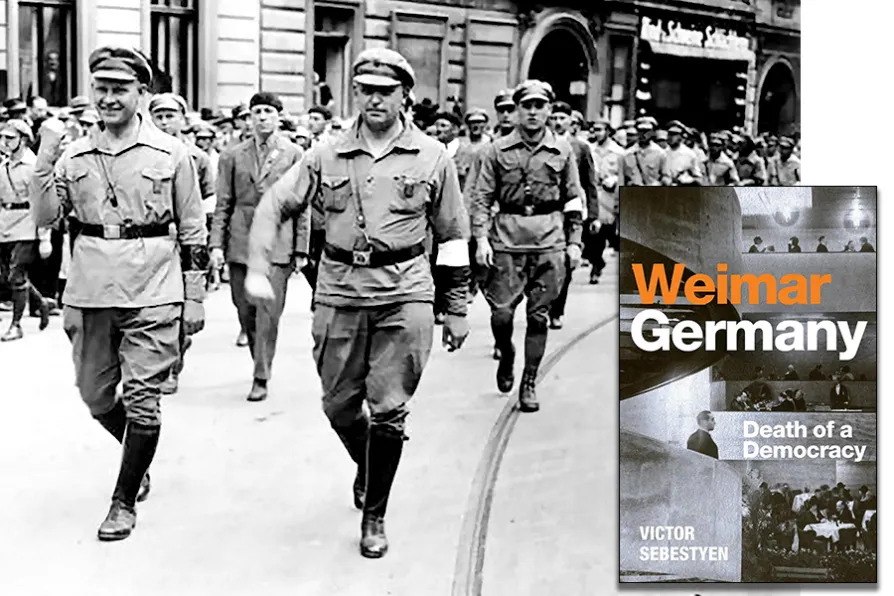
GORDON PARSONS recommends an entertaining account of the years between Germany’s defeat in WWI and Hitler’s seizure of power



Ninety years on
ROB HARGREAVES is moved by the way that memories of the Spanish civil war still stir our passions
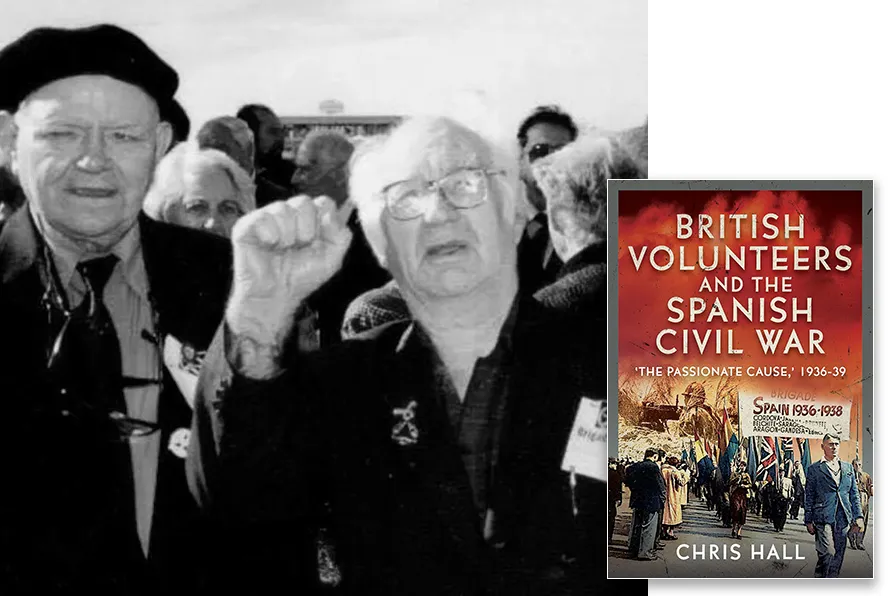
 British International Brigaders' return to Spain, 1996 [Pic: Courtesy of International Brigades Memorial Trust]
MIGUEL YOSHIDA explains the evolution and influence of the Cuban Casa De Las Americas in joining culture to the revolutionary struggle
ANDY HEDGECOCK is charmed by a skilful adaptation of Tove Jansson’s lyrical portrait of three generations of a family, overcoming grief
ALEX HALL treads warily through a messy, dialectical struggle fought in the mundane machinery of driving licences, criminal law, and birth registries
MICHAL BONCZA, FIONA O’CONNOR, JAMES WALSH and ANGUS REID review Atlas of Disappearance, Love Me Tender, Bouchra, and This Tempting Madness
Flitting between myth and the modern world, Medusa is determined to steer clear of human affairs. When her resolve crumbles, the result is petrifying in every sense





British Volunteers and the Spanish Civil War: The Passionate Cause 1936-39
Chris Hall, Pen and Sword, £29.99
FIRST, some stats.
On the first day of the battle of Jarama, in February 1937, the British Battalion of the 15th International Brigade numbered more than 600 men; by the end of the second day they were down to 275. In July that year, a reformed battalion put 600 men into the attack on Brunete, and after 10 days they were reduced to barely 200. Two weeks later, as the battle to save Madrid dragged on, only 42 men were left in the ranks. Political Commissar Wally Tapsell claimed that five out of every six volunteers had been either killed or wounded.
These figures are approximate because the fog of war that descended on Spain between 1936 and 1939 has still not entirely dispelled. The passions it stirred still resonate, but in his new book, published the 90th anniversary of the outbreak of the war, Chris Hall has succeeded masterfully in extracting a broad consensus of facts, while recording the unique stories of those who played their part in a mighty and inspirational struggle.
Yes, the British and Irish volunteers had their share of bad eggs, drunks and deserters, but overall their courage, fighting against incredible odds in what Hall rightly calls the first campaign of the war against fascism is awesome, and undeniable.
Our digital age has enabled great swathes of archive material to be mined from the keyboard. As a librarian in Manchester, he has also put in a hell of a shift in libraries and archives. He was also just in time to interview the last of the Brigaders, which provides his account with authority. Hall says this is the book he has always wanted to write, and we should be glad he did.
The betrayal of Spain by Perfidious Albion is amply covered by details which have gradually emerged over the years. The infamous flight piloted by two English adventurers, that took Franco from the Canaries to Morocco, is traced back to a conspiracy hatched in London between a right-wing English publisher and Franco’s man in London, with likely links to MI6. The cynical hypocrisy of Anglo-French “non-intervention” which allowed Hitler and Mussolini to arm Franco, contrasts with the selfless idealism of most of the Brigaders.
Hall has dug out memoirs, diary notes and letters from those who took part. Pieces about survivors who went on to become well-known after the war — trade union leader Jack Jones, and Labour MP Bob Edwards - appear alongside those of men and women who never achieved national fame, but who have become legends among the faithful - Sam Wild, Maurice Levine, Bob Cooney, Peter Kerrigan, amongst the Brigaders themselves.
There is, too, a focus on some of the truly amazing women who went to Spain. Nurse Madge Addy (whose biography was written by Hall) became a spy for the Allies. Welsh nurse Margaret Powell, recalls her bloody experiences in casualty clearing stations: “I didn’t know who to let die first”.
Nan Green, a brilliant and brave hospital administrator was recruited to give blood in direct transfusions lying next to wounded soldiers. Her husband, George, was killed in the Brigade’s last battle, on the Ebro. Looking back, she sums up the undiluted moral certainty that inspired those who went to Spain: “We had the privilege of being on the high road of history.” Irish Quaker Mary Elmes was among those who carried out relief work with refugees dumped on the beaches of southern France as they fled from Franco’s avenging forces at the end of the war.
The wide span of Hall’s research is impressive. He rightly gives space to to the volunteer doctors, nurses and ambulance drivers who supported the Brigaders, and to the efforts of sympathisers in Britain who raised money for the relief of Spanish civilians. As with the volunteers themselves, they were overwhelmingly working class, but support for the Republic cut across class lines, and even included a duchess. Doctors such as Douglas Jolly pioneered battlefield surgery which saved many lives in the Second World.
Even aficionados of the Spanish civil War will find new and interesting material: for example, about the maverick ex-RAF pilots, with little or no political allegiance, who bravely took to the air for the Republic in out of date planes to combat modern aircraft supplied by Hitler and Mussolini. Or, at Calaceite, when Italians on Franco’s side interceded with Nationalist troops to prevent British prisoners being shot. Were their actions humanitarian, or cynically intended to promote a future exchange of Italian prisoners captured by the Republic?
Sometimes we could do with knowing more details of individuals or incidents, and occasionally, perhaps, a little less. Yet this is, above all, the go-to reference work for anyone coming fresh to the Spanish civil war and the British International Brigades.
Surviving International Brigaders returned home to face either the indifference of the majority of their countrymen, or even discrimination and persecution. As US journalist Martha Gelhorn said at the time: “They deserved our thanks and respect and got neither.” Given today’s world of bully-boy power-brokers, all those who resisted tyranny in the cause of the Spanish Republic deserve our thanks more than ever.
For details of commemorative events marking the 90th anniversary see: international-brigades.org.uk
