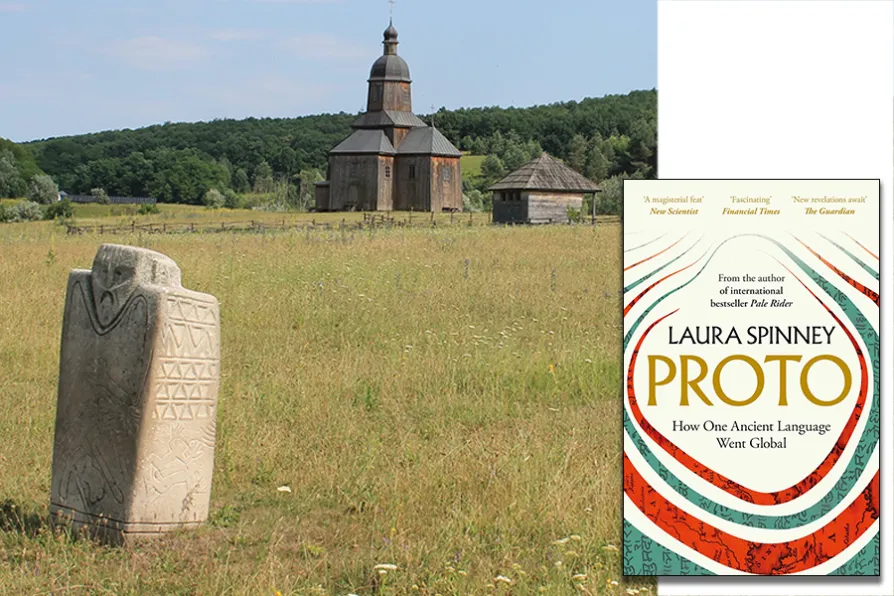
KEN COCKBURN traces the one original language – that of the Yamnaya pastoral nomads – from which all European and Indian languages derive


 Latest editorial
Bitter-sweet meets
MARY CONWAY welcomes a warm, if microscopic study of an Indian and a Pakistani, both culturally adrift in Britain
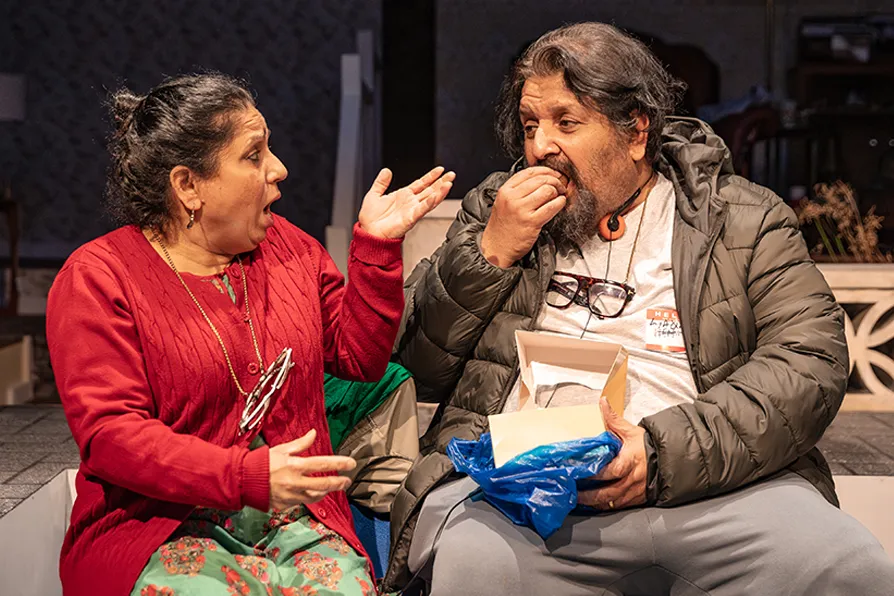 TENDERNESS: Shobu Kapoor as Hema and Rehan Sheikh as Liaquat in Sweetmeats [Pic: Craig Fuller]
PAUL DONOVAN is fascinated by the debunking of the iconic British war hero
ALEX HALL recommends a searing panorama of our global predicament
Comics are not just superheroes and spandex – it can be public art, telling public stories, suggests HARRIET EARLE
ALEXEI SAYLE speaks to Angus Reid about a lifetime of protest, how to hone political art – and what to do now
The bard serenades the Diggers of Wigan and their festive followers





Sweetmeats
Bush Theatre, London
★★★☆☆
THE theme of Karim Khan’s Sweetmeats, now showing at the Bush, settles on the lives of Hema and Liaquat, both in their 60s. She is of Indian origin; he Pakistani. Both live in solitude in England while consciously aging. Both suffer from deteriorating health and are culturally adrift. At a workshop designed to instil healthy living habits and combat diabetes, they meet and connect: she mostly berating him; he through a warmer, gentler response.
What distinguishes the play is its tender and kindly view of two people who may have any number of counterparts across the country but who are paid little or no attention in the media, the arts, or even by fellow citizens. Developed and co-produced by Tara Theatre, the authenticity of the characters is no surprise. The company’s purpose over half a century has been to develop drama through a south Asian lens, and to challenge the lack of diversity in our theatre landscape.
The play focuses on simple conversation rather than on sweeping dramatic themes, and immerses us in the cultural context of the pair. Natasha Kathi-Chandra’s production, with its splendid Punjabi music composed by Amrit Kaur Lohia, unequivocally pinpoints the specific detail of their lives. And the scene where Hema teaches Liaquat to cook – using vegetables foraged from his simple garden — is a most memorable sequence and almost emulates a Bollywood movie for style and art form.
The characters develop so microscopically that the two-and-a-half-hour running time seems long for an audience who get the picture early and then see simple repetition. Shobu Kapoor captures the heart of Hema but is required to deliver too much in one slightly irritable tone. Rehan Sheikh has easy, warm audience rapport and shows us much of the inner man. But, while we grow fonder of them as a pair, we find ourselves waiting for more urgent or more dangerous moments.
Aldo Vazquez has evidently been given free rein with the set which is remarkable for its extensive range and naturalism. Two living spaces, a classroom, a bus stop with shiny red bench, a working kitchen and a garden together make for an ingenious construct in their own right. The set’s domination of the space, though, tends to compete with the actors for attention. When so much close observation of each character is essential to imbibe the play’s dramatic purpose, distraction should be minimal.
However, when Liaquat’s kitchen goes up in flames, it’s s a sensational moment, even if incidental to the main thrust of the play.
This is a heartfelt piece, not least because of the shared sense of loss in the characters. As Hema speaks her perfect Hindi and tells Liaquat how she always meant to go back to India, we feel for them both: trapped between cultures and reliant on sweet foods and sensual things to remember who they were.
A sweet, warming tribute.
Runs until March 21. Box office: 020 8743 5050, bushtheatre.co.uk
