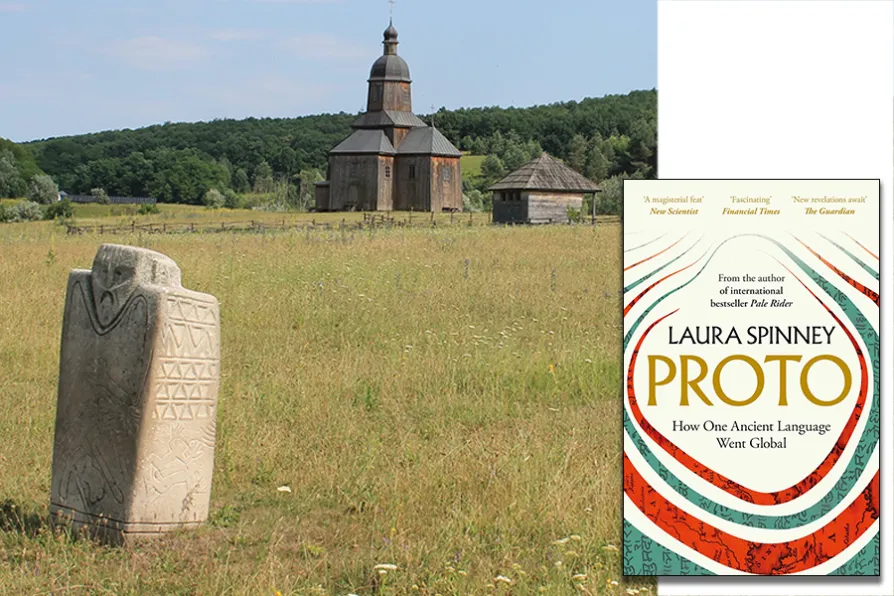
KEN COCKBURN traces the one original language – that of the Yamnaya pastoral nomads – from which all European and Indian languages derive


 Latest editorial
Desolate, but joyfully truthful
MARY CONWAY revels in the macabre waiting game of Strindberg’s forensic dissection of a loveless ruling-class marriage
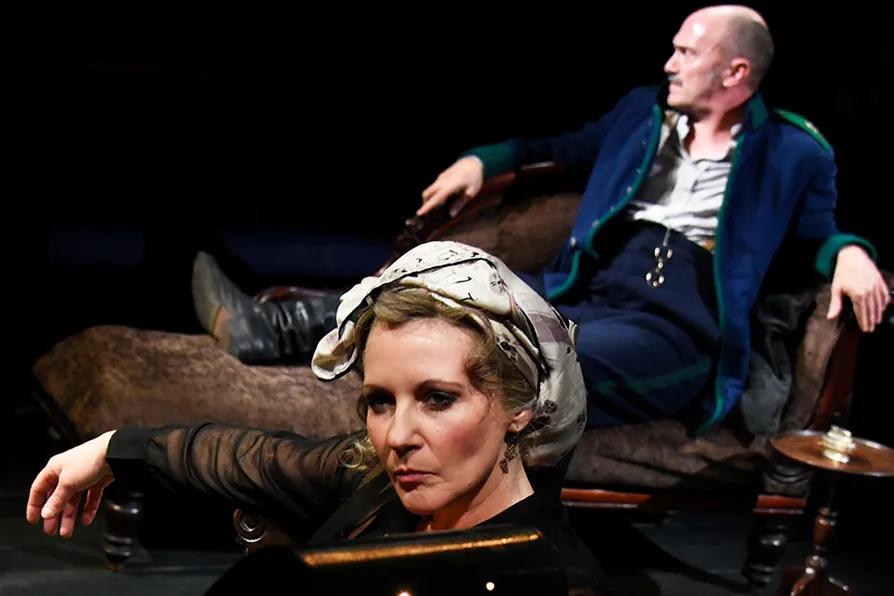 FUTILE EXISTENCE: Lisa Dillon, and Will Keen in Strindberg's Dance of Death [Pic: Nobby Clark]
PAUL DONOVAN is fascinated by the debunking of the iconic British war hero
ALEX HALL recommends a searing panorama of our global predicament
Comics are not just superheroes and spandex – it can be public art, telling public stories, suggests HARRIET EARLE
ALEXEI SAYLE speaks to Angus Reid about a lifetime of protest, how to hone political art – and what to do now
The bard serenades the Diggers of Wigan and their festive followers





Dance of Death
Orange Tree Theatre, London
⭑⭑⭑⭑☆
THE Orange Tree theatre boasts the kind of energy and confidence that pulls in discerning audiences in droves. With its stream of top-class actors, privileged, up-close viewing and inspired choice of material, it sets the bar high. And Dance of Death — as its second Strindberg offering in under six months — somehow epitomises the theatre’s unswerving intellectual and artistic aspirations.
Not that this is a play of effortless mass appeal; rather it represents a once revolutionary step in the theatrical canon and, while hugely comic, microscopically explores the human condition with unnerving candour.
Written in 1900, but updated here to 1918, the play immerses us in the intimate marital life of Edgar and Alice after 25 years together. Living on a quarantined island during the Spanish flu pandemic, the couple have no friends, seem to hate one another and communicate only through a stream of repetitive venom.
Two of their children have died; the other two, and their occasional servants, have abandoned ship; they have no money, and both are bitterly resentful: Alice because she sacrificed a promising acting career for marriage, and Edgar whose life in the army has denied him promotion.
At the heart of this gruelling misery is the ghastly spectre of death that looms inexorably before the pair at all times. It’s a desolate story but joyfully truthful, with a comedic style expertly embraced by supreme director Richard Eyre, using his own translated version of the text.
Much hangs on the two astonishing central performances which — seen from such close quarters — never let us drift. Will Keen as Edgar twitches and grimaces his way through the drama, his contorted expressions bearing out the line: “His eyes are like the moths that hover over graves.” His military bearing engulfs him, while his hatred of the world and all that’s in it brings a delightfully unfettered foretaste of Basil Fawlty and the like.
Lisa Dillon as Alice, meanwhile, initially pleading the case of the put-upon woman, soon gives as good as she gets, assertively seducing their one mild-mannered visitor (Geoffrey Streatfeild) with the revealing cry: “There are rough women who prefer shy men!” It’s a scorching rendition of the role.
Deborah Andrews’ costumes are splendid, Alice’s servile headscarf arranged as a fetching headdress being particularly memorable. And John Leonard’s sound effects of storms and thunderous waves blasting through doors that won’t stay closed complete the experience.
If there is a gripe, it is that Will Keen brings so much original acting technique to bear that we often feel acted at, rather than enfolded in, the human pathos of it all. And this imbalance leaves Geoffrey Streatfeild’s visitor Kurt somewhat colourless in comparison.
But overall it’s a fine piece of theatre with echoes of Waiting for Godot: the characters starkly imprisoned in a relentlessly repetitive, painfully concrete, absurdly futile existence, resolvable only by death.
It’s a chilling look at life, but through a masterly theatrical lens that captures the ultimate comedy of living. The Orange Tree does it again!
Runs until March 7. Box office: (020) 8940-3633, orangetreetheatre.co.uk.
