


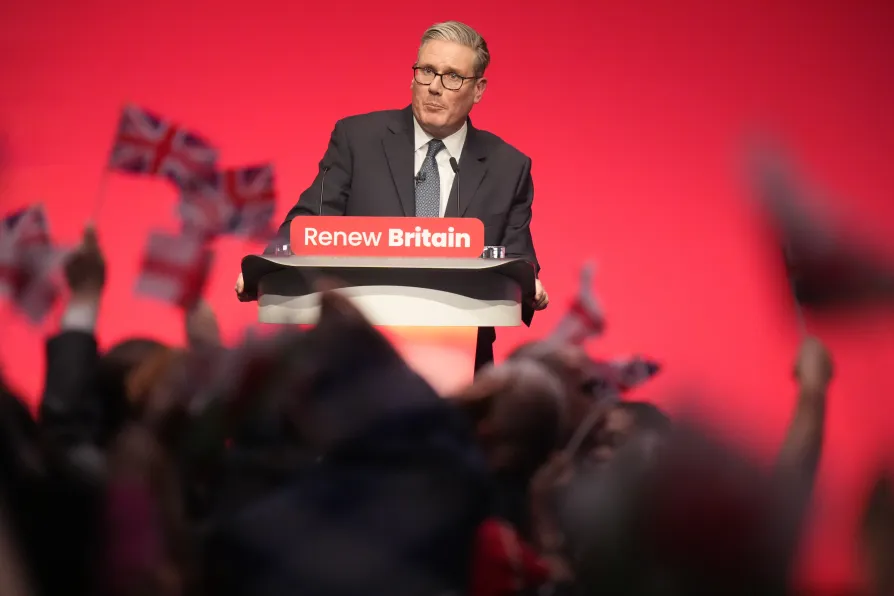
 Prime Minister Keir Starmer delivers his keynote speech during the Labour Party Conference at the ACC Liverpool, September 30, 2025





DEAD man walking is the inescapable image that Keir Starmer leaves in the minds of every sentient observer of the Westminster scene. And when a TV darts tournament audience breaks out into a spontaneous chant of Keir Starmer is a “merchant banker” you know this judgement has been priced into the commonsense understanding of the millions who will shape politics for the next decade.
The skids are under a Prime Minister who gained the leadership of the Labour Party by a bare-faced con trick, by donning, for the period of Labour’s leadership election, the policies of the man who could stand before an ecstatic Glastonbury crowd chanting his name when they assumed he would be Labour’s next prime minister.
Labour’s existential crisis is, perhaps, overblown. Sure it shares in the general crisis of what we still describe as a “social democracy” that on a European level is in meltdown.
But Labour still retains a measure of support both in working-class communities and among sections of a middle strata for whom the systemic crises of capitalism has sharpened their critical faculties and heightened fears for both their futures and those of their children.
And when compared to its continental sister parties Labour still retains the formal adherence of the organised trade union movement. It is worth restating these facts even if their provisional nature is more apparent daily.
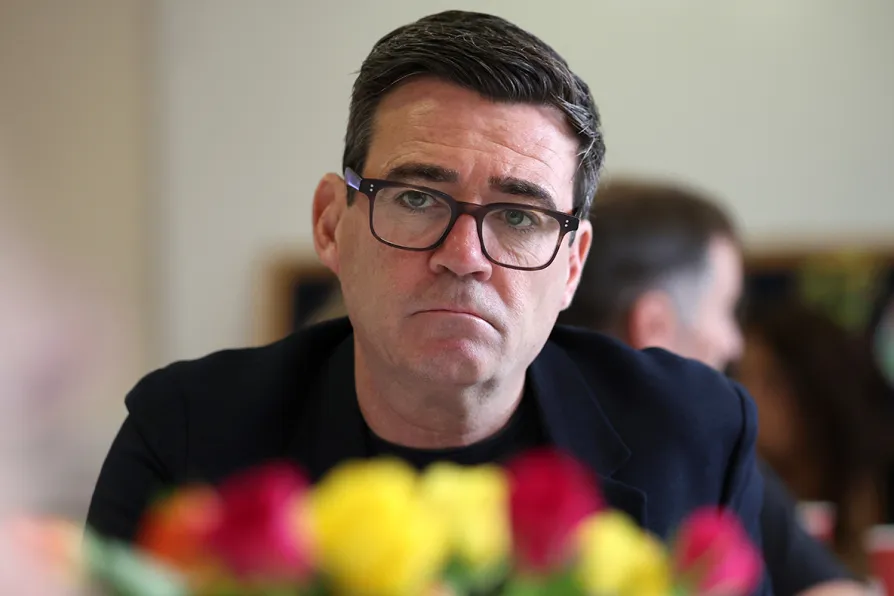
It is in this context that much is now being invested in Andy Burnham. This is a man who abandoned his parliamentary seat to become Manchester’s mayor on the reasonable grounds that he would have more real power an any MP or even minister.
Within the fairly circumscribed limits of his power the general consensus is that he has done a decent job. And careful though he is about offering any hostages to fortune the most developed political idea he has expressed is a preference for the comprehensive principle in the provision of public services.
He can’t evade his responsibility for the acts of the governments in which he served as variously health secretary, in the Home Office, as minister for culture, media and sport, and, until the great crash of 2008 as Gordon Brown’s chief secretary of the Treasury. Thus his political biography imposes limits on illusions people might have about the direction of any cabinet he might head.
But Labour’s crisis is real and the great majority of Labour MPs know what party members and trade unionists feel.
A Labour revival is impossible without a break from neoliberal economic polices and the drive to imperial war that accompanies them.
Even within this neoliberal consensus the Canadian Prime Minister Mark Carney sees the necessity of signalling a modification of the course capitalism’s general crisis has taken in the West. For Labour, the break must be fundamental rather than cosmetic on the Carney model.
It requires the repudiation of the privatisation fetish, a return to public ownership of the commons – mail, rail, water, energy – a break from the marketisation of the NHS and a renewed emphasis on the comprehensive principle that would mark a break from the individualistic culture and moral decay of 21st-century capitalism.
A new domestic policy that attacked the prerogatives of capital and rewarded human labour in the creation of value could open the way to a more general assault on the power of the banks and big business. This would necessarily entail a new foreign policy and the abandonment of both a Trumpian agenda or the equally dangerous drive to war that the new Nato/European Union arms-spending programme entails. It is a big ask.
