

 Latest editorial
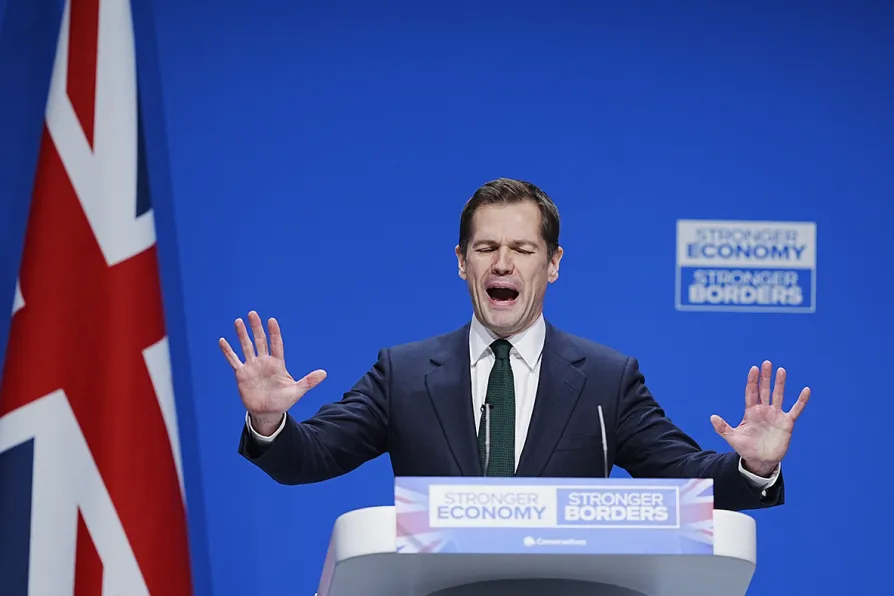 Shadow justice secretary Robert Jenrick delivers a speech during the Conservative Party Conference at the Manchester Central Convention Complex, October 7, 2025





THE dramatic dismissal of Robert Jenrick from his post on the Tory front bench and from the party itself is a landmark in the recalibration and reorganisation of the right in British politics.
It points, far more than the numerous other high-profile defections from the Conservatives to Reform, towards a concentration of significant political forces behind an exceptionally authoritarian and chauvinistic variant of neoliberalism.
The shadow justice secretary may have jumped slightly before he was ready because of Kemi Badenoch’s decisive move but his rightward trajectory was long headed towards destination Farage. The discovery of his draft resignation letter appears to have precipitated her dismissal of what had become a very troublesome princeling.
Jenrick’s growing alignment with Nigel Farage indicates first, that Reform is increasingly seen as the only viable game in town for the hard right and, second, that the party is intensifying its plans to form a government after the next general election.
To plausibly offer itself as a ruling party, Reform needs more experienced politicians who could step into ministerial office. Jenrick, a cynical and unscrupulous opportunist, fits that bill.
Originally a modestly liberal “Cameron Conservative” and a Remainer, he has rebranded himself as an authoritarian xenophobe.
Since losing the 2024 Tory leadership election to Badenoch, his most notable political interventions have been to bemoan the lack of “white faces” he saw during a brief visit to the Handsworth district of Birmingham, and a Conservative conference call for the wholesale sacking of judges he dislikes, to be replaced by those he prefers.
Absurdly ambitious, Jenrick roamed wide over his colleagues’ parliamentary briefs in order to build his profile as the leader of the Tory hard right. It was assumed that he would seek to topple Badenoch after May’s elections if they are as disastrous for the Tories as generally anticipated.
However, the Tory leader has enjoyed a very modest recent recovery in public opinion, and a larger one in her colleagues’ esteem, after a series of combative Commons performances against the hapless Keir Starmer, admittedly no great challenge.
Now Jenrick has taken his personal ambitions to Reform, he may well find himself clashing with Farage, who brooks little dissent and certainly no rivals in the party he owns as well as leads.
The Reform boss is also anxious about his party looking like the Tories 2.0. Given its main calling card presently is a racist campaign against minorities, Jenrick — immigration minister at a time when migrant numbers rose — comes with some baggage, as Reform London mayoral candidate Laila Cunnigham has pointed out.
Just five months ago, Farage himself was describing Jenrick as a “fraud.” But they have since been playing brazen footsie.
Whatever precise configuration may emerge from these shenanigans the underpinning politics are clear — Trumpism UK, a government by and for the plutocracy buttressed by a wholesale attack on democracy and civil liberties and a racist onslaught on migrants and ethnic minorities.
And while the Tories may pat themselves on the back for having purged the putative traitor, a stronger political pole to their right will continue to pull their party in that direction, terminating in a subordinate role in a Farage-led coalition.
That prospect should galvanise Labour MPs to act decisively themselves. The rallying of forces to resist this far-right takeover requires a new leadership for the government.
It is presently rolling the pitch for the Farage gang with its pandering to prejudice and incapacity in addressing the pressing social problems on which the far-right feeds. Changing Labour’s leader is no self-indulgence but the prerequisite for defeating Farage, Jenrick and all they represent.
