


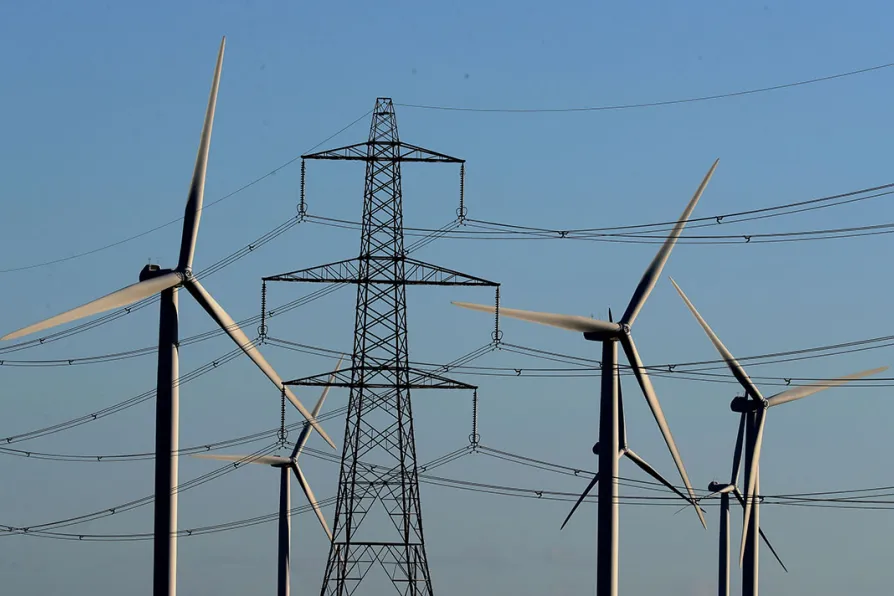
 A view of the Little Cheyne Court Wind Farm amongst existing electricity pylons on the Romney Marsh in Kent

‘Ah the irony:’ Aamer Anwar says he doubts Reform has handed over the names of the far-right thugs who went on the rampage in Glasgow last weekend to the Police





THE government has secured record levels of offshore wind power in its latest renewable energy auction, delivering 8.4 gigawatts of capacity in a move cautiously welcomed by campaigners and unions.
Six new offshore wind projects won contracts, including Berwick Bank in the North Sea, the first new Scottish offshore wind scheme since 2022 and the largest planned project of its kind globally.
Another major project is the first Welsh offshore wind scheme to secure a contract in more than a decade.
Two floating offshore wind projects were also backed.
Developers secured an average strike price of £91 per megawatt hour, or just over £65 in 2012 prices.
The Department for Energy Security and Net Zero said the projects would generate enough electricity to power 12 million homes, unlock £22 billion in private investment and support around 7,000 jobs.
End Fuel Poverty Coalition co-ordinator Simon Francis said the auction results “are exactly the kind of outcome households need after years of volatile bills driven by fossil fuels.”
But he warned that “lower costs on paper must translate into lower bills in reality.”
“Consumers need full transparency on how these contracts will affect prices, clear limits on excess profits across the energy industry and electricity pricing reform so the savings from clean power are properly passed through,” he said.
“If that happens, today’s announcement can be a real step towards ending fuel poverty, not just hitting targets.”
Uplift executive director Tessa Khan said the auction was “entirely necessary” as North Sea gas declines, but said the government must ensure investment delivers strong manufacturing supply chains and unionised jobs.
Greenpeace UK policy director Douglas Parr described it as a “win for climate and billpayers,” but urged for more investment in ports and infrastructure.
Trade unions welcomed the scale of investment but warned job numbers could be overstated.
RMT general secretary Eddie Dempsey said a just transition required secure employment, collective bargaining and retraining for oil and gas workers while GMB national secretary Andy Prendergast said the “litmus test” would be whether promised jobs materialise.
Scottish Energy Secretary Gillian Martin welcomed Scottish projects securing contracts but said limited budgets and “unfair” transmission charges put Scotland at a disadvantage, calling for urgent reform ahead of the next auction round.
