This year’s Venice Biennale marks a major shift in European cultural politics suggests CLARE CAROLIN


 Latest editorial

When a working-class community tells its own story
LUCY BURKE recommends a brilliantly compelling piece of ‘theatre verite’
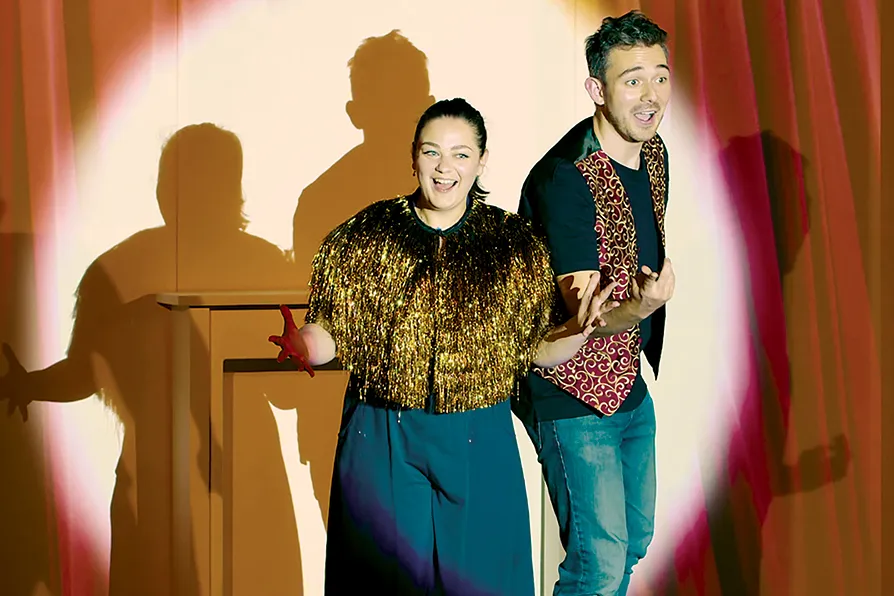 CENSUS IN FULL SWING: Malandra Jacks are Chloe Malandra and Josh Wilkinson / Pic: https://malandrajacks.com/

ANGUS REID applauds the potential of an ambitious show about Gaza, and encourages it to keep its nerve
MATTHEW HAWKINS considers the opening offering at the National Festival of Korean Dance
ANDY HEDGECOCK welcomes an effective and entertaining overview of those who see erroneous ideas as self-evident truths
KENNY MacASKILL welcomes that rare thing: a readable analysis and explanation of the capitalist economy
The world of fake news, where people don’t believe what they are fed, will lead to a demand for authenticity, suggests PAUL DONOVAN





Census
Malandra Jacks/touring
⭑⭑⭑⭑☆
WHAT do we mean when we talk about working-class culture, and who gets to define it?
These questions are at the heart of Census by north Manchester duo Malandra Jacks (Josh Wilkinson and Chloe Malandra), a compelling piece of theatre about place, belonging and working-class culture with deep roots in the community it explores.
Beginning with a bus journey and a funny conversation about their experiences on the 112, 81 and 81A routes and countless bus journeys up and down Moston Lane, to and from Harpurhey.
Unlike many portrayals of working-class culture, the authors (and performers) grew up and still live in the area, and their personal history is part of the story they tell.
Moston and Harpurhey are areas of north Manchester that have been subject to relentless demonisation in the right-wing press since the 2013 BBC3 series People Like Us sent in its production team to construct a negative and stereotyped version of the place as abject, laughable and workshy.
The series reduced a diverse working-class community to a piece of poverty porn, enabling a legacy of mocking, outraged and damaging news reports that have served as ideological justifications for austerity, welfare cuts and an increasingly punitive benefits system that robs people of dignity, hope and a future.
Census takes on this version of Moston and Harpurhey, along with all that is lost in the facts and figures of the official census and the Index of Deprivation – both of which paint a grim picture of poverty and its myriad social impacts.
The play captures the audio-visual testimony of a group of residents including people from recent and historic migrant communities, and from different generations.
There are stories about growing up, loneliness, grief, struggling to get by and people stepping up to help each other. The testimony is woven together with love, care, humour and defiance. Avoiding the usual cliches, it is neither sentimental nor despairing but honest about the challenges we face.
There is a particularly powerful section on social media, the insidious creep of right-wing populism and the appearance of St George flags along Moston Lane.
Listening to young, black Mancunians describe their feelings about the flags as symbols of belonging and not belonging brings home the personal and communal impacts of these displays.
Nearly 60 years ago, Welsh socialist writer and cultural theorist Raymond Williams wrote Culture is Ordinary, an essay which like Census starts on a bus journey and discusses its author’s movement through different communities and ways of thinking about art and culture.
Like Census, it is an endeavour to wrest the definition of culture from those with the most social and economic capital and to argue for its democratisation and transformation.
Making culture “ordinary” for Williams was not to diminish it but to challenge the hierarchies, assumptions and notions of “taste” that exclude and demean most of us. For him, culture was – and is — “ordinary” because it encompasses a “whole way of life.” This means shared meanings, histories, experiences, ways of working and living together.
The particular forms used to capture all this, from the visual arts to literature, theatre and film, should be part of this “ordinariness” rather than expressions of elite social distinction.
Census embodies the spirit of William’s argument, shining a brilliant and honest light on the everyday life of community, and the stories of its members from cradle to grave. It is accessible, smart, funny and provocative without ever losing sight of its grounding in the streets and houses of Moston and Harpurhey.
It is impossible to come away from the show without a sense of hope – something that is in increasingly short supply right now. For this alone Census should be required viewing for every trade unionist, political activist and politician on the left in this country.
The story with which it concludes is about the strength, agency and willingness of people to fight for what matters to them – and it is this energy and refusal to give up, these histories of mutual aid that we must draw upon in the face of a political establishment that looks down and sees only its own tired reflection: self-interest, hatred and division.
Further information vist or Instagram. Confirmed tour dates are February 23 2026; March 5 2026, ; March 12 2026, also expect Pendle and Greater Manchester dates.
Dr Lucy Burke is a researcher at Manchester Met specialising in working-class culture’s definition and representation.
