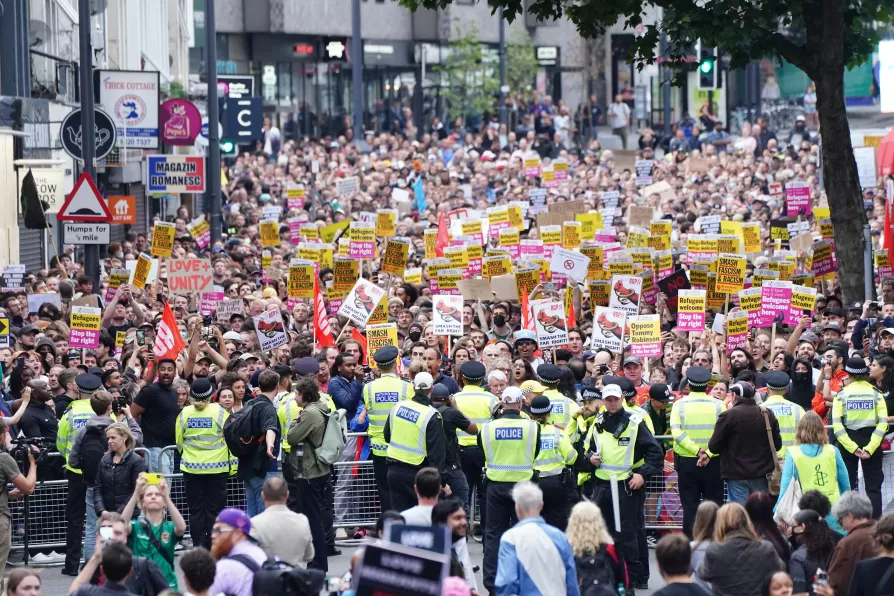
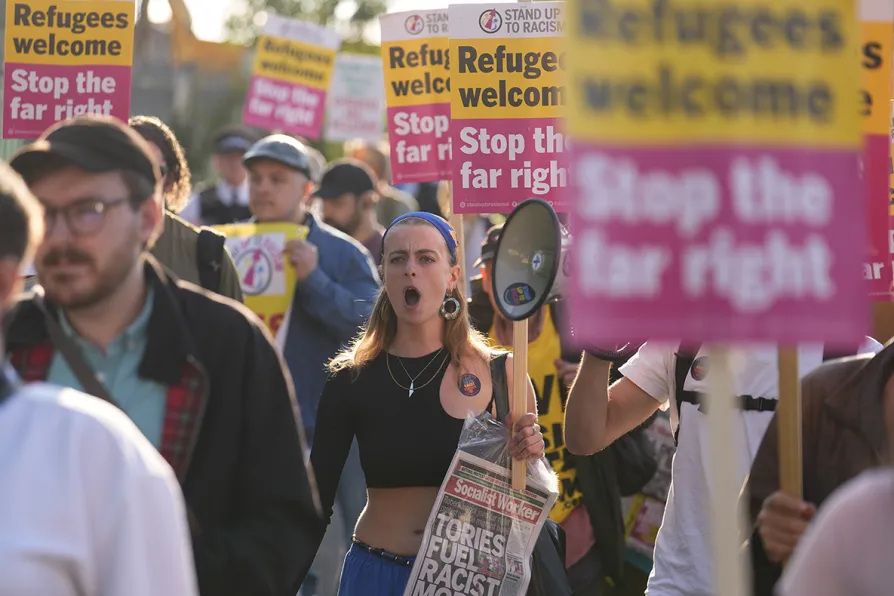
 Counter protesters ahead of an anti-immigration protest in Walthamstow, London, August 7, 2024





MPs ON the home affairs committee have struck a welcome blow against propaganda alleging “two-tier policing” of protest in Britain.
This accusation, common on the lips of right-wing rabble-rousers in and beyond the Tory Party, serves two intertwined purposes.
One is to legitimise race-rioting and violence by terming it “protest,” no doubt over “legitimate concerns.”
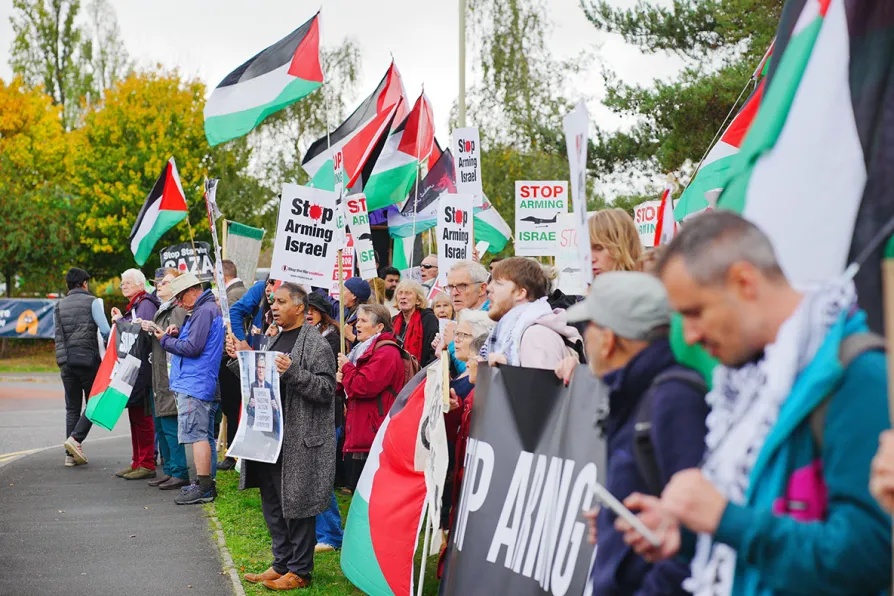
The other is to delegitimise peaceful protest, with the main current target the regular mobilisations for Palestine, by insinuating it is being policed more leniently than these other “protests” that involve smashing the windows of mosques or setting fire to hotels housing refugees.
The committee’s report rightly calls the conflation “disgraceful,” stating: “Those participating in disorder were not policed more strongly because of their supposed political views but because they were throwing missiles, assaulting police officers and committing arson.” Its Conservative chair Dame Karen Bradley adds: “Organised disorder is rightly met with a robust response; any implied equivalence with planned non-violent protests is simply wrong.”
This is a useful intervention because of ongoing efforts to obstruct “planned non-violent protests” by the coalition of groups behind the marches for an end to the war in Gaza and the Israeli occupation of Palestine, based on entirely bogus claims that they constitute “disorder” or risk disrupting worship at synagogues.
This is not an issue addressed by the report. Its focus is on defending police from accusations that they were excessively harsh in dealing with last August’s riots.
In the end, it was mass protest — peaceful, but prepared to stand up to violence if necessary — that doused the flames of far-right thuggery, as whole neighbourhoods took to the streets in centres from Newcastle to Walthamstow in London and Brighton on the south coast to show that, as the old anti-fascist rallying cry has it, They Shall Not Pass.
The head of the Met Police, Sir Mark Rowley, admitted that grassroots mobilisation played a bigger role than policing in preventing the disorder from spreading. It is right to defend meeting force with force to protect communities under racist attack, but the role of protest in breaking that wave of hatred is worth stressing.
Government narratives seek to lump left-wing activism and far-right rioting together: the former is not just not comparable to the latter, it is an essential part of dealing with it. So we need to oppose every bid to conflate the two — including the government’s amendments to the Crime and Policing Bill, which cite last August’s riots as part of their rationale but impose potential prison sentences on protest organisers if those protests are deemed to have breached police conditions, and hefty fines (up to £2,500) on individuals found to have done that.
The police attitude to recent Palestine demonstrations, especially the national demonstration held in January, illustrates how dangerous this is.
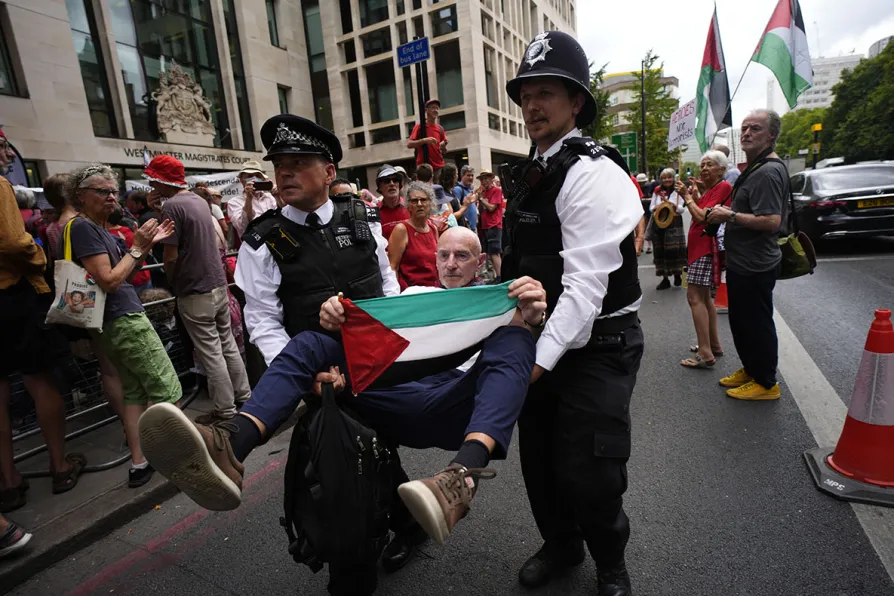
Not only are police placing ever more unreasonable restrictions on where and how anti-war demonstrators can make their point, and setting deliberately confusing conditions (such as specific times protesters could or couldn’t be at certain places along Whitehall, for example). Police also opened ranks to allow protesters through, then closed ranks and claimed those who had passed through had breached the conditions of the march.
Combine these dirty tricks with fines equivalent to more than a month’s pay for many people and prison for the organisers, and we have a system of repression designed to suppress peaceful protest, all because the scale and resilience of the Palestine solidarity movement frightens a ruling elite complicit in genocide and ethnic cleansing.
So MPs’ report drawing a clear distinction between violent disorder and political demonstrations is timely. Now they must face pressure to act in accordance with the conclusions of the home affairs committee, and halt Britain’s slide toward the criminalisation of peaceful protest.

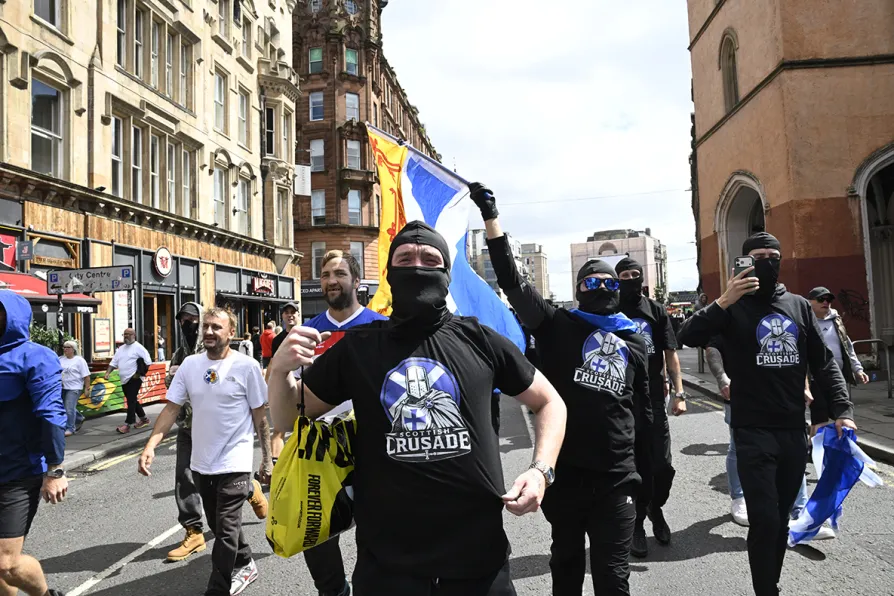
Once again Tower Hamlets is being targeted by anti-Islam campaigners, this time a revamped and radicalised version of Ukip — the far-right event is now banned by the police, but we’ll be assembling this Saturday to make sure they stay away, says JAYDEE SEAFORTH