
EWAN CAMERON witnesses a political farce that lacks a clear message


It’s the socialism, stupid
STEVEN ANDREW has reservations about the political slant of an otherwise indispensable guide to life in the Soviet Union
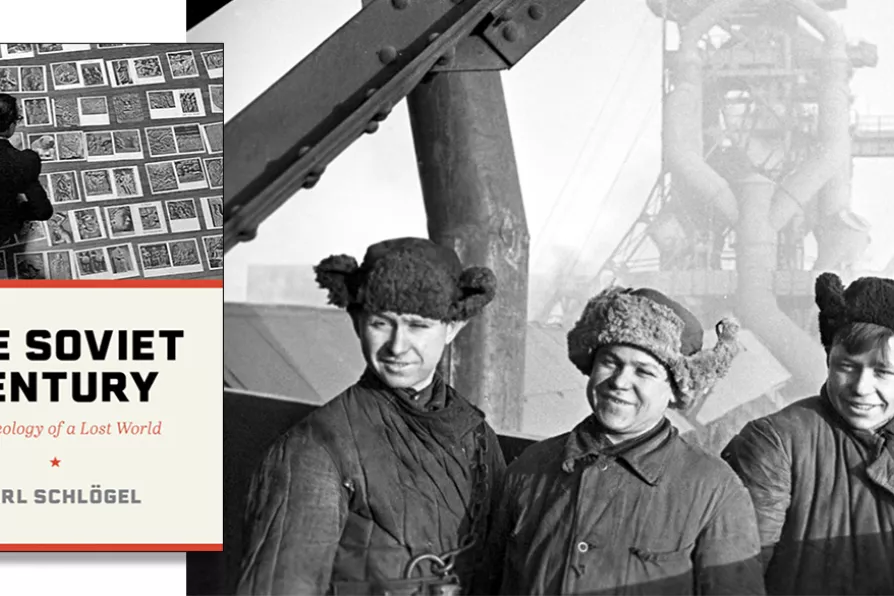
 Komsomol members at the construction of the sixth furnace of the Magnitogorsk Metallurgical Combine in 1943
[Ivan Shagin/RIA Novosti/CC]
Komsomol members at the construction of the sixth furnace of the Magnitogorsk Metallurgical Combine in 1943
[Ivan Shagin/RIA Novosti/CC]

EWAN CAMERON picks out two fascinating music shows, fusing the Korean, and the Celtic, with the modern
BENJAMIN POTHIER suggests that Palaeolithic cave paintings in Spain point to the ceremonial use of hallucinogenic flora
The bard confirms that the right has a humour bypass, and replays the English Revolution on period instruments
MARIA DUARTE and ANDY HEDGECOCK review Sunny Dancer, Tony, Songs of Forgotten Trees, and The End of Oak Street
JOHN GREEN relishes a powerful and moving drama that explores the lived realities of west London’s Punjabi community
MARTIN HALL welcomes a plea for greater compassion between believer and non-believer via the framework of philosophical enquiry





The Soviet Century – Archaeology of a Lost World
by Karl Schlogel
Princeton University Press
SINCE the end of the Soviet era, there has been many a book documenting its rise and fall and inevitably a lot of these have taken a fittingly political and historical approach.
Their quality, however, leaves much to be desired. All too often they have been hastily put together cold war-style pot boilers and cliché-ridden end of history rehashes.
More recently, however, there have been a number of other books, many lavishly produced, which have started to try to capture people’s lived experience of actually existing socialism, documenting everything from Red Army monuments to the murals on the Moscow metro. Writers like Owen Hatherley have also pioneered more serious studies of socialist architecture and urban planning, his well-written explorations having become particularly good examples of this new genre of considered Soviet archaeology.

Similar stories

RON JACOBS enjoys a great tale, told by a US communist, of the lives of working-class New Yorkers

MATTHEW HAWKINS relishes the literary output of autistic writers, and recommends its insight to readers both including and beyond the community themselves

STEVE ANDREW is intrigued by a timely and well-researched book that demonstrates the conflicted history of the central Asian country
BRENT CUTLER is intrigued by the imperialist, supremacist and contradictory history of a word that is used all too easily