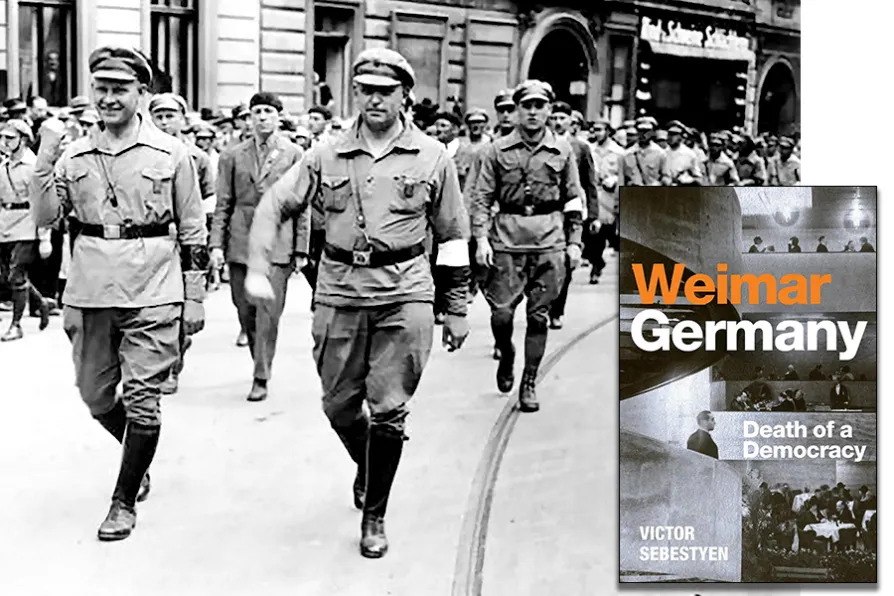
GORDON PARSONS recommends an entertaining account of the years between Germany’s defeat in WWI and Hitler’s seizure of power



The case for council communism
The argument that labour parties, supported by conservative trade unions, are instrumental to capitalism has contemporary resonance, suggests GAVIN O’TOOLE
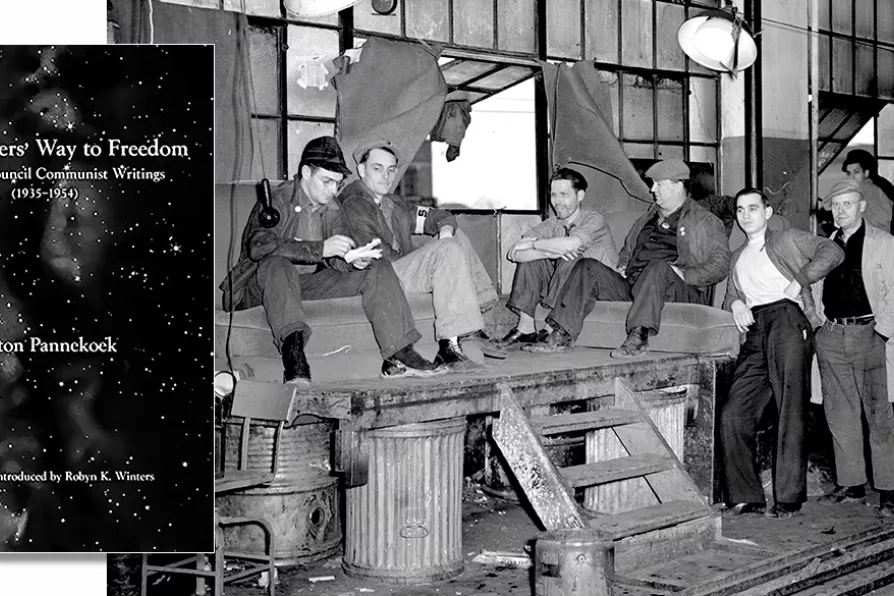
 WORKERS' VOICE: The 1936–1937 Flint sit-down strike at the General Motors plant in Flint, Michigan, US organised by the United Automobile Workers (UAW) formed in 1935. This image inspired the well-known sculpture by Janice Trimpe in Flint’s Sitdowners Memorial Park
[Pic: Library of Congress/CC]
WORKERS' VOICE: The 1936–1937 Flint sit-down strike at the General Motors plant in Flint, Michigan, US organised by the United Automobile Workers (UAW) formed in 1935. This image inspired the well-known sculpture by Janice Trimpe in Flint’s Sitdowners Memorial Park
[Pic: Library of Congress/CC]
MIGUEL YOSHIDA explains the evolution and influence of the Cuban Casa De Las Americas in joining culture to the revolutionary struggle
ANDY HEDGECOCK is charmed by a skilful adaptation of Tove Jansson’s lyrical portrait of three generations of a family, overcoming grief
ALEX HALL treads warily through a messy, dialectical struggle fought in the mundane machinery of driving licences, criminal law, and birth registries
MICHAL BONCZA, FIONA O’CONNOR, JAMES WALSH and ANGUS REID review Atlas of Disappearance, Love Me Tender, Bouchra, and This Tempting Madness
Flitting between myth and the modern world, Medusa is determined to steer clear of human affairs. When her resolve crumbles, the result is petrifying in every sense





The Workers’ Way to Freedom and Other Council Communist Writings
Anton Pannekoek, edited by Robyn K Winters, PM Press, £23.99
WHEN Lenin wrote “Left-Wing Communism: An Infantile Disorder” in 1920, he was taking aim at diverse critics of the Bolshevik party’s tightening international grip over the interpretation of Marxism.
One of the bones of contention between the “left communists,” as they became known, and Leninists was about the role of political parties themselves, and hence the participation by communists in bourgeois parliaments. Foretelling later doctrinal divergence, this was a dispute about socialist strategy in Western Europe and how best to read the array of class forces confronted by workers — and hence how best to organise — in countries markedly different to revolutionary Russia.
A majority of the newly formed Communist Party of Germany (KPD) in December 1918 was opposed to electoral politics and trade unionism, positioning themselves to the left of Bolshevik orthodoxy. However, divisions sundered the new organisation precisely over these issues, fuelling the denunciations of Lenin and others at the Comintern whose official line called for participation in parliamentary elections and fighting to control established trade unions.
This split has been obscured in the shadows of history, yet it remains relevant today because of the questions raised by left communists about the behaviour of labour parties, supported by trade unions, that accept bourgeois parliamentarism uncritically as so-called representatives of workers’ interests.

Similar stories

Internationalism is deeply embedded in socialist theory and practice. Examination illuminates its complexity asserts the Marx Memorial Library and Workers’ School
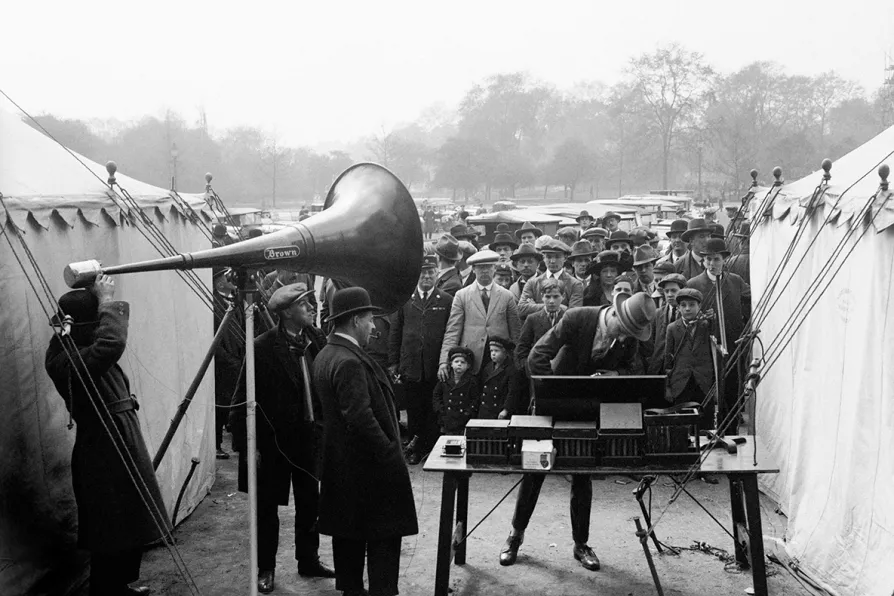
The General Strike exposed the power of the working class — and the limits of its leadership, writes Dr DYLAN MURPHY

JOHN REES replies to Claudia Webbe

Corbyn and Sultana’s ‘Your Party’ represents the first attempt at mass socialist organisation since the CPGB’s formation in 1921, argues DYLAN MURPHY