

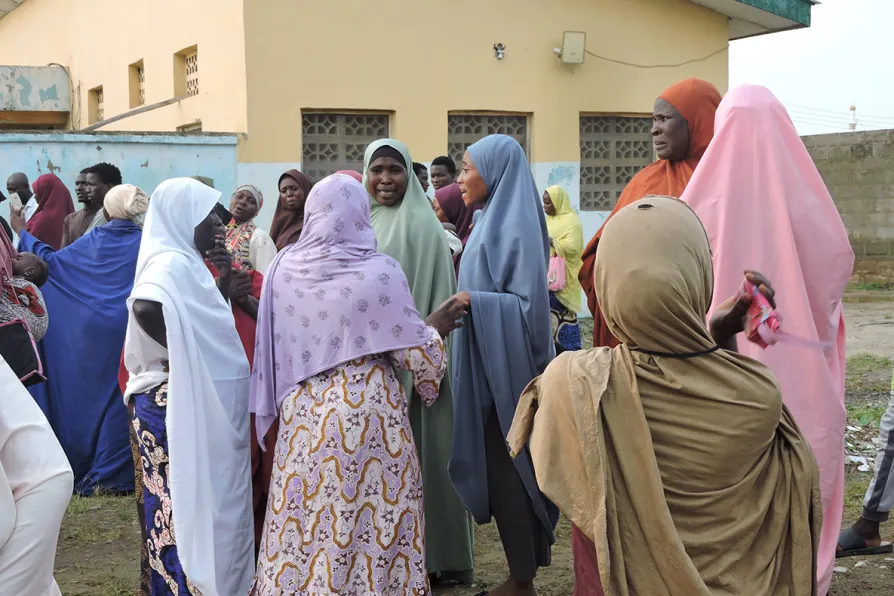
 Families and relatives of miners suspected of illegal mining wait outside a hospital where their bodies are stored in Minna, Nigeria, September 17, 2026





AT LEAST 37 suspects arrested for alleged illegal mining have been found dead in Nigerian security custody, officials said, claiming that an outbreak of disease was suspected of causing the deaths.
However, survivor Dauda Shehu said 65 detainees had been packed into a poorly ventilated cell, suggesting that the victims may have suffocated.
Niger state Governor Farmer Mohammed Umaru Bago said the 37 detainees had died in the custody of the Nigeria Security and Civil Defence Corps (NSCDC) in the north-central state.
He announced three days of mourning for the victims, his press secretary Bologi Ibrahim said in a statement.
They had been in detention since the security agency carried out arrests on Tuesday and Wednesday in connection with suspicions of illegal mining in the state, Suberu Siyaka Aniviye, the head of the NSCDC in Niger, said in a statement on Thursday.
Mr Aniviye said that, while the agency suspects a disease was to blame, the detainees’ bodies had been sent to a local hospital for “further medical examination to establish the actual cause of death.” He did not elaborate on the type of disease.
Mr Shehu said: “We were jam-packed and there was no ventilation for us to breathe well.
“All of a sudden, we realised that we could not breathe and we started scrambling to get fresh air.”
Speaking from Minna general hospital, where the bodies were sent for examination, he said the detainees had tried to attract the attention of the security agency’s guards by banging on the cell door.
Shafatu Sulaiman lost her two sons in the incident and, also speaking from the hospital, pleaded for the government to intervene.
Police in Niger state said they had launched an investigation and urged relatives of the victims to come forward with any information that could help.
Analysts have linked illegal mining activities in Nigeria’s north-central and north-west regions to armed gangs involved in kidnappings for ransom, claiming that groups receive funding from the illicit trade.

A US air strike in north-west Nigeria, publicly framed as a Christmas act of counterterrorism, reveals a deeper shift in how power is exercised in Africa, argues RAIS NEZA BONEZA

Nigeria’s presidential spokesman grovels to the West in response to Washington intimidation, writes PAVAN KULKARNI