DOUG NICHOLLS says the parasitic finance markets must be challenged or another British government could be toppled


 Latest editorial

Listen to the hibakusha this Hiroshima Day – the world doesn’t need more nuclear weapons
JEREMY CORBYN says we should never forget the horrific reality of nuclear weapons, or cease our efforts to rid the planet of them entirely
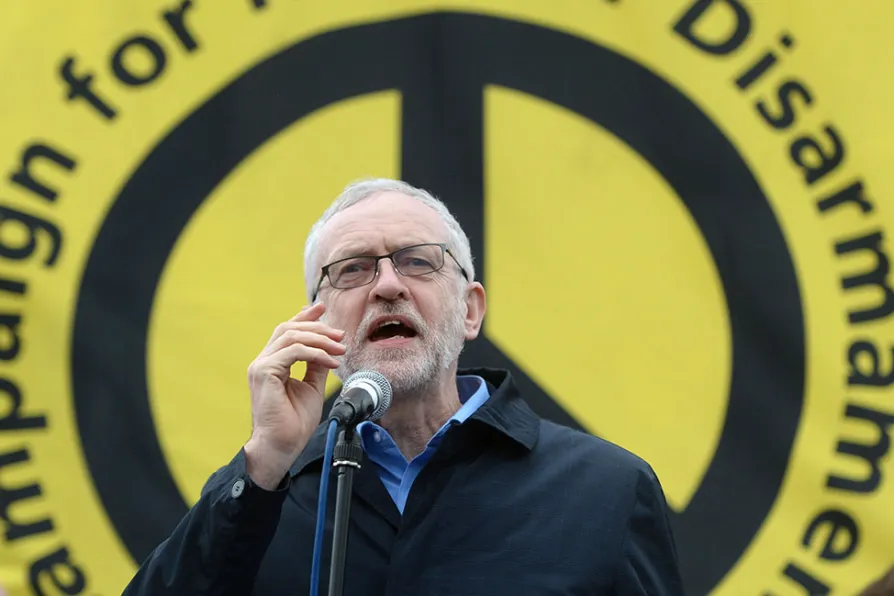 Jeremy Corbyn speaks before a CND banner

The late country singer’s Imagination Library has put hundreds of millions of books into children’s hands. We should build on that legacy by defending the libraries at the heart of our communities, says BRENDA AITCHISON
Deprivation is a fundamental factor in criminal behaviour that must be addressed but, KENNY MacASKILL argues, there needs to a major rethink in sentencing to tackle overcrowding
MML director MEIRIAN JUMP outlines the recently refreshed library’s busy autumn schedule that ranges from book sales, archival exploration, community work with online education and the ever popular site tours
Some thinkers and authors on the right are openly discussing the possibility that the historically successful party of the British ruling class may be exhausted
Class struggle is the motor of history but the direction and detail of change at any time and place is the outcome of many factors, suggests the Marx Memorial Library and Workers’ School
TONY BURKE surveys the shifting political landscape and the challenges Labour needs to address if it is to prevail in the 2028 federal elections





LAST year, I travelled to Hiroshima to represent the Campaign for Nuclear Disarmament at the 80th anniversary of the atomic bomb.
On Hiroshima Day, we remember every single person who was killed by an indefensible act of barbarity. We mourn the human lives underneath the statistical horror of the bomb’s death toll which, together with that from the attack on Nagasaki, was more than 200,000 people. And we commemorate the hundreds of thousands of survivors — known as the hibakusha — who endured the horror of what was left behind: nuclear radiation, mass destruction and unimaginable grief.
The trip will stay with me forever. I was there for the 2025 World Conference against Atomic and Hydrogen Bombs, attended by peace campaigners from all over the world.
Before it began, I visited the Museum of the Atomic Bomb, located in the Peace Park. The museum features an interactive display of an aerial map of the city at 8.15am on August 6 1945.
The electronic graphic shows a blinding flash and pictures emerge of the devastation. All before us is destroyed and flattened, save the exhibition centre with its now famous dome, which survived because the explosion was directly above it. The blast went outwards, destroying everything else.
Photographs of victims, mutilated bodies, burnt trees and twisted metal adorn the walls. Each with a story of a life lost and unbearable pain for those who survived.
Tomorrow, on the 81st anniversary, I’m sure that many politicians will post their generic commemorations. If these commemorations meant anything at all, they would pledge to honour the wishes of the survivors.
“Nuclear weapons are an absolute evil that cannot coexist with humans,” a survivor named Taniguchi Sumiteru said in 2010. “There is no choice but to abolish them.”
Support for nuclear weapons should be taboo. Instead, it has endured as a non-negotiable means of entry to the establishment.
Last week, the new Prime Minister announced an £8.4 billion investment in Britain’s nuclear submarine programme. £5.9bn will go to BAE Systems.
Only the day before, he said that tough choices would need to be made to fund his plans for social care. The money is right there in front of him. Britain spends £12,000 every minute on nuclear weapons. Imagine if we spent that money on schools, renewable energy and social care instead.
The Prime Minister’s announcement on nuclear “deterrence” is seemingly part and parcel of a wider strategy to increase spending on “defence” more broadly. Appointing John Healey as Chancellor — who resigned from Starmer’s government in protest that an extra £13.5 billion on military spending was not enough — is a very telling sign about the direction of this government. I hear there were high-fives in the Ministry of Defence when he was re-appointed, an announcement that also saw shares in arms companies shoot up dramatically. Spending money on weapons and war while our public services are crumbling is not just a political choice. It’s the wrong choice.
Security is not the ability to threaten and destroy your neighbour. Security is getting on with your neighbour. It’s giving children a habitable future. And it’s ensuring everybody has enough resources to live a happy and healthy life. Instead of investing in weapons of mass destruction, why can’t we invest in public services that bring health and security to us all?
If the new government wants to be a global leader, it would start talking about the need for peace. It would end its own complicity in horrific war crimes. And it would advance the cause for nuclear disarmament by signing the treaty on the prohibition of nuclear weapons, which bans the development, production, possession, use or threat of use of nuclear weapons.
Hiroshima is a reminder that nuclear weapons have one purpose, and one purpose only: to cause death and destruction on a colossal scale. I will never understand the pride and excitement with which so many politicians proclaim they would be prepared to launch a nuclear attack. In what circumstances is it necessary to annihilate humanity? Do they know what a global nuclear war would actually look like?
The hibakusha do. On Hiroshima Day, we must remember those who were killed in a barbaric crime against humanity. We mourn the lives that were so needlessly lost. And we must listen to the survivors when they say: “Humans must survive — in peace and prosperity.” We will only honour their words — as well as the memory of those who perished on August 6 1945 — when we rid this planet of nuclear weapons once and for all.
Politicians can bang their chests in the name of national security all they like. They must surely know that in the event of a nuclear war, nobody wins.
Indeed, if our politicians care about the legacy they leave behind, they may want to consider the following possibility: if they carry on down this path, there may not be anybody around to remember them at all.

Similar stories
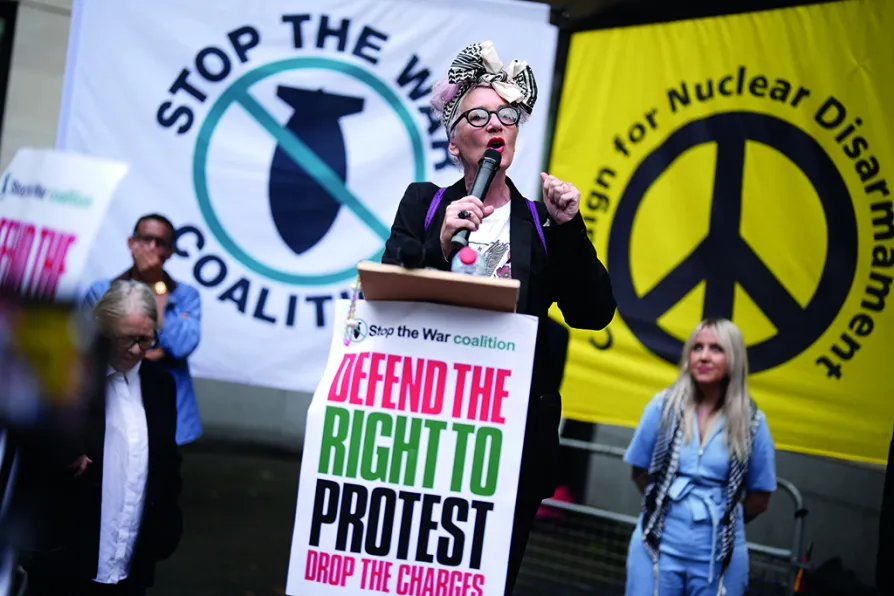
On Hiroshima Day, Campaign for Nuclear Disarmament general secretary SOPHIE BOLT explains why the danger of nuclear conflict is growing daily