DOUG NICHOLLS says the parasitic finance markets must be challenged or another British government could be toppled


 Latest editorial

Nuclear disarmament has never been more urgent
On Hiroshima Day, Campaign for Nuclear Disarmament general secretary SOPHIE BOLT explains why the danger of nuclear conflict is growing daily
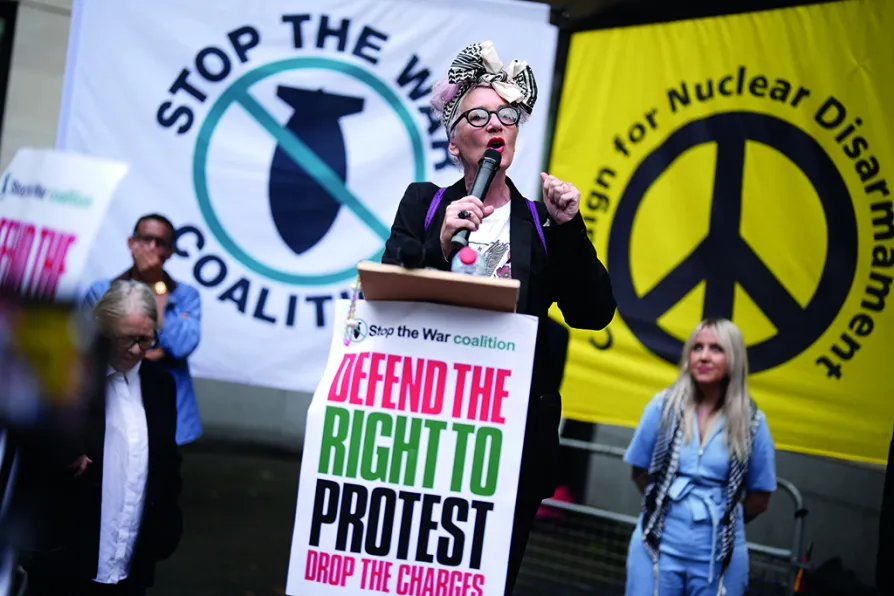 CND general secretary Sophie Bolt

The late country singer’s Imagination Library has put hundreds of millions of books into children’s hands. We should build on that legacy by defending the libraries at the heart of our communities, says BRENDA AITCHISON
Deprivation is a fundamental factor in criminal behaviour that must be addressed but, KENNY MacASKILL argues, there needs to a major rethink in sentencing to tackle overcrowding
MML director MEIRIAN JUMP outlines the recently refreshed library’s busy autumn schedule that ranges from book sales, archival exploration, community work with online education and the ever popular site tours
Some thinkers and authors on the right are openly discussing the possibility that the historically successful party of the British ruling class may be exhausted
Class struggle is the motor of history but the direction and detail of change at any time and place is the outcome of many factors, suggests the Marx Memorial Library and Workers’ School
TONY BURKE surveys the shifting political landscape and the challenges Labour needs to address if it is to prevail in the 2028 federal elections





TODAY, we remember the horrific war crime committed by the United States against the people of Hiroshima and Nagasaki.
Eighty-one years ago, President Truman authorised the atomic bombings of these two cities, not to end the second world war, but to ensure it emerged from this devastating global war as the dominant superpower.
The two bombs killed over 340,000 people, dying instantly, vaporised by thousand-degree heat, or more slowly, in agony from the terrible burns and radiation sickness.
The bombings started a nuclear arms race which resulted in a frenzy of nuclear weapons production and testing. Now, Hibakusha — the Japanese word for atomic bomb survivors — can be found right across the world.
Not just in Japan, but in the Aboriginal populations of Australia, the Marshall Islanders, the Downwinders of the Nevada desert and military personnel — all of whom were exposed to repeated nuclear explosions throughout the 1950s and 1960s. The Japanese peace movement also attributes the name of hibakusha to Iraqi civilians and troops who were poisoned by radioactive depleted uranium, that was also used in Kosovo and now in the Ukraine war.
Children of those exposed, and their children’s children, have all been damaged by these explosions and are today suffering from agonising medical conditions, cancers and birth defects. Millions have been affected.
Yet, as we mark this anniversary, the existential threats from nuclear annihilation and accelerating climate breakdown are only growing.
The worsening of the Ukraine war — with the intensification of long-range drone and missile attacks — means the threat of a nuclear confrontation between Nato and Russia is only increasing.
This escalation is taking place at the same time as France has started its nuclear co-operation agreement. Nuclear exercises have already taken place with Germany.
The agreement will mean that France could deploy its nuclear weapons to European countries including Poland — right on Russia’s borders.
There is another layer of nuclear weapons across Europe too — with at least 150 US nuclear bombs stationed at six Nato bases, including at Lakenheath in Britain. The British government is actively driving this nuclear proliferation. through its purchase of US nuclear-capable fighter jets, working hand-in-hand with Trump, in gearing up to use nuclear weapons pre-emptively in war.
The impact of Nato expansion is also seeing other governments drop their bans — in the face of strong public opposition — on hosting nuclear weapons, including Finland and Lithuania.
The Trump administration made it clear in its US National Security Strategy that maintaining nuclear supremacy is necessary to its continued global dominance, most critically in relation to attempting to check China’s economic growth and growing global influence.
So it is corralling countries into funding and facilitating its nuclear supremacy. For instance, the US administration is continuing to press Japan to lift its fundamental principles against nuclear weapons. US nuclear-armed submarines already use Japanese ports, so this raises the question of whether the US wants to station US nuclear weapons at its military bases in the country. Prime Minister Sanae Takaichi appears supportive of removing the anti-nuclear principles.
As this global rearmament intensifies, military spending has been increasing year-on-year — to record highs of $2,887 billion in 2025 — alongside record levels of spending on modernising and expanding nuclear weapons.
At the same time, across the world, hundreds of thousands of excess deaths are being caused by extreme heat and millions across the African continent are facing famine due to drought.
Here in Britain, whilst there were nearly 3,000 excess deaths in May and June alone from the heatwave, the new Burnham government has endorsed cuts of up to £7 billion — and another £5bn in the autumn to fund increases in military and nuclear spending. These include deep cuts to capital spending on climate action. Meanwhile health, emergency and fire services are critically understaffed and underfunded.
Yet Burnham is doing this against increasing opposition and anger. There is strong opposition within the wider population against these cuts to public services. And urgent calls for action on climate are growing. The stark warnings of the suppressed Joint Intelligence Committee report about the catastrophic impact of climate breakdown, including food shortages due to drought, must be acted upon now.
The United States’ attempts to maintain its global dominance are only driving us closer towards war and nuclear annihilation. The deadly rearmament programmes across Europe and here in Britain — far from keeping us safe — are only accelerating the life-threatening crisis of climate breakdown.
Instead we must redirect the hundreds of billions away from war and nuclear weapons so we can halt the climate crisis, transform our societies and rebuild our communities.
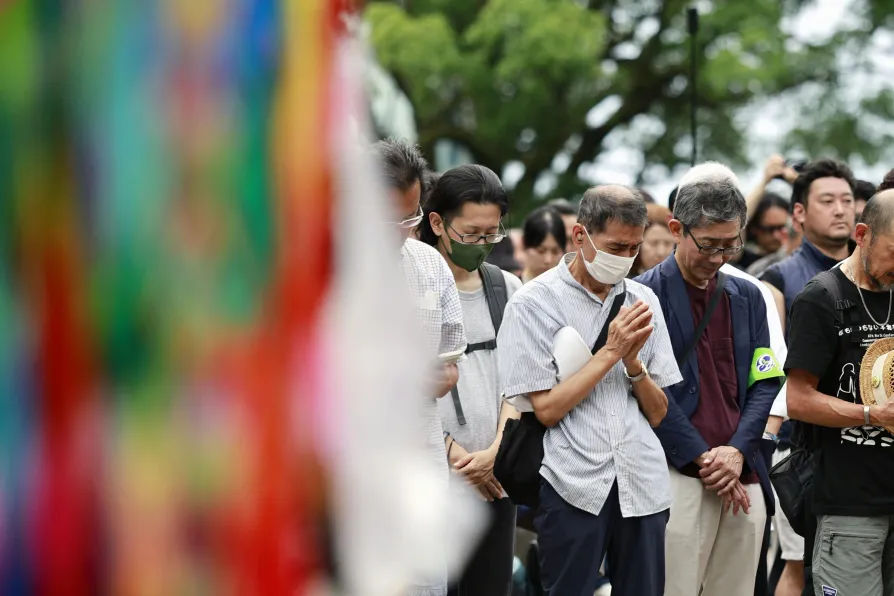
Here in Britain and across the world, ceremonies are taking place to mark the anniversary of the atomic bombings, calling for an end to nuclear weapons. It is time for world leaders to heed the demands of the global Hibakusha.
Never has it been more urgent to halt the threat of nuclear weapons — to ensure that the horrors of nuclear war are never repeated — and instead co-operate globally to save people and planet.
CND groups across the country are organising events this week and over the weekend to mark the anniversaries of Hiroshima and Nagasaki. Visit CND’s events (https://cnduk.org/events/hiroshimaevents/) to find an event near to you.
Sophie Bolt is general secretary of CND.

Similar stories
SOPHIE BOLT argues that spending more on military will harm rather than benefit Britain by diverting vital resources away from essential public services

We need a government that invests in saving lives not destroying them, argues SOPHIE BOLT