

 Latest editorial

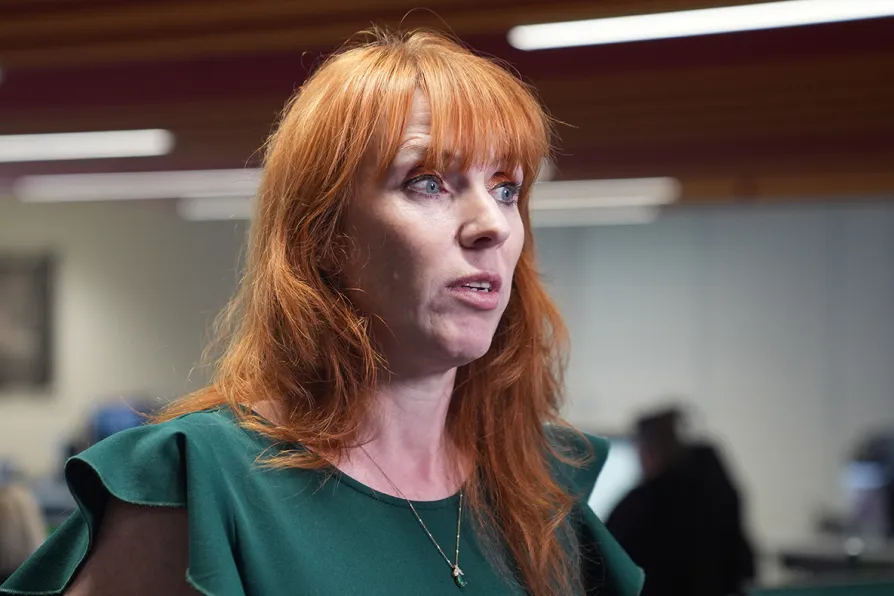 Housing Secretary Angela Rayner speaks to the media after meeting with emergency responders who fought the home-destroying Stourbridge fires at West Midlands Fire and Rescue Service HQ in Birmingham, August 17, 2026






THE final week of the school summer holidays signals the end of the traditional Fleet Street “silly season.” Normally the mainstream media fills its pages with insubstantial frippery and moaning about the weather.
This year there has been no shortage of serious news stories. Drought and an unprecedented series of heatwaves have caused thousands of excess deaths and a disaster for Britain’s farmers. The full extent of the damage caused by the privatisation of the water industry and the only viable solution — renationalisation — is now well-understood by the people, and yet this government continues to duck the issue.
The threat of war increases and Andy Burnham hands over the technology that will enable Volodymyr Zelensky to continue to prosecute Nato’s proxy war to the last drop of Ukrainian blood. The impact on British defence jobs of this decision does not appear to have even been an afterthought.
Angela Rayner in her new role announced at the start of the summer holidays there would be no curbs placed on private rents. Today she claimed the 12,000 council home completions last year was a record “since the records started in early ’90s.”
An odd claim since records on council home completions go back to the first half of the 20th century, with an average of 90,000 council homes built each year between 1946 and 1979. There was £14 billion public subsidy for building council homes in 1975 alone, which makes the 10-year allocation of £39bn for 300,000 homes seem remarkably unambitious.
The Thetford pogrom a couple of weeks ago cast new shame on a cynical political Establishment united in diverting the British people from scrutinising its client role for the rampant military-industrial complex driving austerity to targeting refugees and, in this case, black and ethnic minority residents on a former council estate that is at risk of being destroyed by the landlord to which it was transferred in 1992.
The local council rejected the landlord’s planning application to demolish half the estate, double the density and displace most of the existing working-class community last October, following overwhelming opposition to the proposals by the residents.
That decision has now been appealed, with residents fearing the government’s “presumed support” for all planning applications to increase housing, regardless of the impact on existing communities.
While most of the violence on the estate was caused by outsiders, the residents have become alarmed at the proliferation of homes built for working-class families being converted into houses in multiple occupation (HMOs) and an increasingly itinerant population.
These conversions do not normally require planning permission, and as the landlord’s planning application has progressed residents have noted that Serco, contracted to the Home Office to provide accommodation to asylum-seekers has bought several properties on the estate and is converting them to HMOs.
On top of a planning regime that has enabled a rapacious landlord and private developers to ignore the harm their proposals are causing the local population the anger is hardly surprising.
The relaxation of planning regulations does not only affect the ability of communities and local councils to decide what types of homes are needed. They also take a default position of acceptance of applications for “large-scale infrastructure” — including energy and water-guzzling AI data centres.
There is a need to tighten, not relax, planning regulations; to restore the right of communities and their elected representatives to decide what development is needed rather than concentrating power in the hands of directly elected mayors who will do the bidding of private developers and corporations at all our expense. It’s time to get serious.


Social Housing Action Campaign blasts PM’s decision to break commitment to allocate 100% of Affordable Homes Programme to social rents


The new PM may offer more of the same, but early signs on his housing policies look promising, says GLYNN ROBBINS

‘Rent freezes are not a way forward at the moment,’ Housing Secretary Angela Rayner says