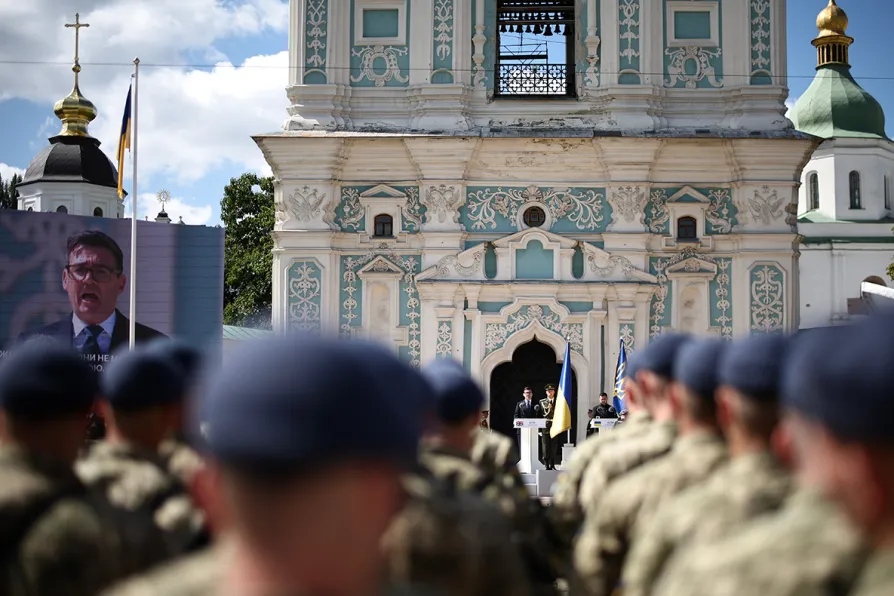
 Prime Minister Andy Burnham speaks at a commemorative ceremony marking Ukraine's 35th Independence Day outside St Sofia Cathedral in Kyiv, Ukraine, August 24, 2026
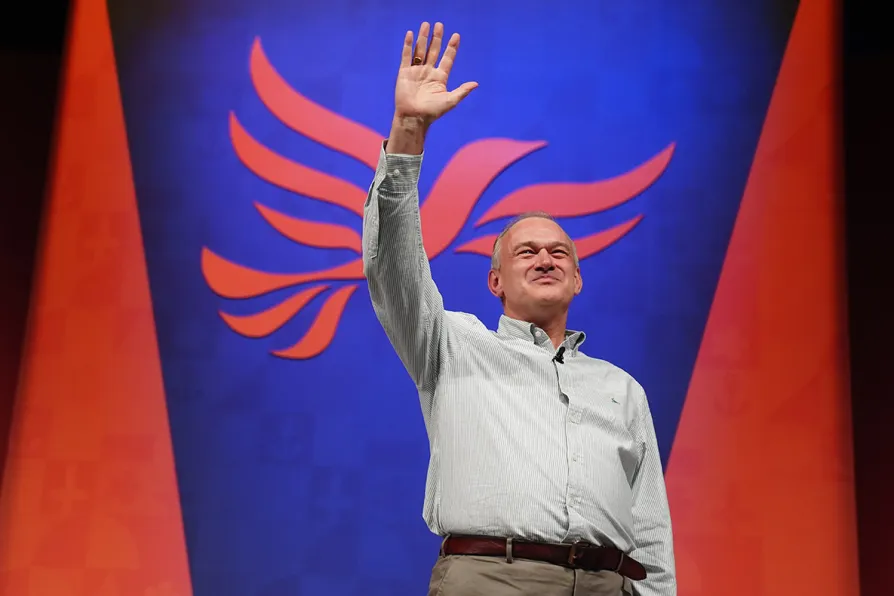





ANDY BURNHAM’S first foreign visit since coming to office last month sends a disappointing signal about his international, and indeed economic, direction.
Britain has a clear choice it can make about the role we play on the world stage. We can continue to play the role of warmonger, stoking conflict, destabilising whole regions, contributing to the toll of human lives taken by war, or we could develop an independent foreign policy that support peace, contributes to conflict resolution and global co-operation.
According to the ACLED Conflict Index over 240,000 people around the world were killed in conflict-related violence in the past 12 months, and yet Burnham has chosen the former path.
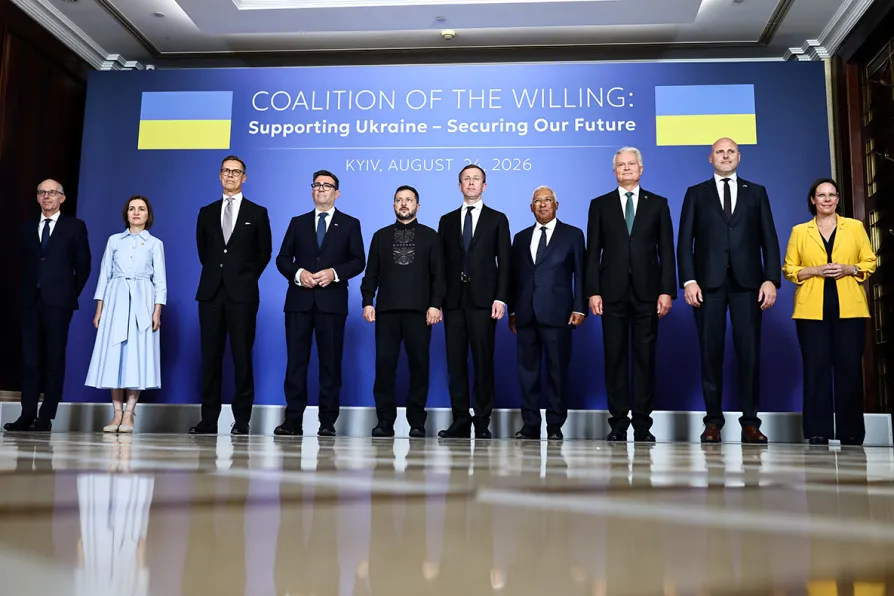
In his statements at the so-called “Coalition of the Willing” meeting in Ukraine, we can see what the reality of his stated policy of cosying up to the EU actually looks like.
Those who for years have claimed that the EU is a force for peace and stability and that Britain should never have left the Brussels-based bosses’ club, will be disappointed to hear that closer ties with the EU means calls for Patriot missiles to prolong the slaughter in Ukraine.
The EU military-industrial complex demands to be fed and the people of Ukraine will pay the price in human suffering to put money in the pockets of the arms dealers. This at a time when the vast majority of Ukrainians want to see a negotiated settlement to the conflict and calls for democratic elections are increasing daily.
While those directly affected by war and armed conflict pay the price of this warmongering in blood, the economic impact of war ensures that working people the world over suffer its consequences, directly or indirectly.
We are already facing a further cost-of-living crisis triggered by the US and Israel’s illegal attacks on Iran, attacks which have killed thousands of civilians including the 120 primary schoolchildren massacred in Minab.
The announcement by the US of further sanctions against Iran will only make this worse. The US intention to “sever the economic lifeline” that sustains Iran can only result in massive civilian casualties given the hollowing out of Iran’s economy over decades through a combination of sanctions and neoliberal economic measures imposed by the theocratic regime.
It is also likely to further deepen the resultant economic crisis which will hit working people in Britain, the US and elsewhere.
War on Iran has hit energy prices hard, driving up the price of food and other basics that rely heavily on transport. It also increases the cost of production, slowing economic output more generally, whilst driving increases in inflation.
The diversion of investment into arms production, for wars in Iran, Ukraine and elsewhere further skews what remains of the productive economy, also hitting jobs through cutbacks in more labour-intensive sectors like health and education, and extracting value out of our economy in the form of super-profits for the arms monopolies.
As the Alternative Defence Review has shown, increased military spending is economically inefficient, socially regressive and environmentally destructive.
Driving our country into a warfare economy is not the way to revive Britain’s economic fortunes. Reindustrialisation of our economy will need investment into civilian manufacturing, defence diversification and a huge investment in developing sustainable flows of skilled labour.
That means investment in education and training at all levels, investment in the people of this country, and the development of good jobs on a decent wage.
This is the choice that faces the Burnham-led Labour government.
On the one hand, investment in war and destruction, closer ties to the EU military-industrial complex and continuing our role as US imperialism’s bridge to Europe.
On the other, reindustrialisation, good, skilled jobs that pay a good wage, and investment in the future of our country.

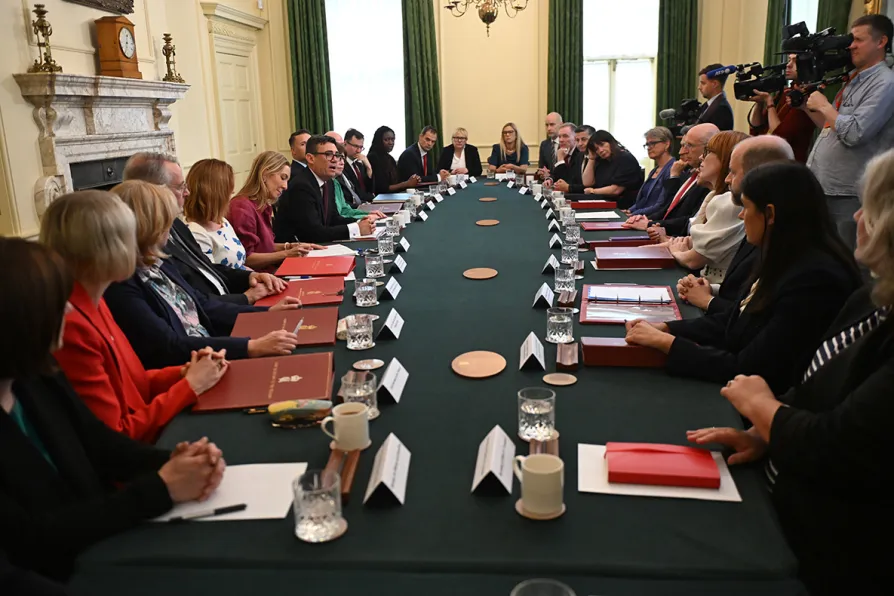
New PM slashes fuel bills and culls Starmer deadwood, but peace activists warn that placing John Healey as new Chancellor shows ‘beyond doubt that the military industrial complex is in charge of Burnham’s economic policy’
SOPHIE BOLT argues that spending more on military will harm rather than benefit Britain by diverting vital resources away from essential public services