The question is not simply how much we spend on defence, but what we understand defence and security to mean, says SIMON BRIGNELL



Moving pictures
ROX MIDDLETON and LIAM SHAW examine the early scientific investigations that enabled film to become an artistic medium
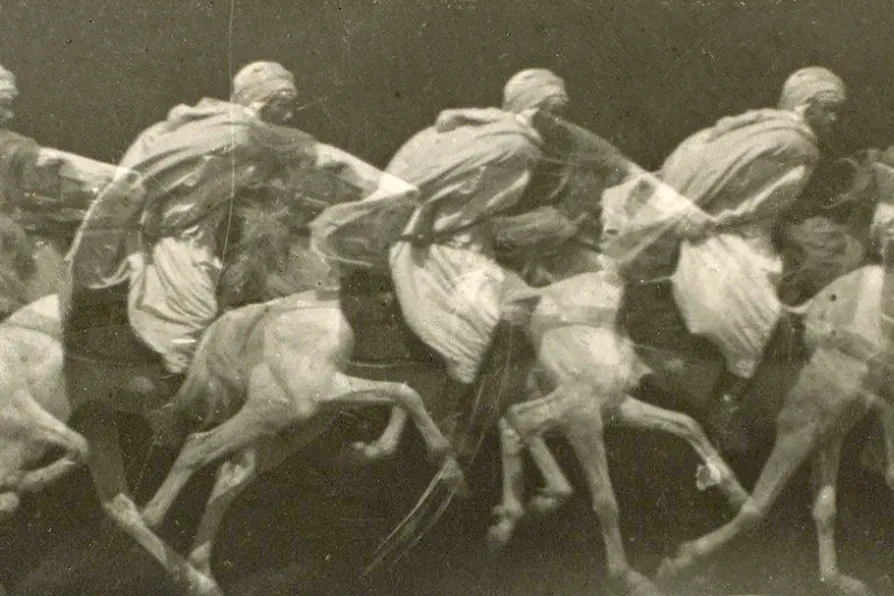
 PRELUDE TO INDIANA JONES: (Above) Eadweard Muybridge: Arab Horse Gallup, 1887
[Public Domain]
PRELUDE TO INDIANA JONES: (Above) Eadweard Muybridge: Arab Horse Gallup, 1887
[Public Domain]

Given the recent rejection of peace proposals by Israel the world must provide an immediate and resolute response to force accountability on Gaza, argues RAMZY BAROUD
MARK SEDDON tries to cool off in the countryside to avoid the heatwaves but the greed and incompetence of the privatised water industry is now at boiling point
The disputed election of a far-right president, who is also a US citizen, signals further consolidation of Washington’s regional power and represents a threat to the country’s democracy and sovereignty, writes WT WHITNEY JNR
by Her Excellency Ismara Mercedes Vargas Walter, Ambassador of the Republic of Cuba to the United Kingdom
DR STEPHEN WILKINSON assesses the life and legacy of a revolutionary giant





THIS week is the second week of the BFI London Film Festival, a chance for those in London to see films that they might not otherwise get to see in a cinema in Britain.
Unlike other film festivals, London Film Festival is a public festival, being largely aimed at bringing the public into the films, rather than (like for example in Cannes) being for largely aimed at professionals in the film industry, such as Cannes. At its best, film offers a chance for people to see and think about cultures and perspectives outside of their own.
The science of movies, it might be assumed, lies mostly in the inventions of cinematography: the cameras, films, microphones, projectors that make the recording of movies possible. Certainly, advances in camera and projector technology have made a difference to what is possible.

Similar stories

A six minute animation that conveys the horror of atomic war A Short Vision, made in 1956, is more effective than any drama, writes LINDA PENTZ GUNTER

GEORGE FOGARTY is dazzled by a breathtakingly skillful puppet version of Shakespeare’s greatest love poem

If true, the photo’s history is a damning indictment of the systematic exploitation of non-Western journalists by Western media organisations – a pattern that persists today, posit KATE CANTRELL and ALISON BEDFORD

Neutrinos are so abundant that 400 trillion pass through your body every second. ROX MIDDLETON, LIAM SHAW and MIRIAM GAUNTLETT explain how scientists are seeking to know more about them