DOUG NICHOLLS says the parasitic finance markets must be challenged or another British government could be toppled


 Latest editorial

Why nuclear power should be part of our energy security strategy
MARK JONES responds to issues raised in the recent report from Richard Hebbert on the Communist Party’s Congress debate on nuclear power
 A general view of the Sizewell nuclear power plant in Suffolk, June 19, 2024

The late country singer’s Imagination Library has put hundreds of millions of books into children’s hands. We should build on that legacy by defending the libraries at the heart of our communities, says BRENDA AITCHISON
Deprivation is a fundamental factor in criminal behaviour that must be addressed but, KENNY MacASKILL argues, there needs to a major rethink in sentencing to tackle overcrowding
MML director MEIRIAN JUMP outlines the recently refreshed library’s busy autumn schedule that ranges from book sales, archival exploration, community work with online education and the ever popular site tours
Some thinkers and authors on the right are openly discussing the possibility that the historically successful party of the British ruling class may be exhausted
Class struggle is the motor of history but the direction and detail of change at any time and place is the outcome of many factors, suggests the Marx Memorial Library and Workers’ School
TONY BURKE surveys the shifting political landscape and the challenges Labour needs to address if it is to prevail in the 2028 federal elections





RICHARD HEBBERT’S thoughtful article rightly welcomes the debate opened by the resolution on civil nuclear power at the Communist Party’s recent Congress and insists that any nuclear programme “must be kept in the public sector as part of an international effort.”
On that socialist principle we are in full agreement. He also writes that this debate occurs where there are “urgent questions about energy security and sovereignty.”
A few points, however, need sharpening.
First, the voice of the nuclear workforce is not the managerial union Prospect but Unite — Britain’s largest energy union. At this year’s Unite policy conference we carried overwhelmingly a motion (which I moved) for full public ownership of generation, transmission and distribution, and for new nuclear build.
Unite supports nuclear because its members will build, operate and decommission the plants — delivering tens of thousands of high-skill, unionised jobs and the just transition we all want.
This is no sectional special pleading; rather, it is a recognition that the only way to achieve a balanced, planned and long-term invested energy policy is through public ownership. Further, we do this so that we can plan and invest long-term in manufacturing whilst providing citizens with energy they can afford. The urgency that Hebbert raises is that families and pensioners are too scared to switch on their heating because of extortionate bills.
Second, the waste issue is often presented as an insuperable obstacle. In reality, one person’s lifetime share of nuclear waste fits into a shoebox and is far more straightforward to manage than the mountains of unrecyclable turbine blades and solar panels produced by a renewables-only strategy.
Finland’s deep geological repository opens next year; Sweden follows soon after. The science has moved on since the days in the 1950s when the Communist Party — under the guidance of its members who were scientists — not only supported Britain’s civil nuclear power programme but helped craft it.
I would also add that bowing to catastrophism does not help. Pointing to possible future nuclear-related crises just glosses over the real and existing crisis of bloated energy bills and the elderly dying silently of hypothermia in front rooms they cannot afford to heat.
The time for action is now, and the answers to this existing crisis are evident and open to change by working-class pressure and union action. The End Fuel Poverty campaign estimated there were 4,950 excess winter deaths caused by cold homes in 2023 and that over 8 million adults are living in “cold damp homes.”
Hebbert’s distinction between fission and fusion is technically correct, but it is oddly placed in the current debate. No-one is suggesting we wait for fusion, which remains decades away. The urgent choice today is proven fission technology under public ownership or continued dependence on imported gas and electricity.
France already demonstrates that civil and military programmes can be separated: civil fuel is enriched to 3–5 per cent U-235, weapons-grade to over 90 per cent, with different plants, budgets and IAEA oversight. Our resolution to the Communist Party Congress demanded exactly that ring-fencing, with no cross-subsidy to Trident.
Energy sovereignty is class politics. When the wind drops, Britain now imports gigawatts not only from France (mostly nuclear) but also from Norway (hydropower), Belgium, the Netherlands, Ireland and Denmark. We send billions abroad and surrender the ability to plan our own industrial future.
Meanwhile China builds the future with a rolling programme of small modular reactors. The government has just approved three Rolls-Royce SMRs at Wylfa and handed majority control at Sizewell C to private capital. That is not energy sovereignty — it is surrender.
Congress ultimately decided to remit the resolution. We must now ensure the newly elected executive committee grasp the nettle, and if involved, I shall add my voice to those other comrades who work in the energy sector to argue for a return to what was once a proud, public, civil nuclear programme position (alongside renewables) — exactly the socialist energy policy Britain needs.
Mark Jones is chair of Unite’s energy & utilities regional industrial sector committee for London and Eastern and a member of the Communist Party in Suffolk.

Similar stories

In the third of a four-part serialisation from her new book No to Nuclear, LINDA PENTZ GUNTER explains how the world had a chance to build an energy system around renewables more than 70 years ago — instead, it chose nuclear

In the second of a four-part serialisation from her new book No to Nuclear, LINDA PENTZ GUNTER highlights how the industry is searching for ways to preserve its relevance
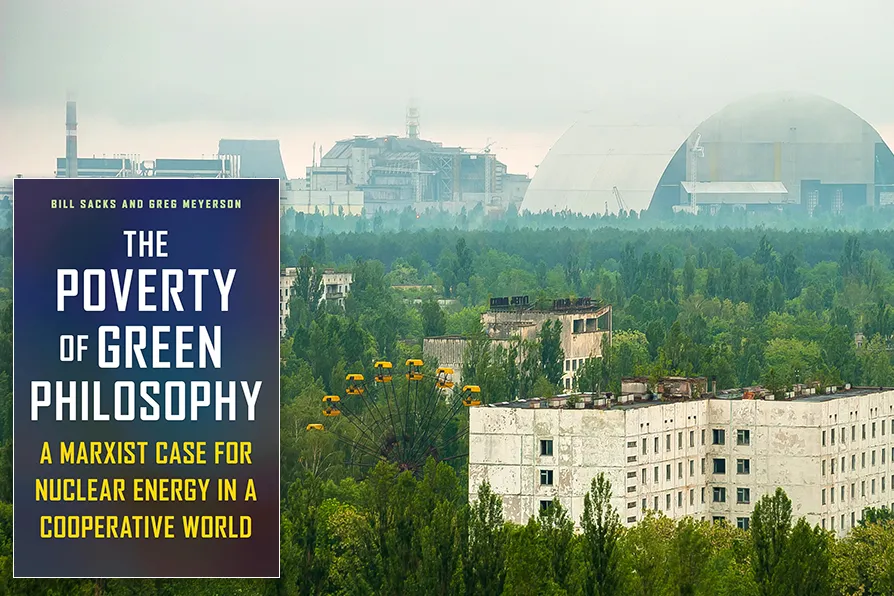
BRENT CUTLER welcomes a valuable contribution to discussions around the need to de-carbonise energy production
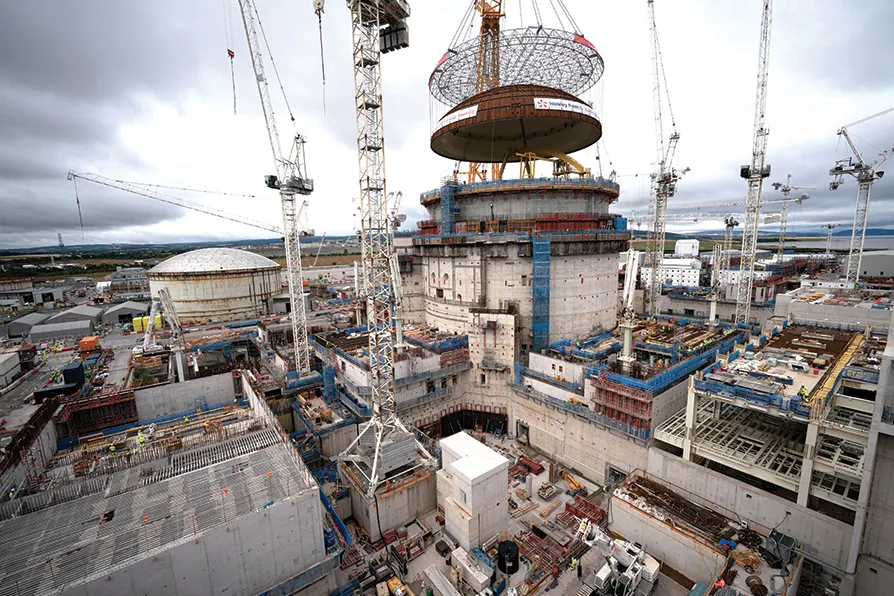
The Communist Party of Britain’s Congress last month debated a resolution on ending opposition to all nuclear power in light of technological advances and the climate crisis. RICHARD HEBBERT explains why