Committee for the Defence of the Iranian People’s Rights general secretary GAWAIN LITTLE discusses the impact of the US-Israeli war on the Iranian people and economy


 Latest editorial

Should communists revisit opposition to civil nuclear power?
The Communist Party of Britain’s Congress last month debated a resolution on ending opposition to all nuclear power in light of technological advances and the climate crisis. RICHARD HEBBERT explains why
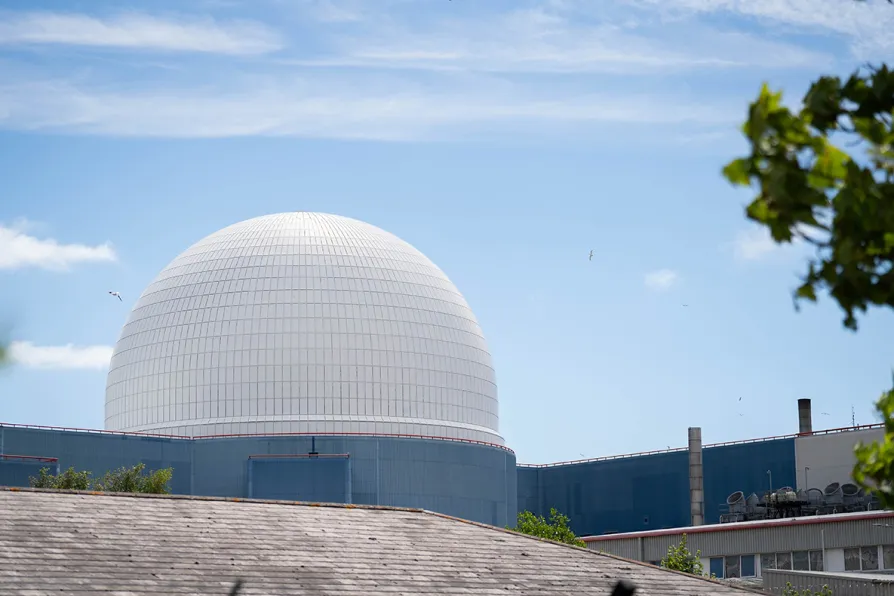
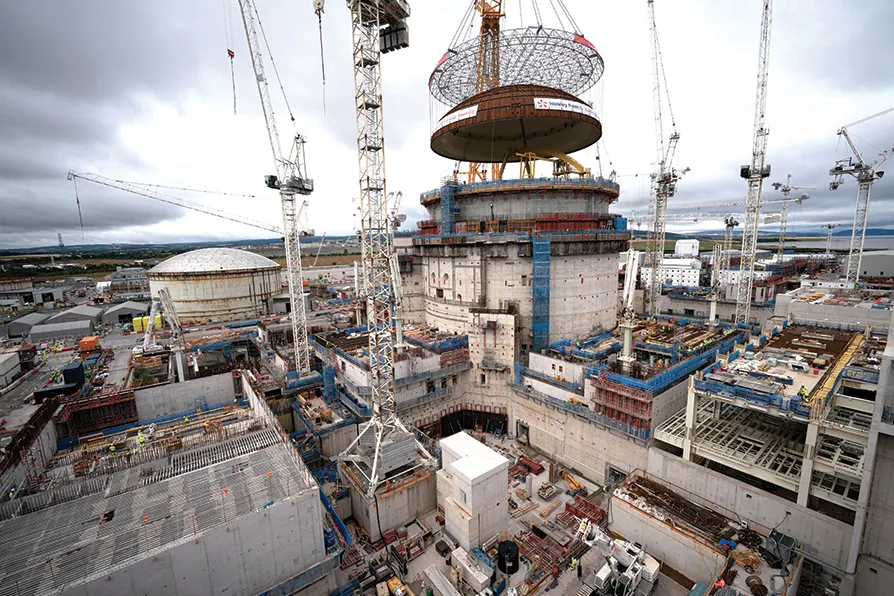 INTERMINABLE DELAYS: The lifting of a 245-tonne steel dome onto Hinkley Point C's second reactor building, at in Bridgwater, Somerset on July 17 2025 - scheduled to be finished by 2025 it now won’t be until 2031

Capitalism has extracted itself from crisis before, argues PRABHAT PATNAIK – but through methods no longer available. So it is turning to authoritarianism, militarism and neocolonialism
The five young men killed in the A66 crash were responsible for a devastating tragedy — but the crash should force us to ask difficult questions about wider society, argues RENATA MEDEIROS MIRRA
Britain funds the policing of black culture 16 times better than the culture itself. The Diamond Jubilee is the moment to end that, argues CLAUDIA WEBBE
Despite Andy Burnham’s declaration defending the continued partition of the island, all major international and internal trends are converging to make Irish reunification inevitable
Humans are part of the ‘animal kingdom’ – and of nature in general – but also distinct from it and labour (work) is part of what makes us unique, declared Engels. His insights 150 years ago into how our species came to be and how we differ from the rest of nature, are as important today as they were then, says the MARX MEMORIAL LIBRARY





IN A TIME of environmental damage and warfare; of dwindling resources and growing demand, how the world generates enough power to supply the energy needs of society and industry is a matter of vital importance.
Leading industrial nations have been slow to rise to the challenge of finding ways to produce energy which don’t rely on the fossil fuels which have caused increasingly catastrophic climate change and the recent threats we have seen to power supply, in and resulting from the war between Russia and Ukraine, have raised urgent questions about energy security and sovereignty.
Here in Britain the 2024 closure of the Ratcliffe-on-Soar power station near Nottingham marked the end of coal-fired power production, however gas has replaced coal as the largest energy source and the Drax power station in Yorkshire, which burns wood pellets to generate power, while providing 5 per cent of the nation’s power, has become its largest single source of carbon emissions.
There has to be a better way.
Of course renewables such as solar, wind and tidal or wave are growing as important energy sources and in the run up to last month’s Cop30 there was acknowledgement of the world-leading progress of China in transitioning to renewables.
But not everywhere has the land or the resources to follow China’s lead and so what other options are there for a clean and sustainable energy mix?
The Communist Party of Britain’s 58th Congress last month produced much lively debate on a whole range of issues, but one of the keenest debates was on a proposal from Suffolk Branch which asked the Party to revisit the question of civil nuclear power.
The resolution, which recognised the “urgent need for a planned, sustainable energy transition to meet net-zero targets, ensure sovereignty and guarantee affordability,” asked the party to update its policy to support “significant nuclear expansion.”
For many, the issue of nuclear power is an emotional one. Memories of the Hiroshima and Nagasaki bombs and the incidents at Three Mile Island in 1979, Chernobyl in 1986 and Fukushima in 2011 make people nervous about the production of nuclear power.
Many remember the international “Nuclear Power? No thanks” campaign of the 1970s – so what are the issues?
We can start with the basics. Nuclear power is the result of either nuclear fission or nuclear fusion.
Nuclear fission is a reaction produced when a neutron collides with a heavy nucleus which then becomes unstable, splitting and releasing energy and more neutrons which can then collide with other nuclei causing another fission – the chain reaction. The energy released heats water into steam which spins a turbine which produces carbon-free electricity.
Nuclear fusion occurs when two lighter nuclei slam together under very a high temperature to form a heavier one. As with fission, the energy is released because the resulting mass is smaller than the reacting mass – some of the original mass is missing as it is converted to energy.
Most nuclear power is currently produced by fission, but it produces long-term waste and there is the danger of a runaway reaction.
Fusion produces more energy, it does not have a chain reaction and produces less long-term waste – but it is more difficult than fission and while it may be potentially better than fission, it is not yet commercially viable.
So what are the arguments generally for and against nuclear power?
On the plus side, nuclear power – other than in the construction of the power stations – is low carbon; it produces no greenhouse gas emissions. Unlike renewables it doesn’t depend on the weather, the wind, the tide or the sun; it’s reliable. It is high energy; nuclear plants produce a lot of power and finally, it can work with renewables to provide a more stable and resilient energy system.
Arguments against include that it is costly and slow to build the infrastructure - it can take six to 10 years to build a reactor – the plant at Hinkley was announced in 2010 and won’t be operating until 2027.
The storage of long term waste is a significant problem where it can remain active for a very long time. The possibility of accident is rare, but the incidents mentioned above show that they do happen, potentially with very serious consequences. Security is an issue either from malicious intervention, or as a result of conflict.
Not surprisingly opinion is divided; in arguing against nuclear power Friends of the Earth make some of the points set out above and add that renewables can produce 20 times the energy currently consumed by homes and provide green jobs to counter losses through transition.
The Prospect trade union on the other hand says that we have to replace fossil fuel and that wind and solar power are variable, citing in support a “wind drought” in 2021 where fossil fuels had to provide back-up power production.
They accept that nuclear power is costly, but argue that it needs public investment to remove any profit motive – a political choice.
Finally they claim that there is an economic argument and that a smarter energy system would provide resilient and reliable power for all.
In Britain’s Road to Socialism the Communist Party of Britain, in its consideration of energy and the environment, reflects much of the discussion above – that there must be a move away from fossil fuels, that current nuclear power production based on nuclear fission is “a costly, dangerous and highly irresponsible option,” but that research into the viability of power from nuclear fusion has been hampered by the refusal of monopoly capitalism to invest because it is expensive and unprofitable.
The Communists argue that any nuclear programme must be kept in the public sector as part of an international effort.
That may not be so far from what was asked by the proposers of the Suffolk resolution. But while there is much in the resolution that needs to be considered, the party could not yet commit to a resolution which says “We believe a major, purely civil nuclear programme is vital,” and so Congress remitted the resolution for timely research on the issue and consideration of the position.
In the end capital’s ceaseless drive for profit has brought the world to the current climate crisis, if nuclear power is to be a part of the solution we have to make sure that it is not hijacked by capital as was coal power and all that followed.
Power to (and for) the people!
Richard Hebbert convenes the Communist Party environmental commission.

Similar stories
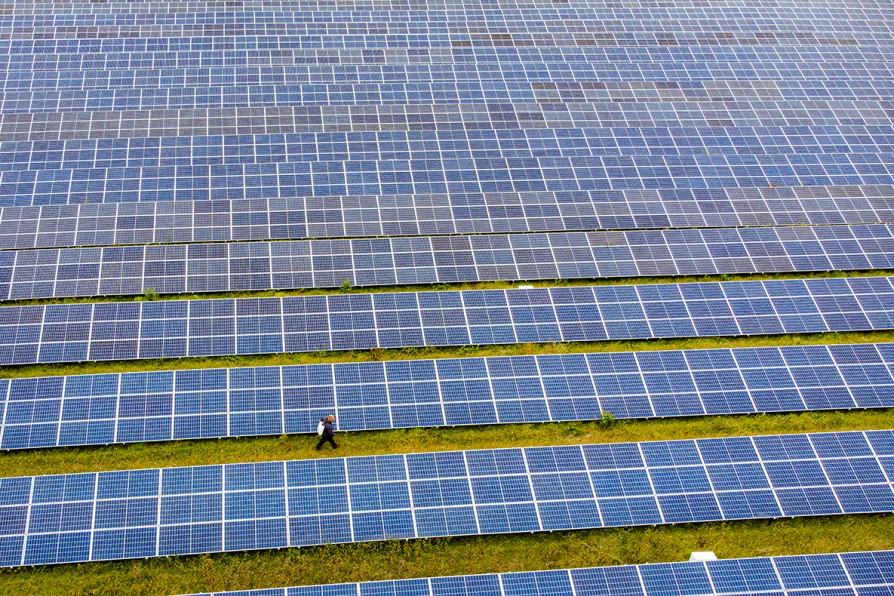
In the third of a four-part serialisation from her new book No to Nuclear, LINDA PENTZ GUNTER explains how the world had a chance to build an energy system around renewables more than 70 years ago — instead, it chose nuclear
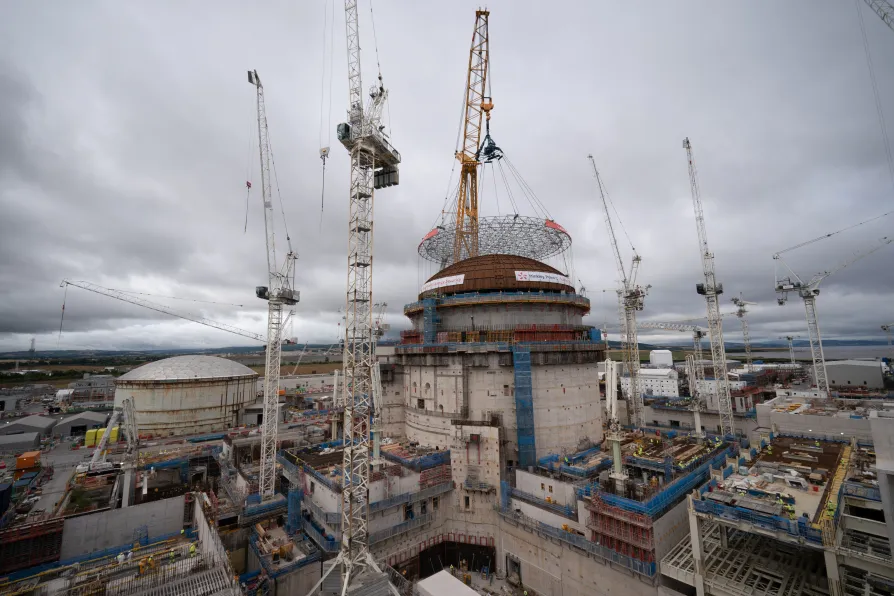
In the second of a four-part serialisation from her new book No to Nuclear, LINDA PENTZ GUNTER highlights how the industry is searching for ways to preserve its relevance
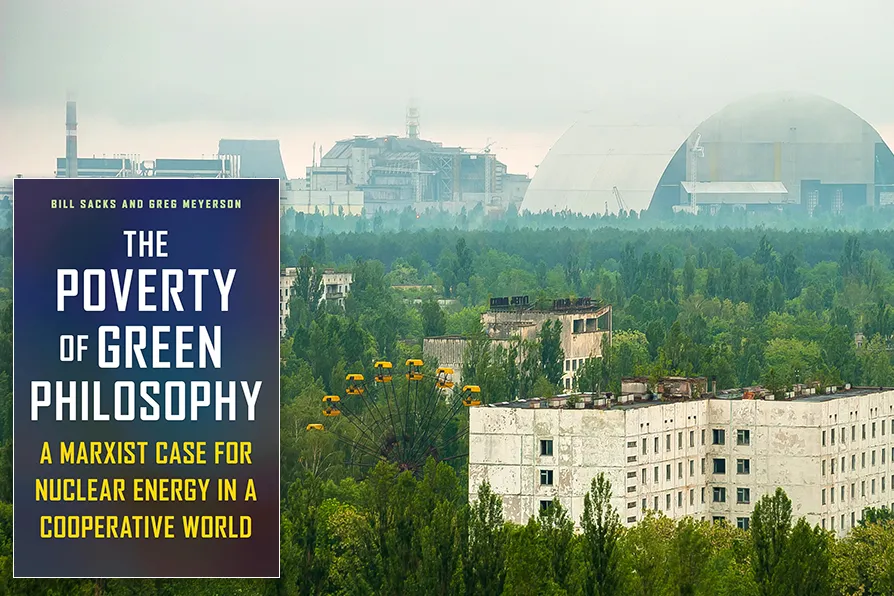
BRENT CUTLER welcomes a valuable contribution to discussions around the need to de-carbonise energy production
MARK JONES responds to issues raised in the recent report from Richard Hebbert on the Communist Party’s Congress debate on nuclear power