


Food crisis looming as Iran war hits supply chain
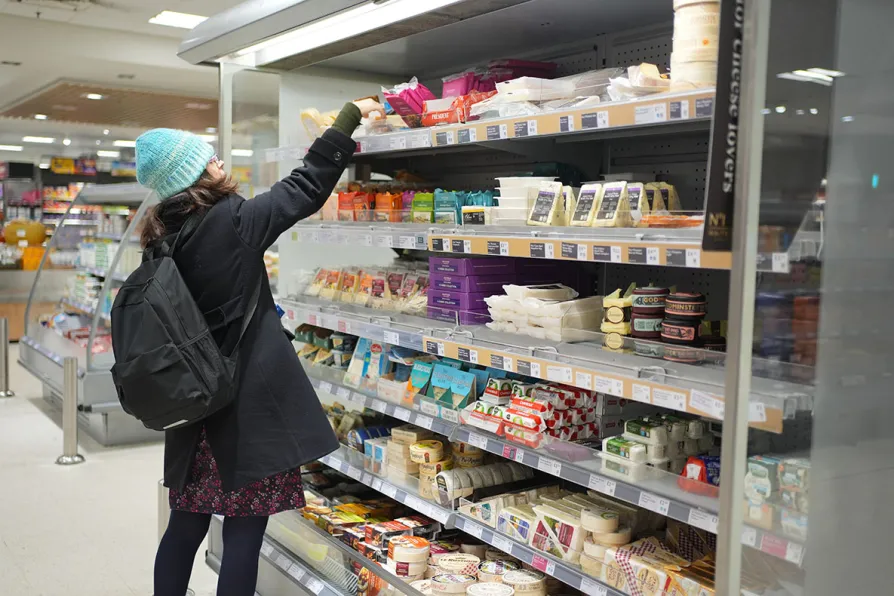
 A shopper in a supermarket
Parliamentary probe into the Reform UK leader’s £5m gift from crypto-billionaire to resume





BRITAIN faces a looming food crisis because of the war against Iran, ministers conceded today.
Chicken and pork could be among the items disappearing from supermarket shelves by the summer, with the government planning emergency measures to combat shortages.
The US-Israeli aggression against Iran has shut the Straits of Hormuz, impacting on the supply of carbon dioxide (CO2), among other things.
CO2 is vital to the storage of meats and salads, as well as being used in brewing and other vital processes from MRI scanning to water purification.
Business Secretary Peter Kyle sought to calm concerns by saying PM Sir Keir Starmer was personally leading the government’s response.
“The Prime Minister has been there since the very start, and he is going through personally and driving deep dives into lots of areas of resilience throughout our economy,” Mr Kyle said, stressing that ministers were engaged in contingency planning.
“Right now, people should go on as they are.”
With shortages in prospect, prices are also likely to soar. Kevin White, of the Grocer magazine, said it was “pretty much inevitable that we’re going to see inflation in food.”
“I think, without scaremongering, it’s almost inevitable that the energy price shocks, and just the supply chain disruption that we’re seeing … it’s going to kind of feed into inflation across food and drink,” he told the BBC.
The boss of leading retailer Tesco, Ken Murphy, did not rule out price rises. “We don’t know what it’s going to look like, because clearly this is a volatile, unpredictable situation,” he said.
And the National Farmers Union has warned that the price of cucumbers and tomatoes could rise in the next six weeks, with milk following a few weeks further on.
A Stop the War Coalition spokesperson said: “As we have warned, working people in Britain are going to be paying the price for this catastrophic and illegal war against Iran, which Keir Starmer continues to enable.
“Britain should join with other states in demanding that Trump and Netanyahu immediately halt their aggression, and should deny arms, basing or overflight rights and any diplomatic or intelligence cooperation until they do.”
Petrol prices have already soared since the war started, and an increase in food costs would further derail Chancellor Rachel Reeves’ economic plans.
She has become particularly strident in opposition to the war, flying to Washington to broadcast her view that the conflict was a “mistake” by President Trump, pointing out that he was trying to restart negotiations which had been in progress before his attack.
Ms Reeves is also understood to be holding out against demands from the military for massively increased spending on arms, something which would require either tax rises, spending cuts elsewhere or a relaxation of her “iron-clad” fiscal rules, none of which she favours.
Health Secretary — and likely Blairite leadership challenger — Wes Streeting appeared to back Lord Robertson today, saying “we do need to put more money into defence. We have been putting more money into defence, but we will need more.
“We definitely want to reduce the welfare budget,” he added, echoing Lord Robertson’s main demand and stressing that “defence will be much higher” on the list of Ms Reeves’ priorities.
Mr Streeting also said plans had been drawn up to prioritise ambulances if diesel supplies ran low.
Mr Kyle said that the government was restarting a bioethanol plant on Teesside that had been mothballed eight months ago.
The plant, which produces CO2, had been shut as a consequence of the trade deal Labour signed with Trump last year — an agreement the president has now said he may either repudiate or renegotiate anyway.
Beyond that, the main preparation ministers appear to be making for a summer of discontent is a crackdown on protest, rushing expanded police powers to ban demonstrations through Parliament, with Communities Secretary Steve Reed heading an emergency response team in Whitehall.
