

 Latest editorial
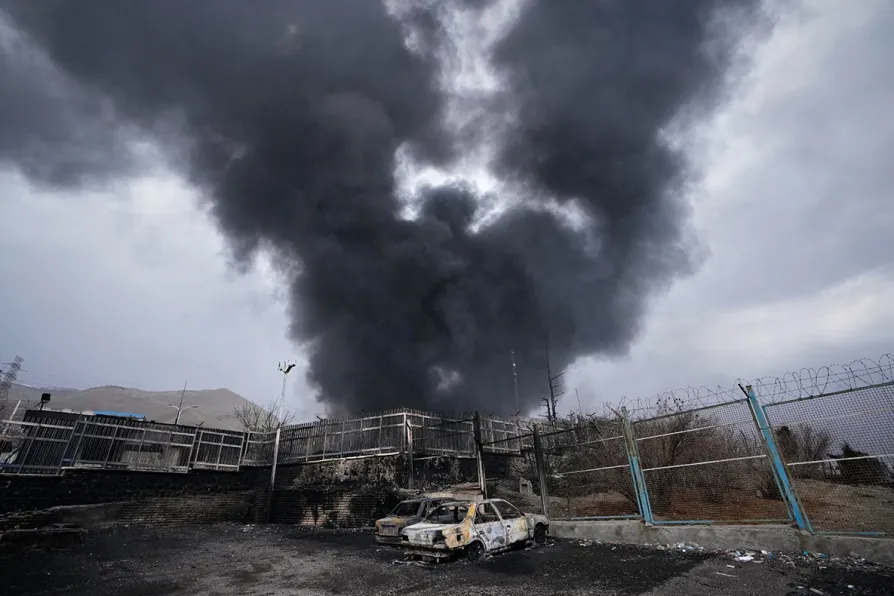 A thick plume of smoke rises from an oil storage facility hit by a US-Israeli strike in Tehran, Iran, March 8, 2026





THE United Arab Emirates (UAE) will withdraw from Opec tomorrow, further weakening the oil cartel’s leverage over global supplies and prices.
Announced on Tuesday, the decision will leave Opec without its third-largest producer.
The UAE has complained for years that cartel production quotas are too low.
Another factor is the UAE’s increasingly frosty relationship with Saudi Arabia, the largest Opec producer, even when both came under attack by fellow cartel member Iran after the United States and Israel launched their unprovoked war on the latter country.
The UAE withdrawal from Opec is unlikely to affect markets immediately because world oil supplies are sharply constrained by the ongoing closure of the Strait of Hormuz.
Opec accounts for roughly 40 per of the world’s oil output, but its market power has waned in recent years as the US boosted production.
While Saudi Arabia produced more than 10 million barrels a day before the war, the US pumps more than 13 million barrels daily.
The UAE produced around 3.4 million barrels of crude a day just before the war with Iran began on February 28. Analysts put its production capacity at roughly five million barrels a day.
