

 Latest editorial

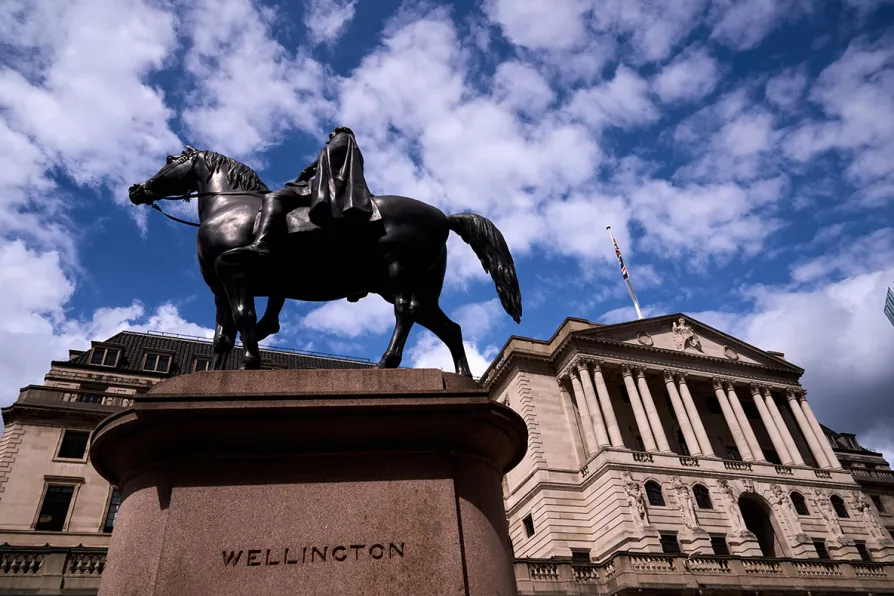 The Bank of England in the City of London





UNIONS have warned that the fall in inflation to its lowest level in more than a year is the “calm before the storm,” as workers continue paying the price of the economic crisis.
The Office for National Statistics said Consumer Prices Index inflation fell to 2.8 per cent in April, down from 3.3 per cent in March — its lowest since March 2025 and below most economists’ forecasts of 3 per cent.
A key driver was Ofgem lowering its energy price cap by 7 per cent, or £10 a month, from the start of April.
But inflation is expected to surge again as the war in Iran has sent fuel prices soaring, with the energy price cap set to rise significantly from July.
Petrol rose 16.6p to 156.8p a litre in April — the highest since November 2022 — while diesel rocketed 31.3p to 190p, also the highest since 2022.
The Bank of England has warned inflation could rise as high as 6.2 per cent in a worst-case scenario if the war is not resolved.
Chancellor Rachel Reeves is expected to announce a cost-of-living package tomorrow, reportedly including abandoning a planned fuel duty rise and targeted energy cost measures.
Unite general secretary Sharon Graham said that the government “cannot keep crossing its fingers behind its back” and urgently needs to “change direction to ensure it backs everyday people.”
“Today’s drop in inflation is the calm before the storm,” she said.
“Workers and communities are still suffering from paying the price for crisis after crisis. We are now braced for more price rises in the coming months.”
Economists said the lower-than-expected data, combined with weaker wage growth and a cooling jobs market, could see the Bank of England hold off from hiking interest rates at its next meeting on June 18.
TUC general secretary Paul Nowak said rate cuts “should now be on the agenda,” adding: “As the war continues, ministers must go further to shield households and businesses from the worst effects of Trumpflation.”
He said that the longer US President Donald Trump’s “illegal war goes on, the greater the threat to households and firms.”
“Lowering rates would ease the pressure on struggling households and firms, and help support economic growth,” he said.
