ANDY HEDGECOCK and MARIA DUARTE review Late Fame, The Death of Robin Hood, Leviticus, and Gail Daughtry and the Celebrity Sex Pass


 Latest editorial

Understanding Iran
BRENT CUTLER searches a new history of contemporary Iran for an understanding of the Islamic Republic, finding both interesting detail and glaring omissions
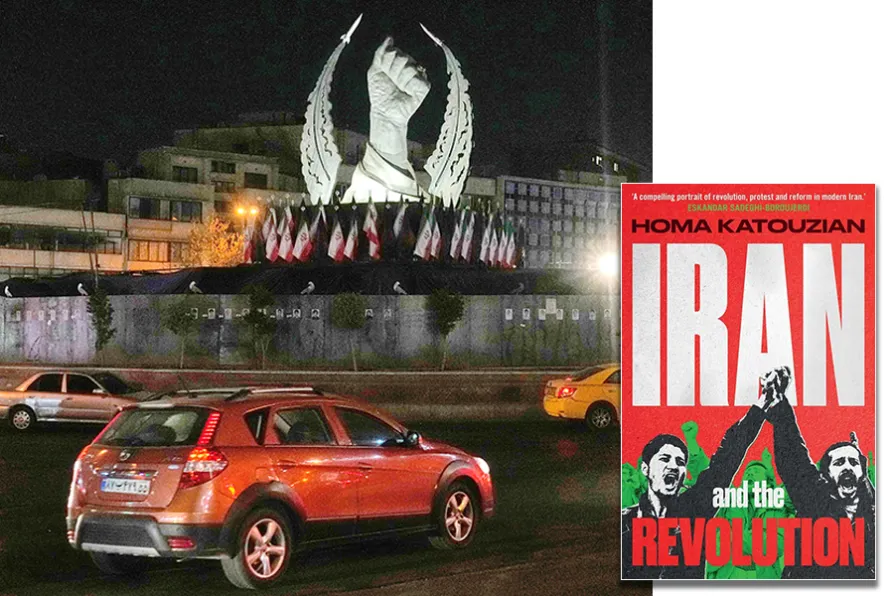 MONUMENT TO MARTYRDOM: The towering monument depicting the clenched fist of the late Iranian Supreme Leader Ayatollah Ali Khamenei, bearing the words "We Must Rise" was unveiled in Revolution Square in Tehran on July 3, 2026.

GORDON PARSONS enjoys Kant’s ‘mind-boggling’ theory of human reality: that we create the reality we experience
DAVID RABY welcomes a biography that emphasises how Fidel’s unique characteristics became hallmarks of the ongoing Cuban revolutionary process
IAN SINCLAIR recommends a readable, if partisan, account of the astonishing campaign of New York's new mayor
MATTHEW HAWKINS witnesses a contemporary ballet that represents human life as subjected to artificial intelligence
by Marwa Paikan





Iran and The Revolution: A History
Homa Katouzian, Yale University Press, £25
HOMA KATOUZIAN, an Iranian-born academic, has written extensively on Iranian history; his latest book, Iran and The Revolution, covers the period from the early 1940s up to 2025, just before the current war.
It includes the Anglo-Soviet invasion of 1941, the short-lived Mossadegh government of 1953, the Shah’s white revolution of the 1960s, the 1979 revolution, and continues with the twists and turns within Iran since the 1980s.
The book starts in August 1941, with the Anglo-Soviet invasion of Iran, Operation Countenance. Its objective was to prevent Axis powers from gaining a foothold in a highly strategic area between British-dominated Iraq and the Soviet Union. The invasion brought an end to the rule of Reza Shah Pahlavi.
The book covers the events of 1953, when the progressive government of Mossadegh attempted to nationalise the British-owned Anglo-Iranian Oil Company.
Katouzian claims that the Tudeh Party (the Marxist-Leninist communist party of Iran) opposed Mossadegh, which is not strictly true.
The Tudeh Party gave Mossadegh’s National Front government critical backing and supported the nationalisation of Anglo-Iranian Oil. It opposed Mossadegh’s bond scheme which, although less well known than his nationalisation programme, would have been important to Iranians at the time.
What is staggering about the book is its failure to mention Operation Ajax. Operation Ajax, orchestrated by the CIA agent Kermit Roosevelt, corralled gangs of armed thugs against Mossadegh’s government, resulting in its collapse and replacement by Mohamed Reza Pahlavi, the last shah and son of Reza Shah Pahlavi. No study of the period is complete without mention of this CIA-orchestrated plot.
The Shah could be described as an enlightened despot; Katouzian states that he was trying to emulate both Xerxes and Fidel Castro. In 1963 the Shah embarked on the white revolution. This was an attempt at technological modernisation and included limited land reform and improvements to the position of women; the problem being that an enlightened despot is a contradiction in terms.
The white revolution raised people’s expectations without meeting them, and was opposed by both the conservative clergy and the left.
The left viewed the white revolution, which was largely dependent on US investment, as further domination by US imperialism. Ironically, the fall of Mossadegh also reduced British influence in Iran, while the Tudeh Party had accused him of being too sympathetic to US imperialism.
Meanwhile the Islamic clergy, who played a decisive role in the overthrow of Mossadegh, having falsely claimed that he intended to close down the mosques, viewed the white revolution as anti-Islamic.
The clergy would have viewed rapid industrialisation and urbanisation under the Shah, combined with a degree of secularisation, as a likely threat to their domination of society.
However, this poses the question of how the clergy, which in most societies fares better at dominating rural societies, still manages to dominate a country which is 77 per cent urban. Meanwhile some organisations even attempted to square the circle between Islam and Marxism, notably the People’s Mojahedin.
Revolutions are not one-day events; they begin with the overthrow of the old regime and end with the consolidation of the new. The Russian revolution began in 1917 and came to an end in the 1920s. In the case of this study, the Iranian revolution started in January 1979, when the Shah fled and came to an end in the early 1980s by which time the Islamic Republic had eradicated internal opposition.
Image
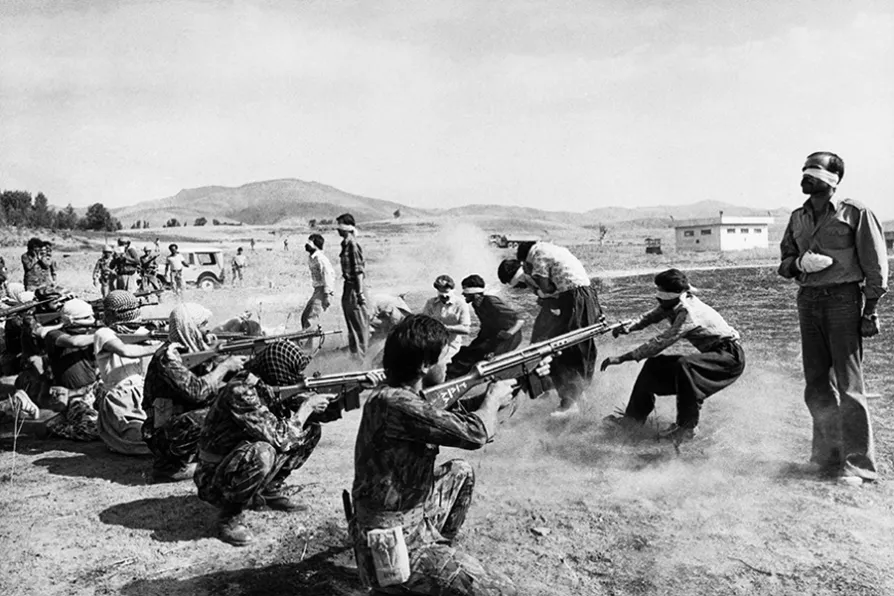
After a revolution there is a period of political horse-trading with different groups vying for power. After the Shah fled the country in January 1979, Iran saw radical Islamist and leftist groups in competition for influence, with the Tudeh Party now one of several Marxist-Leninist groupings, along with moderates such as Bazargan and Banisadr (respectively Iran’s new president and prime minister), each vying for position.
The occupation of the US embassy by Islamic students was an attempt by Islamists to upstage the left, presenting themselves as the better anti-imperialists.
By 1982 the Islamists, led by Ayatollah Khomeini, were firmly in control. Most of the left, including the Tudeh Party, supported the Islamists until they were themselves suppressed. The only exception were the People’s Fedayeen, a quasi-Maoist grouping with links to the anti-revisionist left. Today, the Iranian left, including the Tudeh, mostly exist in exile, with some of its members becoming involved in left-wing politics in their adopted countries.
The author covers the period since the revolution in some detail; this should arguably be the subject of another book. Nevertheless, he discusses the nature of the Islamic Republic’s constitution.
The constitution does contain some separation of powers between the executive, judiciary and legislature. However, the author is highly critical of the Guardian Council, which has extensive powers, including right to veto legislation and control over who stands for election, both for the parliament (Majlis) and the presidency.
Although the president, currently Masoud Pezeshkian, is nominally elected, real power is held by the Supreme Leader. The Supreme Leader, currently Ayatollah Mojtaba Khamenei, holds the position for life, has the final say in all matters of state, and has control of the armed forces, including the Revolutionary Guards.
The presidency has on occasion acted as a focus for limited opposition to the regime, most notably when the moderate Islamist Mohammad Khatami was elected president in 1997. He was, however, undermined by both the Guardian Council and the Supreme Leader.
Katouzian also touches on Iran’s place in the world. Iran holds a distinct position in the Islamic world. Almost on inception, Islam split into Sunni and Shi’ite denominations: Iran is a majority Shi’ite nation, where most of the Muslim world is Sunni.
Shia Islam places considerable emphasis on martyrdom, which was significant when Iran’s Supreme Leader, Ali Khameni, and senior military figures were recently assassinated by the US and Israel. This puts it at odds with many of its neighbours, especially Saudi Arabia.
Since the revolution of 1979, Iran has been able to use its influence among Shi’ite communities throughout the Middle East. Iran has become the focal point in the “Axis of Resistance” which has included Lebanese Hezbollah (Party of God), the former Assad regime in Syria, Hamas in Gaza and the Houthis of Yemen.
No discussion on Iran would be complete without mention of the nuclear issue. This dates back to the early 2000s when Iran’s attempts at uranium enrichment came to light.
A settlement was reached in 2015, when Iran agreed on restrictions to the nuclear programme, and since then Iran has continuously denied planning to build nuclear weapons.
The settlement was undermined by the first Trump administration but still supported by the EU. Alleged concerns over the Iranian nuclear programme and faux concerns over human rights were Trump’s pretext for the current conflict.
The present conflict has galvanised support for the regime; this may be connected to the Shi’ite concept of martyrdom. As to whether the Iranian economy can withstand the present crisis, only time will tell; it should also be noted that Iran’s largest trading partner is China.
Katouzian views Iranian society in terms of state/society conflict, with little reference to class. He also refers to Iran as a “short-term” society, while he considers the West to be a “long-term” society. This means that your position in society is a privilege that can be arbitrarily removed by the state, be that the Shah or the Islamic Republic.
This puts him at odds with Marxists who would see the Shah as a tool of the pro-imperialist, comprador bourgeoisie, with the Islamists acting on behalf of wealthy bazaar traders.
It could also be argued that the author is guilty of Orientalist thinking; the belief that Middle Easterners have a backward mindset compared to the West.
Although it contains useful information, the book is most notable for what it leaves out. That said, it also raises a number of interesting questions about Iranian society.

Similar stories
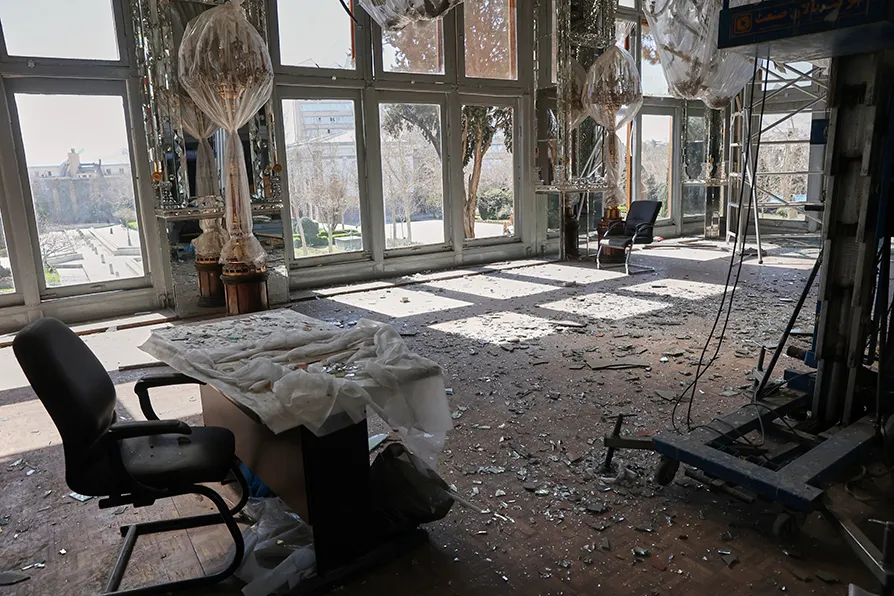
KATAYOUN SHAHANDEH surveys Iran’s cultural heritage and explains what has been damaged and what could be lost
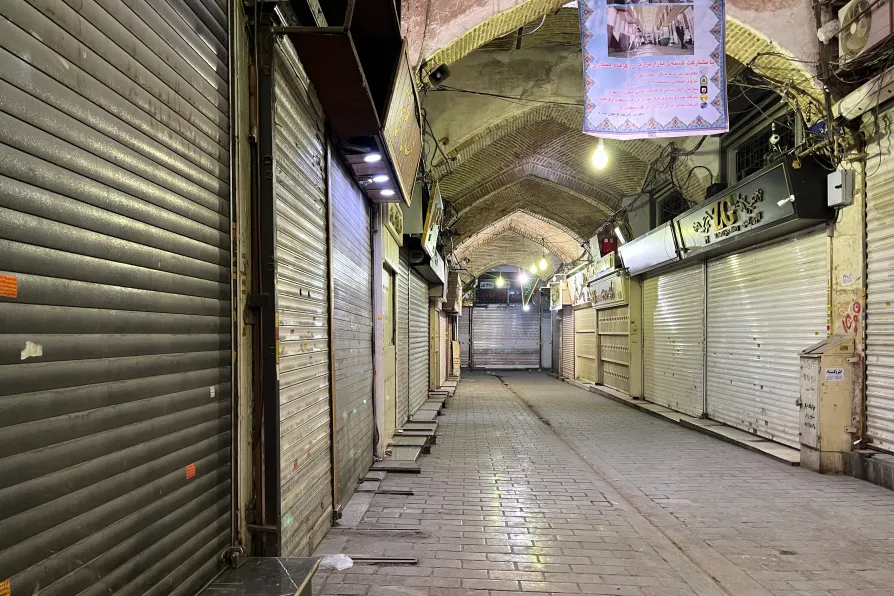
Trump threatens war and punitive tariffs to recapture Iranian resources – just as in 1953, when the CIA overthrew Mossadegh and US corporations immediately seized 40% of the oil, says SEVIM DAGDELEN
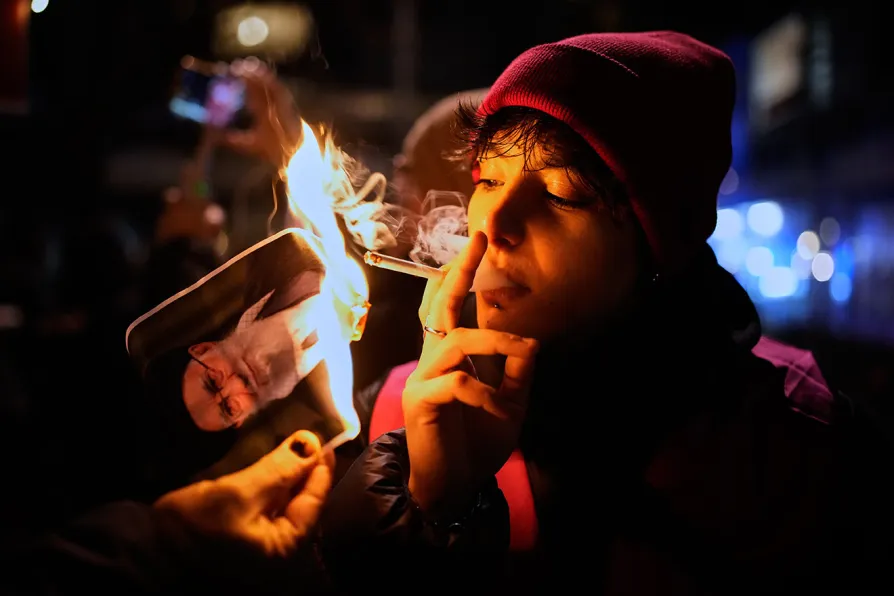
MOHAMMAD OMIDVAR, a senior figure in the Tudeh Party of Iran, tells the Morning Star that mass protests are rooted in poverty, corruption and neoliberal rule and warns against monarchist revival and US-engineered regime change
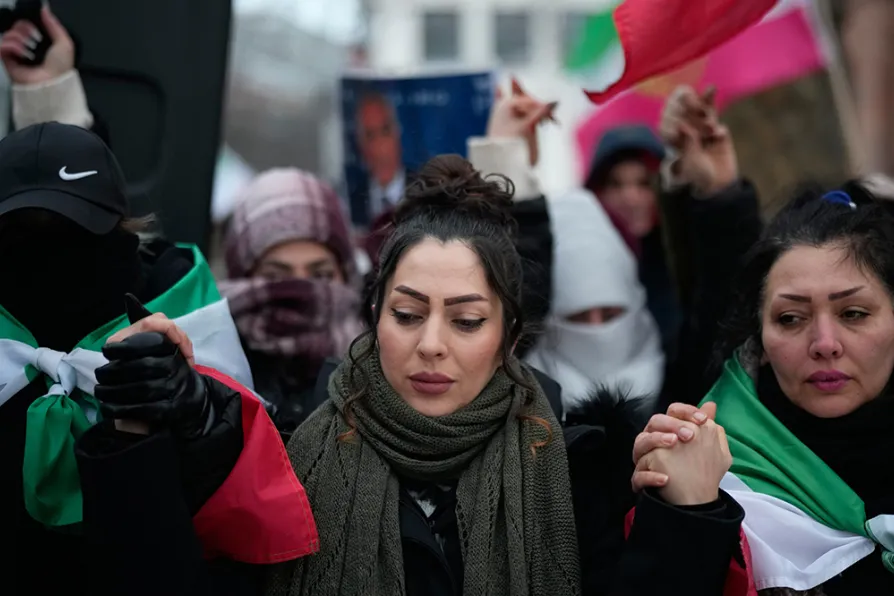
The Committee for the Defence of Iranian People’s Rights (Codir) welcomes demonstrations across Iran, which have put pressure upon the theocratic dictatorship, but warns against intervention by the United States to force Iran in a particular direction