

 Latest editorial
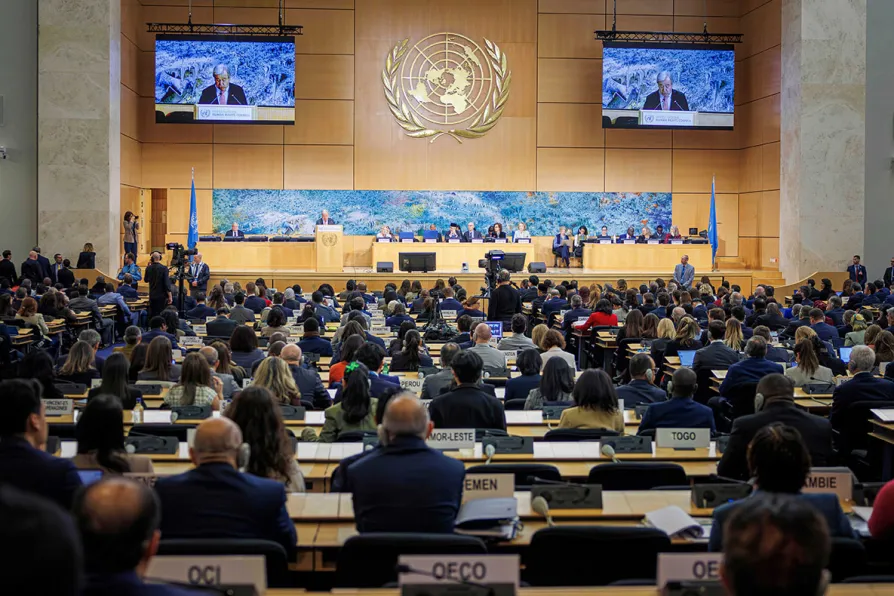 U.N. Secretary-General Antonio Guterres speaks during the opening of the 61st session of the United Nations Human Rights Council at the European headquarters of the United Nations in Geneva, February 23, 2026





FOUR candidates to be the next secretary-general of the United Nations will be interviewed for the job this week as Antonio Guterres’s reign comes to an end next year.
Chile’s former president Michelle Bachelet — one of two women and one of three from Latin America — will be the first to face ambassadors from the UN’s 193 member nations during a three-hour question-and-answer session tomorrow.
Ms Bachelet will be followed by UN nuclear chief Rafael Mariano Grossi of Argentina.
On Wednesday, UN trade chief Rebeca Grynspan will take centre stage in the General Assembly hall before Senegal’s former president Macky Sall.
The UN Charter says little about choosing the secretary-general except that the General Assembly, which includes all members, should do so upon the recommendation of the Security Council.
That gives the five permanent members of the UN’s most powerful body — the US, Russia, China, Britain and France — the decision-making role and veto power over the selection.
By tradition, the secretary-general rotates by region. Mr Guterres, a former Portuguese prime minister and UN refugee chief representing Europe, succeeded former South Korean foreign minister Ban Ki-moon, who represented Asia. He followed Ghana’s Kofi Annan, who represented Africa.
Now, it should be Latin America’s turn, though Eastern Europe has never had a secretary-general and lost out in 2016.
