

 Latest editorial

In the final part of LAYTH YOUSIF'S series on the history of the NY Cosmos, he traces their experiences which have made them the team that always has success in their sights
 PICTURE CREDITS: John Paul Perdicaro






THE town of Paterson, similar to so many others across New Jersey — attempting to recalibrate after struggling to find a place in the post-industrial world — is surely referenced in Bruce Springsteen’s haunting My Hometown, when the narrator says plaintively: “They’re closing down the textile mill/Across the railroad tracks/Foreman says, “These jobs are going, boys/And they ain’t coming back.”
Or the stringent Death To My Hometown in his album Wrecking Ball, where he decries the uncaring capitalism that “destroyed our families’ factories and they took our homes,” adding for good measure: “Send the robber barons straight to hell.”
Nor the plaintive anguish in Springsteen’s Youngstown, illuminating the pride of working people with the heartfelt lines: “Them smokestacks reaching like the arms of God/Into a beautiful sky of soot and clay,” adding with feeling against the rapacious mill and blast furnace owners: “Now, sir, you tell me the world’s changed/Once, I made you rich enough/Rich enough to forget my name.”
You can see the evidence in the disused, dilapidated red brick mill building opposite the main entrance where I gained entry to the evocative Hinchliffe Stadium.
Its broken windows and silent tall chimney tower signify a poignant architectural monument signposting the move away from mass manufacturing and heavy mechanisation of the industrial landscape.
The 1913 Paterson Silk Strike
The town is also immortalised in celluloid, with Jim Jarmusch’s Paterson, about a frustrated poet, as well as Reds, that won best Oscar award for director Warren Beatty, with Diane Keaton and Jack Nicholson also nominated for best actress, and best supporting actor, respectively.
The 1981 historical drama centred on the life of the renowned early 20th-century US journalist, poet and communist activist John Reed. The legendary Reed, who chronicled the October Revolution in Russia in his seminal 1919 book, Ten Days That Shook The World, also reported on strikers in the New Jersey silk mill industry, and was arrested in Paterson in 1913, after attempting to speak on behalf of picketers in the town.
The 1913 Paterson silk strike involved demands for the establishment of an eight-hour day, and improved working conditions. The workers mobilising after years of declining wages, poor working conditions, and long working days.
The strike began on February 1 1913, ending five months later, on July 28. During the course of the strike, approximately 1,850 strikers were arrested.
The authorities’ severe behaviour handed out to those who walked out — as well as the brief jail time Reed was forced to endure — ensured the firebrand journalist was radicalised still further, allying with the socialist union, Industrial Workers of the World. His account of his experiences was published that summer, entitled War in Paterson.
Reed related the 1913 strike by writing: “There’s war in Paterson. But it’s a curious kind of war. All the violence is the work of one side — the Mill Owners. Their servants, the Police, club unresisting men and women and ride down law-abiding crowds on horseback. Their paid mercenaries, the armed Detectives, shoot and kill innocent people … opposing them are about twenty-five thousand striking silk-workers, of whom perhaps ten thousand are active, and their weapon is the picket-line.”
Cosmos: A community-driven club
More than a century since those troubled times, the fighting spirit of Paterson still rings true.
Jose tells me proudly: “We are a community-driven club that has put roots down in this part of New Jersey. We’re not that far from New York City (you can look across and see the New York City skyline).
“We’re just looking forward to the team building a base, and heading up and getting to the point when we’re one of the USL Premier teams. And we start playing, hopefully on an equal footing internationally.
“For example, because of the history of this club, we are able to have an international friendly, which is rewarding for us.”
Cosmos v Laguna
Green smoke comes from the Cosmos Ultras, the Five Points, before their game against Mexican side Laguna, as both teams head out for kick off at Hinchliffe Stadium in Patterson, New Jersey on a sweltering Sunday afternoon.
Diego Gonzalez scores an early goal to put the visitors 1-0 up. The Liga MX side double their lead through a header from Lucas Di Yorio. Cosmos reduce the deficit through a second-half goal from Sebastian Guenzatti, prompting the loyal Five Points group to unleash the green smoke in celebration.
As Five Points stalwart Jose explained to me at half time: “We call ourselves the Five Points. We all stand together, you can see some of our banners.
“The Five Points are a collective of multiple groups, from all around the area, we have a couple of New York City ones, from Queens, we have a Long Island based one, and we have a newer one that’s from here in New Jersey. We also have a band.”
The Five Points consists of the Cross Island Crew, Brigada 71, Green Legion and Katra Locos. Along with the band La Banda Del Cosmos, including Jose’s son on snare drums. An additional group, Hudson River Hive, joined the collective in September 2025.
Jose added: “We have some governance and leaders in terms of getting people to games, getting the word out about certain events, but we don’t do any marketing, or anything like that.
“We are independent. The club doesn’t tell us what to do.”
As the final whistle blows, ensuring it wasn’t to be for the hosts as they go down 2-1 to Laguna, the thought arises that it is wonderful to see this historic club rebuilding with great hope for the future, while being embedded in their community here in Paterson, New Jersey.
The Paterson Great Falls (Passaic River) — Sopranos links
As if visitors to the mighty Cosmos required any further reasons to attend a match at Hinchliffe, the stadium has the Paterson Great Falls. Situated behind the scoreboard, there can’t be too many teams across the globe that can boast a stunning 77-foot-tall, 300-foot-wide waterfall behind their ground. Formed at the end of the last Ice Age 13,000 years ago, the falls later became the home of the Lenape Native Americans.
In 1778, Alexander Hamilton — yes, he of West End theatre cultural phenomenon status — visited the falls and was impressed by its potential for industry. Later when Hamilton was the nation’s secretary of treasury, the statesman, and Founding Father chose the site as Paterson became the country’s first planned industrial city, which Hamilton called a “national manufactory.”
Hamilton commissioned civil engineer Pierre Charles L’Enfant — who designed the layout of the land’s new capital at Washington DC — to also plan the system of canals that would supply the power for watermills in the new town, which became the catalyst for Paterson’s burgeoning mill industry.
For those interested in far more recent history, the nearby bridge played host to an iconic scene from the Sopranos.
I ask Jose if he and the Five Points are feeling confident about the future?
“Very much so,” he replies, adding: “I would say there is a lot of chatter from people naturally being unhappy with results, particularly with the previous iteration of this team. It was a team that won championships in three of the five years that they played in the NASL.
“We didn’t have promotion and relegation at that time.
“We are now going to have promotion and relegation outside of Major League Soccer within this United Soccer League One. There’s a Championship. There’s going to be a Premier [League].
“For us, that’s what we hang our hat on. This is a team that is building for the future.”
Post-match duties ended, New Jersey native, and US soccer expert and journalist Michael kindly takes us to the lively Hoboken, a gentrified district full of independent bars and restaurants.
Generous Hoboken host Michael takes us to a pub with a colourful mural dedicated to the 1994 World Cup on its walls outside, including a vivid Paul McGrath, as we drink locally brewed beer in a pub that has a raft of football scarves hanging from the ceiling. There are even a couple of loudly inebriated Scots, steadfastly refusing to end their summer adventure.
The evening is warm, and there is hope in the air.
A strawberry moon edges over NYC, with June’s charming full moon framing the Statue of Liberty as it crosses this incredible city. While the Empire State Building is lit up in the colours of the rainbow, following the city’s Pride Parade over the weekend that saw thousands take to the streets to celebrate the LGBTQ+ community, while commemorating the seminal Stonewall Riots of 1968.
And in the nearby shadows of the 80,000 capacity Meadowlands stadium, the mighty New York Cosmos are attempting to rise once again, taking a wrecking ball to the established order, with their own unique force, powered by community, solidarity and a proud heritage.
As New Jersey native Springsteen sang in his stirring Wrecking Ball song: “Hard times come, and hard times go,” adding: “Through the mud and the beer/The blood and the cheers/I’ve seen champions come and go/So if you’ve got the guts, mister/Yeah, if you got the balls/If you think it’s your time/Then step to the line/And bring on your wrecking ball.”
The earlier words of Jose ring out, when he told me: “We have high expectations of this version of the Cosmos.
“Collectively we understand it’s going to take a little time, even though some of us, myself included, feel a little disappointed that the results aren’t there yet.
“But you gotta have perspective, because we’ve spent five years wishing we were back, and now they’re here. And myself and so many others are very happy about that fact.”

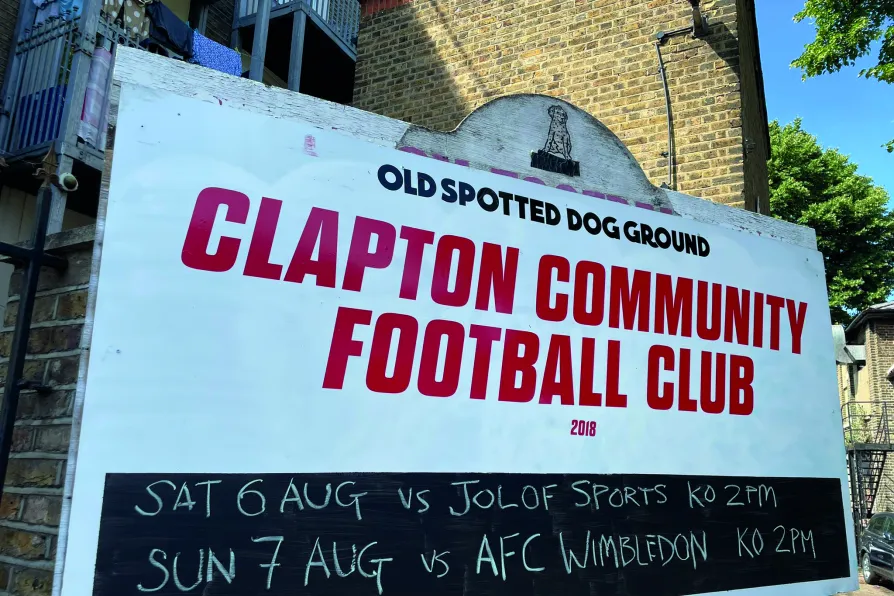
Two teams from different sides of the world will face off this weekend in a landmark football occasion. One team from the Americas, another from Europe, will meet in an exhibition of the world’s game that is being broadcast across the globe, writes JAMES NALTON
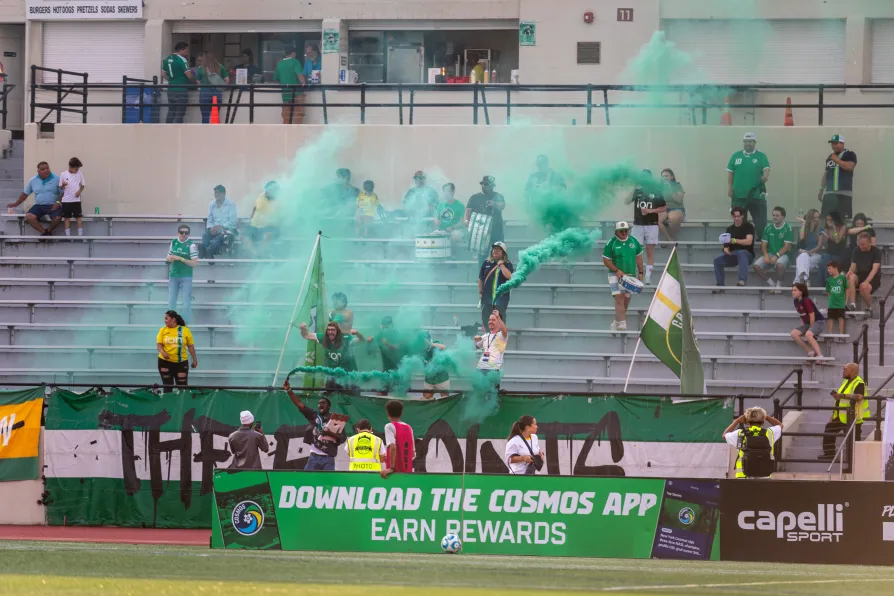
In the second part of LAYTH YOUSIF’S history of the New York Cosmos, he reflects on their stunning reboot
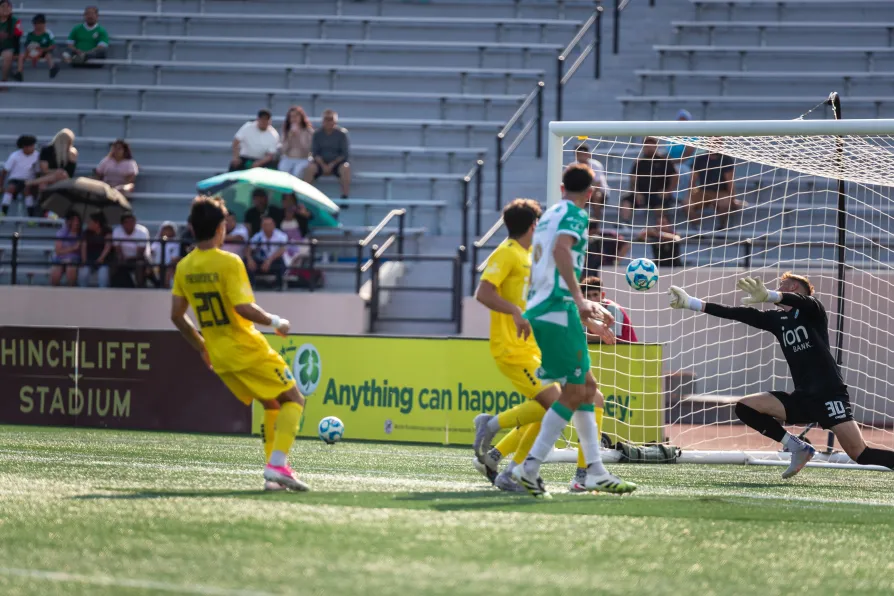
In the first of a three-part series, LAYTH YOUSIF visits a community-driven club in blue-collar Paterson, New Jersey, with a rich heritage that is rising once again
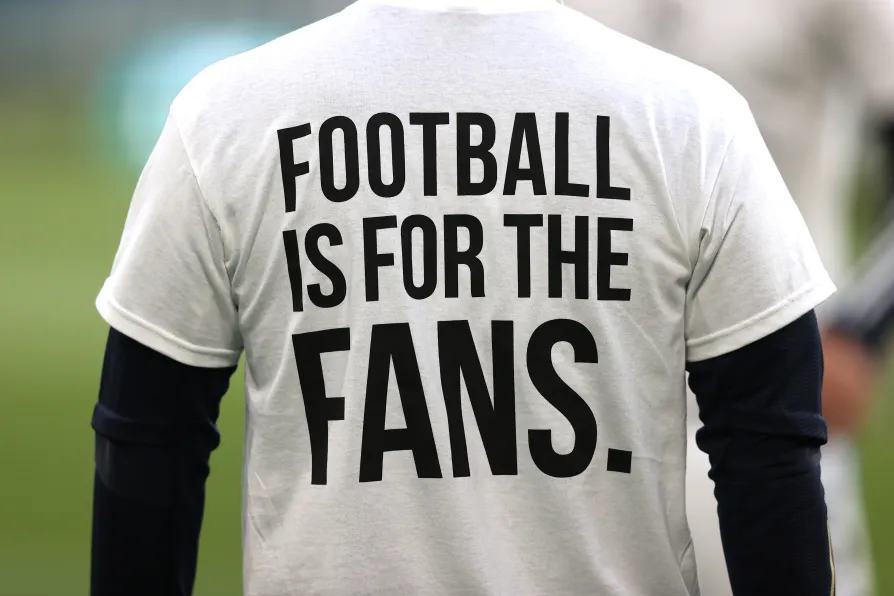
From pirate statues to surplus Wembley seats, The Dripping Pan offers a reminder that the game’s soul survives beyond the Premier League glare, writes LAYTH YOUSIF