

 Latest editorial
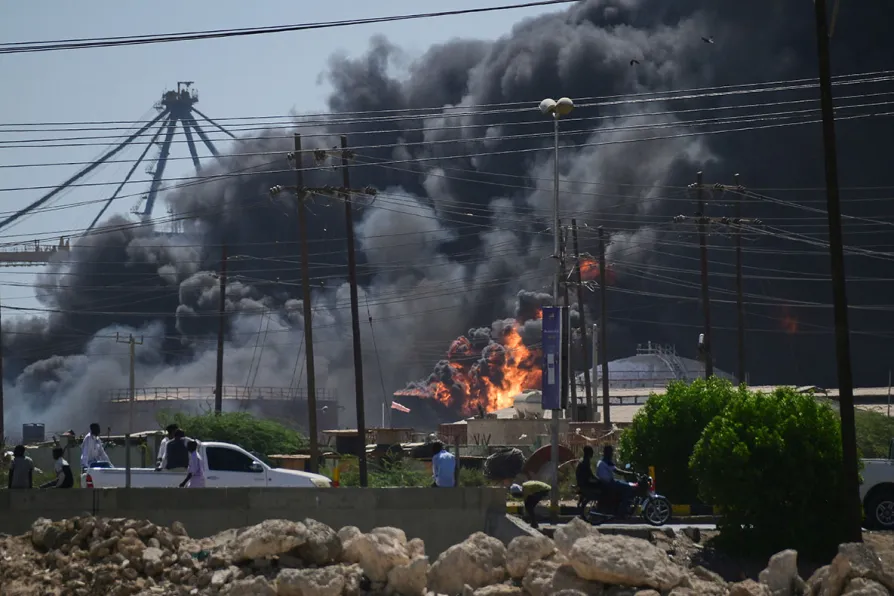 Smoke billows after drone strikes by the paramilitary Rapid Support Forces (RSF) targeted the northern port in the Red Sea city of Port Sudan, Sudan, May 6, 2025





SUDAN entered its fourth year of war today with no end in sight to what the United Nations branded an “abandoned crisis.”
The fighting between the two former allies, the Sudanese military and the paramilitary Rapid Support Forces (RSF) has seen at least 59,000 people killed and forced more than 13 million people to flee their homes.
At least 6,000 of those killed, died during a three day RSF killing spree through el-Fasher in Darfur during October, according to the United Nations.
The war has pushed parts of Sudan into famine. The number of people with severe acute malnutrition is expected to increase to 800,000, the world’s foremost experts on food security, the Integrated Food Security Phase Classification, said in February.
About 34 million people, or almost two of every three Sudanese, need assistance, the UN says.
Only 63 per cent of health facilities remain fully or partially functional amid disease outbreaks including cholera, according to the World Health Organisation.
“A plea from me: Please don’t call this the forgotten crisis. I’m referring to this as an abandoned crisis,” the top UN official in Sudan, Denise Brown, said on Monday, blasting the international community for failing to focus on ending the fighting.
Growing evidence shows regional powers Egypt, Saudi Arabia and the United Arab Emirates are backing combatants behind the scenes.
“This grim and chastening anniversary marks another year when the world has failed to meet the test of Sudan,” UN humanitarian chief Tom Fletcher said.
The war exploded during Sudan’s transition to democracy after a popular uprising ousted long-time dictator Omar al-Bashir in April 2019.
The military is led by General Abdel-Fattah Burhan, who chairs the ruling sovereign council, and the RSF by General Mohamed Hamdan Dagalo.
Both sides have been accused of war crimes.
Sudan is now essentially divided between a military government in the capital, Khartoum, and a rival RSF-controlled administration in Darfur.
