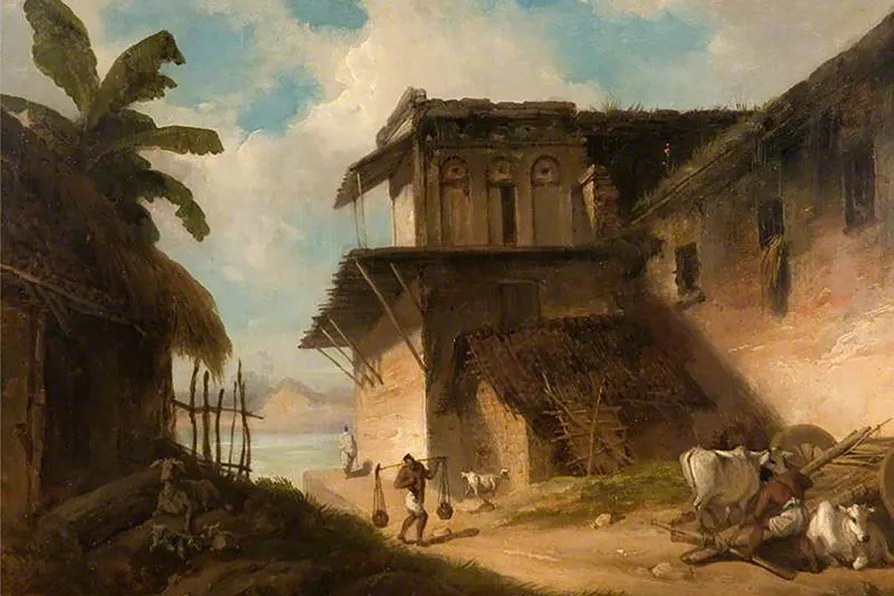
APURBA CHATTERJEE explains how British artists in India used the “picturesque” to reshape colonial landscapes and celebrate imperial power


 Latest editorial

The strange case of the unsatisfactory literary adaptation
SUSAN DARLINGTON laments a version of the adventures of Sherlock Holmes that is unable to solve its own problems
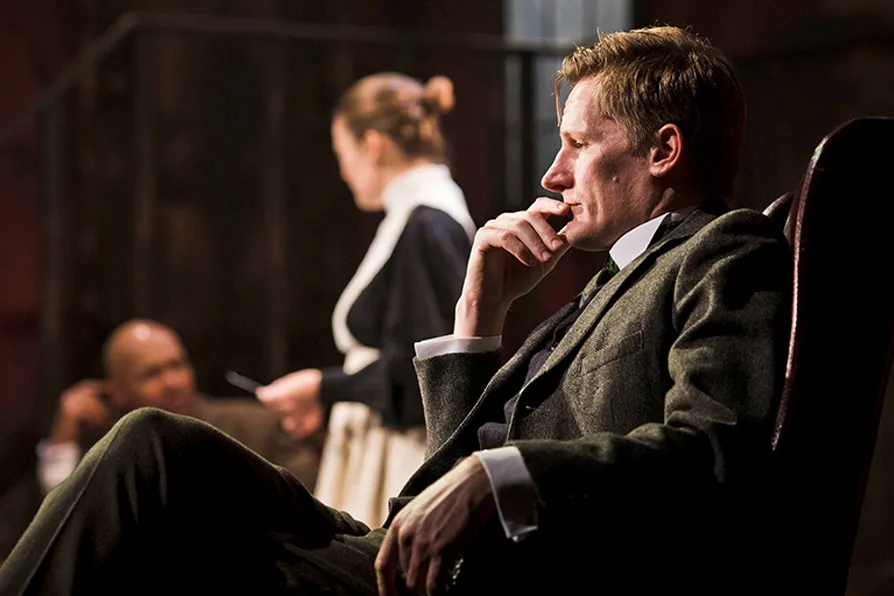 UNSATISFACTORY MY DEAR WATSON: Mark Knightley as Sherlock Holmes [Pic: Asun Olivan]
PAUL DONOVAN welcomes a revival of Reginald Rose’s classic play that reminds us of the fundamental need for trials with juries
SIMON PARSONS applauds an exceptional performance of Wesker’s little-known play, by the same actor for whom it was written 45 years ago
ANDY HEDGECOCK and MARIA DUARTE review Late Fame, The Death of Robin Hood, Leviticus, and Gail Daughtry and the Celebrity Sex Pass
ANGUS REID recommends a uniquely accomplished documentary collage that contemplates our relation to the natural world
GORDON PARSONS enjoys Kant’s ‘mind-boggling’ theory of human reality: that we create the reality we experience





Sherlock Holmes: The Hunt for Moriarty
Leeds Playhouse
★★☆☆☆
BLACKEYED THEATRE has created shows that respond to the curriculum for over 20 years. During the same period, the number of young people choosing to study literature and drama has declined. This production is a rearguard action in this depressing landscape.
Adapted by Nick Lane from the work of Arthur Conan Doyle, Sherlock Holmes: The Hunt for Moriarty has several elemental problems. In weaving together multiple short stories, the production creates a disjointed narrative arc and frustrating losses of momentum. Each apparent conclusion simply opens into another case, which leaves the mystery feeling over-complicated and over-long (clocking in at around 180 minutes).
Focusing on fewer sources could have given the story more focus. Characters repeatedly warn that the fate of the British empire is at stake, but each micro-conclusion drains the tension rather than heightening it. The same is true of the references to corrupt power brokers being at the heart of government. Although this has clear contemporary parallels, the idea is never explored in detail, leaving it feeling tantalisingly unfulfilled.
This sense of missed opportunity extends to the use of Mark Hooper’s projections. Telegrams and newspaper cuttings curl and rise across the stage walls, offering fleeting moments of visual imagination. Too sparingly employed to have real impact, they feel like a grudging nod to technology rather than being fully integrated. As such, they sit awkwardly alongside Victoria Spearing’s solid yet old‑fashioned set design.
Any actor would struggle to rise above these problems, but the six-handed cast display a hamminess that verges on parody. Playing multiple roles, they cover many of Sherlock’s famous friends and adversaries. Pippa Caddick’s Mrs Hudson is promoted from housekeeper to investigator, while Ben Owora’s Dr Watson does his best to keep the audience up to speed when they’re left confused by the deductive reasoning of Mark Knightley’s Sherlock.
For a detective who famously craves intellectual challenge, Sherlock feels oddly ill-served here: trapped in a production that has plenty of potential but that’s ultimately unable to solve its own problems.
On tour until May 23. For tickets and venues see: blackeyedtheatre.co.uk
