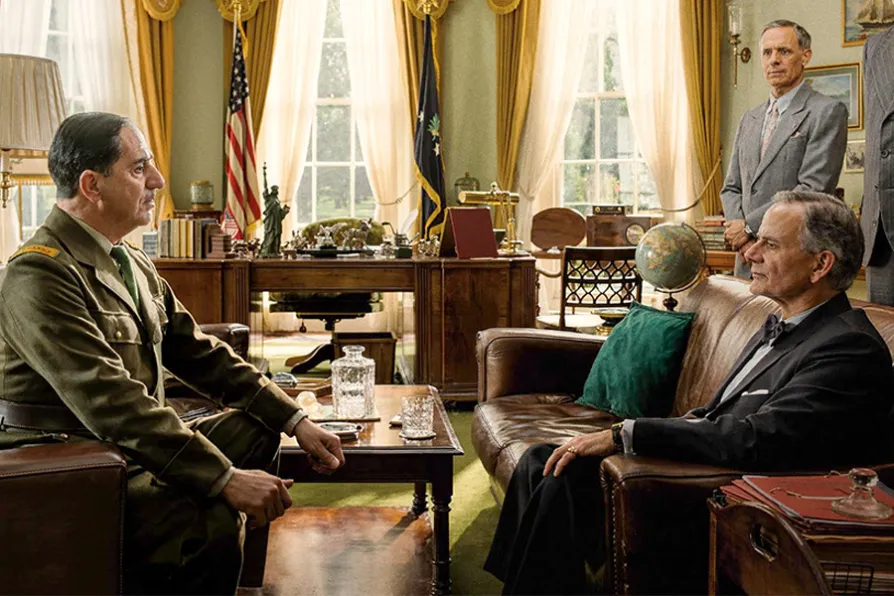
NICK WRIGHT laments the one-sided telling of French history in an otherwise entertaining spectacle


 Latest editorial
The sordid facts behind the foundational myths
ALEX HALL appreciates the history of a famous shoot-out that is sourced from diaries, letters, and newspapers of the time
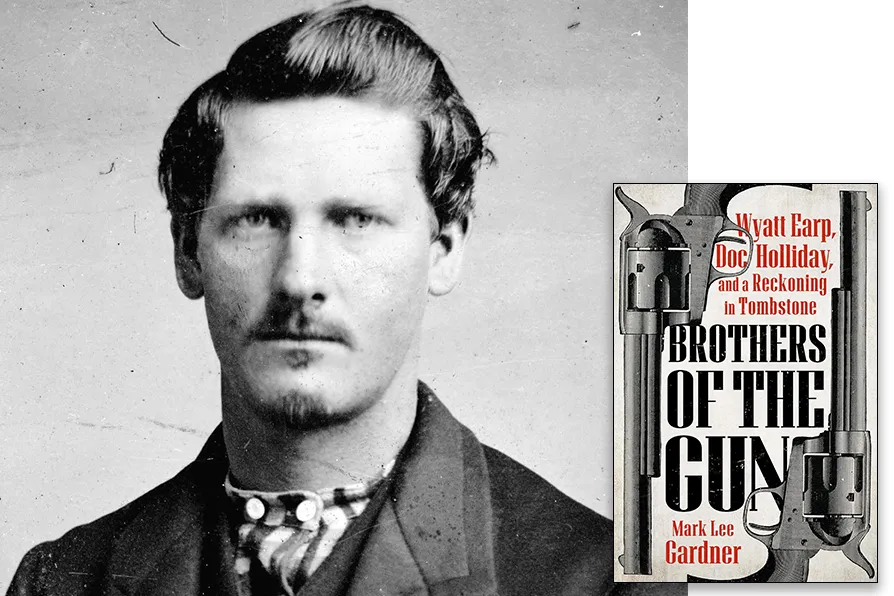 Wyatt Earp at age 21 in 1869 or 1870, Lamar, Missouri. [Pic: Public Domain]
MARK TURNER relishes the warm, melancholy of jazz drummer-turned composer Sam Green
RITA DI SANTO assesses the winners of the most politically charged festival to date
KATARZYNA KOSMALA introduces a retrospective by one of the most significant figures in contemporary US photography
MAYER WAKEFIELD is entertained but let down by an audacious production that, sadly, doesn't ring true





Brothers of the Gun: Wyatt Earp, Doc Holliday and a Reckoning in Tombstone
Mark Lee Gardner, Dutton, £31.99
NEARLY all states build themselves a foundational mythology. Whether it be descent from Olympian god or the product of a Bolivarian revolution for liberty, such myths form an origin narrative: forged in enlightenment or fire, legacies of great men, and heroic deeds.
The United States, however, was forged in the modern age. Sources are multiple and legion, but the mythology is still an essential component of how it sees itself today. The 19th-century frontier was a primary incubator. It was framed as the edge of civilisation, a line between the rational West and a backward wilderness, thereby rationalising a colonial settler project that devastated indigenous peoples. The myth of the rugged individual, prizing freedom and principle, provided cover for this reality.
Within that pantheon, few figures are more iconic than Wyatt Earp and Doc Holliday. In Brothers of the Gun, historian Mark Lee Gardner joins the ongoing work of disentangling men from myth. His method is straightforward: start with the legendary tale, then return to the diaries, letters, and newspapers of the time and, unlike the film directors, only quote dialogue that can be directly sourced.
Earp wasn’t the steadfast lawman of legend, but a complex opportunist. He spent as much time being arrested and charged as arresting and charging. Further career choices include pimping, brothel keeping, horse thieving, gambling and saloons.
John Henry “Doc” Holliday trained as a dentist. Diagnosed with tuberculosis, he headed West to avail of the abundant sunshine, clean air — and boom towns. He found his vocation as a gambler and an inveterate drinker, his mortality shadowed by disease and a foul, argumentative, temper. The enigmatic friendship of both men, born from shared bravery and a Texas saloon confrontation, is central to the myth.
Both men and Earp’s brothers found themselves in Tombstone in 1881, with a local outlaw group known as the Cochise County Cowboys spreading rumours that Earp had robbed a stagecoach. Virgil Earp, city marshall, deputised his brothers and Holliday to enforce a city ordnance against carrying guns in the city, and went to disarm the Cowboys.
The gunfight at the OK Corral lasted 30 seconds, and actually took place on Fremont Street, some distance from the eponymous livery stables. Morgan Earp was killed, Virgil maimed. The “battle” is now a celebrated tourist attraction. The reality was probably quite sordid, and its epilogue is little more than a vendetta. It is difficult not to compare a more recent 30-second shootout: Alex Pretti being shot by federal ICE agents in Minneapolis January 2026. How will future pulps frame this: dutiful law enforcement on a gun-toting activist or the enforcement of dishonourable aims on a nurse?
While Gardner’s retelling is detailed and unpacks some of the fabrications of the story, it feels somewhat confined. The analysis would be bolstered by a deeper engagement with the broader economic forces driving the US and a view of the frontier from “the other side of the border,” something he has approached in other works.
Ultimately, Gardner delivers a source-driven retelling of a key American legend. Hopefully, future histories of the US will focus on the facts, filter the propaganda, and reveal the tarnish of truth rather than the gilt of legends.
