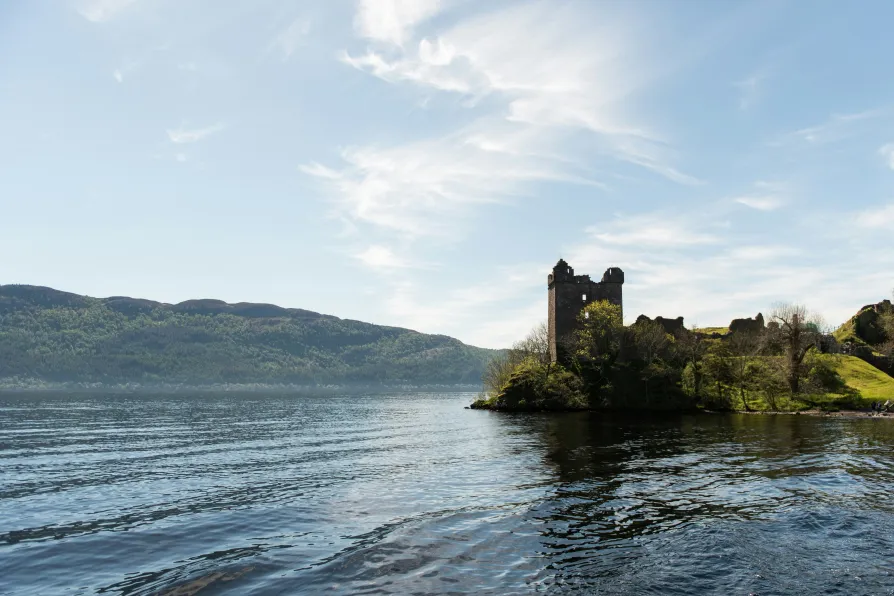
 Loch Ness and Urquhart Castle in Scotland






CAMPAIGNERS have demanded the government ban seabed trawling in Scotland’s sea lochs to protect “some of the most vulnerable carbon stores in the country.”
The Sustainable Inshore Fisheries Trust (Sift) urged ministers today to advance “coherent measures to protect our seabeds” after new researchers revealed the “substantial impacts” of the practice.
A report from the University of St Andrews revealed a “single disturbance event” could lead to “very rapid losses” of carbon, as lochs play an important role in storing CO2 which would otherwise be released into the environment and further drive climate change.
Sift executive director Charles Millar demanded the government move to ban seabed trawling on these “vital sea loch carbon stores.”
“This new research confirms that the heads of Scottish sea lochs, which collect peat washed down by rivers from surrounding glens, contain some of the most vulnerable carbon stores in the country,” he said.
Mr Millar said research has shown “even a single disturbance event can have a major effect on these important sediments, releasing substantial amounts of carbon into the water and then back into the atmosphere.
“With Scottish peatlands at ever greater risk of fire, as we saw at the massive moorland blaze near Nethy Bridge in the Cairngorms this summer, we must urgently act to protect our equally important seabed carbon from disturbance.”
A spokesperson said the Scottish government already has “a strong set of measures in place to ensure that the marine environment is protected and are building on these through a range of initiatives, including the development of fisheries management measures in Marine Protected Areas.
“Any future decisions on measures to protect blue carbon habitats will continue to be informed by the best available scientific evidence.”