

 Latest editorial

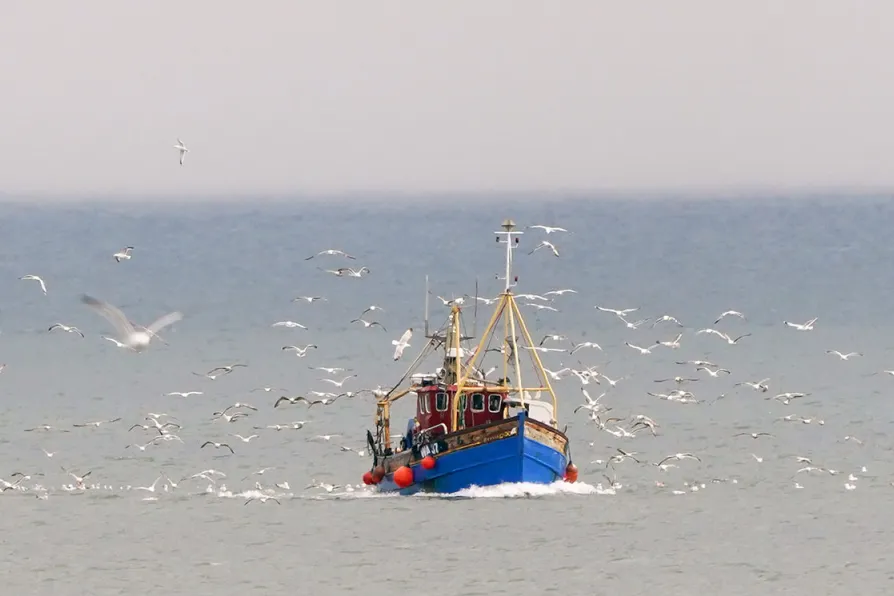 A trawler returns to the North Shields fish quay with its catch from the North Sea, May 5, 2022






NORTH SEA scampi fishing has been exacting a “largely invisible” environmental cost by releasing carbon locked in seabeds for millennia, according to new research.
Studying the carbon stored in the muds of the Fladen Ground — one of the North Sea’s most commercially important fishing grounds — scientists at the University of Exeter found that the practice of dragging nets across the seabed, known as bottom trawling, to catch the crustaceans, released carbon faster that it could be reabsorbed.
Scampi is often marketed as a sustainable seafood choice, but Zoe Roseby, lead author of the study, said: “Many people don’t realise that Norway lobsters (scampi) live in mud, or that catching them involves towing nets directly across the seabed.
“That makes the environmental cost of scampi largely invisible to consumers.”
Ms Roseby cautioned that “not all seabeds carry the same climate risk,” but added: “Some areas of the seabed are still actively accumulating sediment and carbon today, whereas the Fladen Ground is a low-accumulation environment.
“Most of the carbon stored there was deposited at the end of the last ice age and is not being replenished in our lifetime.”
Arguing for smarter management of the resource, co-author of the study and lead scientist of the Convex Seascape Survey, Callum Roberts, added: “For fisheries to be genuinely sustainable, we have to consider where fishing takes place and how different seabed habitats function in the carbon cycle.
“This isn’t an argument against eating scampi or against fishing itself.
“But if seafood is to be climate-smart, we need to think not just about what we catch, but how and where we catch it, and use smarter spatial management to avoid disturbing seabeds that are actively accumulating and efficiently burying more vulnerable carbon.”
