
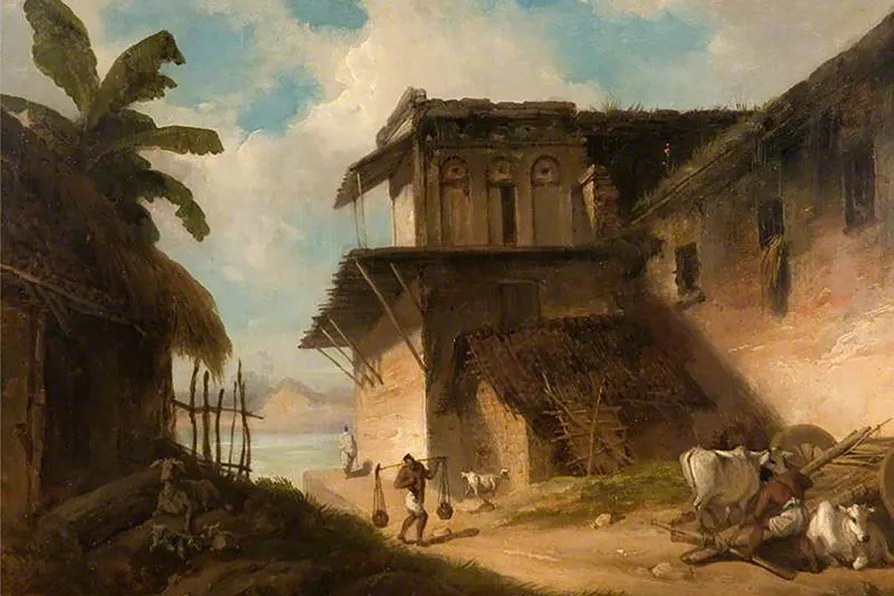
APURBA CHATTERJEE explains how British artists in India used the “picturesque” to reshape colonial landscapes and celebrate imperial power


‘Read the book. Feel every word we wrote’
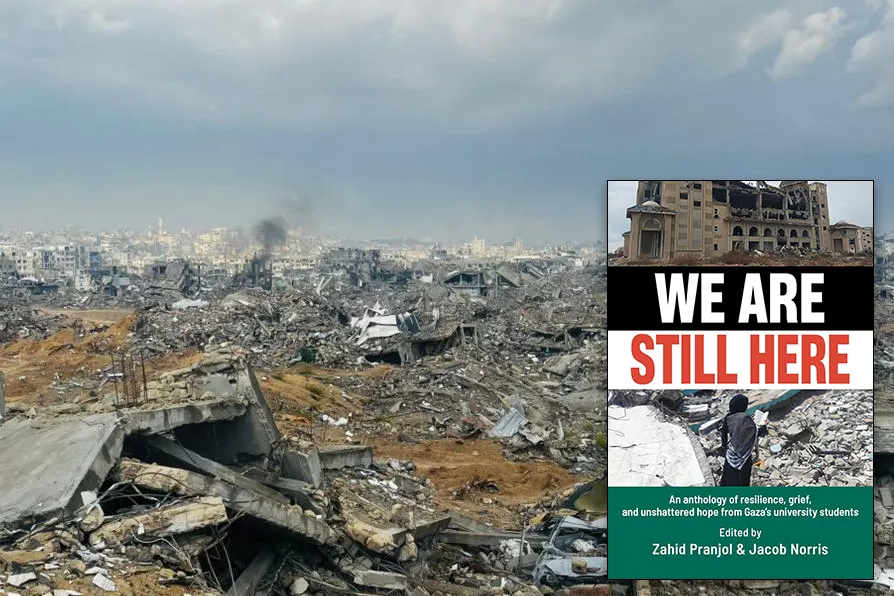
JOE GILL speaks to the Palestinian students in Gaza whose testimony is collected in a remarkable anthology
 [Pic: Mariam Malaka]
PAUL DONOVAN welcomes a revival of Reginald Rose’s classic play that reminds us of the fundamental need for trials with juries
SIMON PARSONS applauds an exceptional performance of Wesker’s little-known play, by the same actor for whom it was written 45 years ago
ANDY HEDGECOCK and MARIA DUARTE review Late Fame, The Death of Robin Hood, Leviticus, and Gail Daughtry and the Celebrity Sex Pass
ANGUS REID recommends a uniquely accomplished documentary collage that contemplates our relation to the natural world
GORDON PARSONS enjoys Kant’s ‘mind-boggling’ theory of human reality: that we create the reality we experience





We Are Still Here: Voices from Gaza’s Student Generation
Zahid Pranjol and Jacob Norris (Editors), Daraja Press, £14.99
ON a Zoom call in late December, Mariam, a student in Gaza, uses her phone camera to survey the rubble and devastation that was once her home: “Yes, I’m sitting at the rubble of my home. This is my area. There is no house.”
“It’s winter now,” says Hada Homaid, “the season that we once loved, but now fear most. Because the rain floods the streets, because the infrastructure is completely destroyed in our city. And people literally are drowning in their tents.”
Since October 2023, Israel systematically destroyed universities and schools, killing thousands of students and targeting many renowned academics and teachers. The genocidal campaign has even been given a name: educide.
Despite these dire circumstances, a number of displaced students are on a call to discuss a book they have co-written that is now published in English, by Canadian publisher Daraja Press.
One student on the call, Obay, has just returned from a library where the very first copies of We Are Still Here have been printed in Gaza.
Image
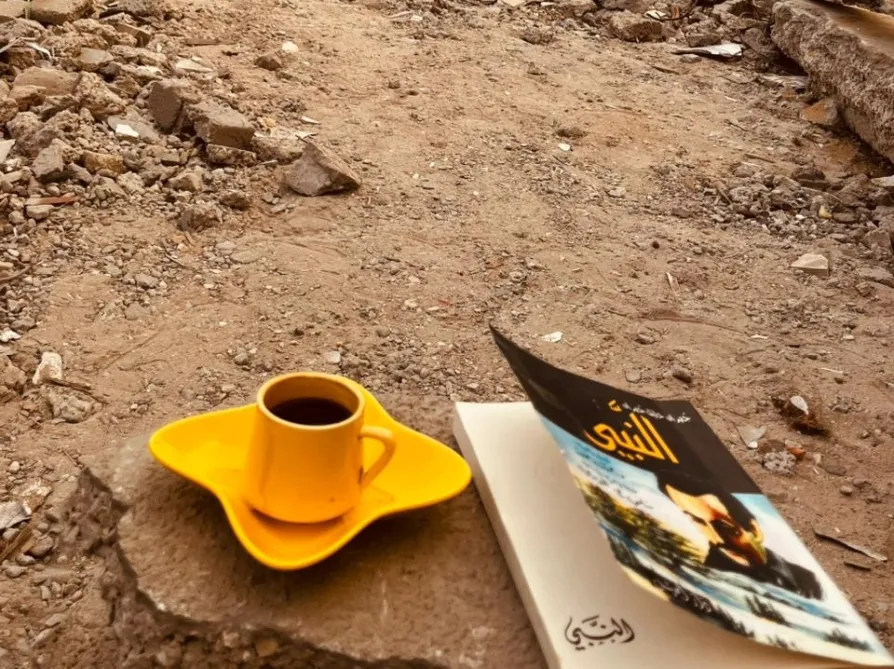
We Are Still Here emerged from international solidarity, by one person in particular, Dr Zahid Pranjol, professor in Biomedical Science Education at Sussex University. He began co-ordinating an education solidarity project in April 2024 when it became clear that Israel was obliterating Gaza’s university infrastructure and in person learning was no longer possible.
In June this year, Pranjol initiated a conversational English programme with a few volunteer teachers from the Sussex area for students in Gaza. This has now grown to 70 teachers with more than a 1,000 students in Gaza, 80 per cent of whom were displaced or in partially destroyed homes. All classes are on WhatsApp and on weekly Zoom sessions when possible.
During the brutal onslaught waged by Israel this summer, students began to send their own writing to him, raw and unfiltered accounts of their experiences and feelings.
Pranjol had the idea for a book, which he discussed with Jacob Norris, associate professor in Middle East history at Sussex, who agreed to help edit and publish it. Norris reached out to a number of publishers, and Daraja Press in Canada agreed to publish it.
Given the urgency of the situation, they moved quickly. Before they knew it, in a few weeks, the book was in print. Dr Pranjol explains: “When these stories were being collected, these students were being actively displaced, their houses were being bombed in the north of Gaza. A lot of these works capture their live, almost last words.”
Hada Homaid says to the readers of the anthology: These words are not only words on the pages. These words carry lived experiences. These words carry endurance, and the quiet strength of survival, so please read slowly. And look at these words, there is a whole society is still pleading beneath every word.”
And to the readers of the anthology she says: “These words are not only words on the pages. These words carry lived experiences. These words carry endurance, and the quiet strength of survival, so please read slowly. And look at these words, there is a whole society is still pleading beneath every word.”
Fellow writer Rawan Marwan Omar Matar agrees. “We wrote a book filled with emotion of sorrow and grief, and first-hand testimonies of our attempt to survive, written by university students who turned to pen and paper when no one would listen.”
Rivers of grief, loss after loss, heartache, hunger, defiance: in the pages of We Are Still Here, every kind of torment and shock that a young person can endure amid genocide is found in this unique anthology.
It is the endeavour of more than 60 university-age students in Gaza, writing while being uprooted, starved and bombed — prose pieces on what it means to be alive while all around you is destroyed; odes to beloved fathers, uncles, brothers and lovers taken by the relentless onslaught from the sky; defiant prayers from people who refuse to be silenced and erased while all they love is taken from them.
This is not a polished set of texts; it is raw, draft history and open-wounded. The intensity of feeling expressed in these pages means it is not to be read in one sitting, but rather to savour and inhale the weight and truth of each poem or plea.
While many accounts are vivid testimonials of survival, and confrontation with death and loss, and some of the poems are works in progress, there are works of beauty and truth, such as Mariam Marwan Malaka’s poems of immeasurable grief for a martyred lover.
Saad Aldin Ahmed Muhanna deploys telling details to show how enforced famine stripped away Palestinian dignity, opening with an old woman kicking an empty plastic bottle and shouting at a child taking her place in the aid queue.
“If you try to remain “a decent human being” – you get trampled./ With time, I learned to shout./ To shove./ To speak in a tone that isn’t mine, with a voice I never thought I had. I became one of them./ Or maybe I always was – and only ever lived under conditions that let me pretend to be rational./ We are not just fighting to survive./ We’re fighting not to lose ourselves completely while trying to survive.”
I ask Rawan, one of the contributors, what is her personal message to people outside Gaza?
“Read the book,” she replies, “feel every word we wrote, every moment we felt. You will find the stories almost unreal, too heavy for any human to bear. Some of us lost our mind from what we endured, and the others died from the shock. So read, feel, and if you have the ability to help, support these voices wherever they are in the world. Enough silence in the face of injustice. Unite and stand up for one another. That’s what I want to say to the world.”
All funds from We Are Still Here go to the authors; Translations into French, Italian, German, Spanish, Portuguese and Arabic, are on the way, and there’s already a second book in the works.
Lost Wish
by Mariam Marwan Malaka
(Excerpt)
And I wished I had gone before you – or with you.
I wished I had kissed the brow of freedom.
I wished my kiss had come in your presence.
I wished, when sleep slips past grief-heavy lids, it would find you waiting.
I wished there had been, at the very least, a farewell
One in which I could weep myself to death,
So they might carry my coffin and yours, side by side.
…
What now?
In your leaving, did you find eternal bliss?
In your leaving, did you find a faithful lover?
In your leaving, did you leave behind a place
For the beloved once bound by fleeting love
And the eternal ache of parting?
