TUC president and POA leader STEVE GILLAN speaks to Ben Chacko on the eve of Congress 2026


 Latest editorial
The power of labour movement history and strategies today show us how to change the world
Assistant general secretary of the General Federation of Trade Unions HENRY FOWLER reports on day 1 from the GFTU’s residential Summer School at Quorn Grange Hotel
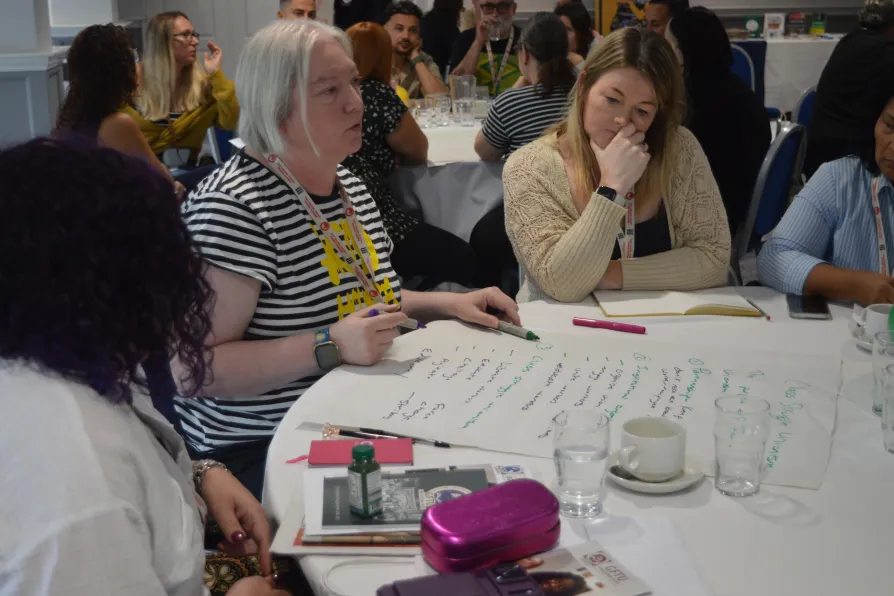 A group participate in GFTU's Summer School [Pic Henry Fowler]

As Cuba faces the most dangerous moment in its recent history, Britain must do more than condemn the US blockade at the United Nations, writes KEVIN COURTNEY, chair of the Cuba Solidarity Campaign
The Together Alliance is hosting two summits, North and South, to build power and plan action against the scourge of racism peddled by the right. DANIEL KEBEDE urges mass participation
Morning Star assistant business manager BERNADETTE KEAVENEY and international editor ROGER McKENZIE remember attending the 2001 TUC, suspended midweek after news of the World Trade Centre attacks
Whether it’s dented bike frames or broken ferries, MATT KERR wishes politicians had the same steely staying power of elite engineering instead of chasing disposable self-importance
The events of 9/11 reverberated across the United States and then the world. JOHN WIGHT remembers the eerie atmosphere that exposed racial divisions at the heart of Hollywood





YESTERDAY was the first of three days of the General Federation of Trade Unions (GFTU) Summer School, teaching dozens of workers radical political economy, organising skills and lessons from our history for today.
Day 1 focused on the question: what is the point of a trade union? Starting with Gawain Little, GFTU general secretary, we explored the importance of class and the class struggle nature of the employment relationship.
Using the framework developed by Joe Burns, we explored the different approaches to trade unionism: “business unionism” (working with companies in partnership, often to do deals with little power exerted), “labour liberalism” (the idea that we mobilise members and use political campaigns to win), and “class struggle” unionism (an understanding that the employment relationship is inherently antagonistic and exploitative, in which struggle is key and partnership is not possible).
Rhys Davies, from the Wales Institute of Social and Economic Research and Data (WISERD), engaged participants in the trends in trade union membership over the years.
Looking at the incredible resource Union Maps, now integrated into Strike Map, Davies explored the regional disparities in union membership, including surprising participants that the Cumbrian coastal plain is the highest unionised area, due to the nuclear industry.
This presentation skilfully empowered participants to understand how many workers are covered by a collective agreement and the impact this has on wages, conditions and power at work.
The afternoon session began by exploring how we can rebuild labour power and the role of the general strike in the 21st century.
This session included PCS general secretary Fran Heathcote, author and activist Callum Cant, BFAWU general secretary Sarah Woolley and author and activist Edd Mustill, chaired by Gawain Little.
Heathcote focused on the need for co-ordination across our movement and how the general strike demonstrates this in practice. Woolley explored the importance of collective action, arguing that the general strike is an extraordinary demonstration of working people realising they are individually replaceable, but collectively unstoppable.
Cant described the political development of the general strike as a tactic of self-organised workers from below, dating back to the 1840s. Mustill affirmed that we cannot rely on the removal of trade union legislation to organise in a co-ordinated way; building solidarity through actions that move us beyond sectionalism is how we build power.
Following the powerful reflection on the general strike, Hwanhee Bae from the GFTU Educational Trust asked us all how billionaires exist. Bae spoke about how we live in a world with billionaires (and a trillionaire). There are three primary ways to make money under capitalist society, and which one you’d pick depends on who you are — more precisely, which class you belong to.
Workers sell their labour power and earn wages. Industrial capitalists use the means of production they own, employ labour and sell the commodities and services produced by workers, making profit in return.
Banks and landlords simply lend their assets — money or land — to industrial capitalists and take a cut of the latter’s profits in the form of interest and rent, respectively. But these are flows, not stocks.
Looking at the Bloomberg list of billionaires, the world’s 20 richest people aren’t bankers or landlords. They are industrial capitalists, mostly in tech, meaning they must have made profit.
So how did they accumulate hundreds of billions? It’s mostly through the stocks of their companies, private equity, venture capital and other financial assets produced by workers’ labour.
Capitalism’s irony, as pointed out in Murphy’s Law, is that “in order to get a loan, you must first prove you don’t need it.”
We are promised meritocracy, but we don’t all play by the same rules.
The final session of the day was facilitated by author and academic Robert Ovetz. His powerful presentation focused on organising workers in not-for-profits.
Ovetz emphasised that the charity sector is one of the largest and fastest-growing sectors of the British economy, meaning there is an immense opportunity to unionise more workers around issues of low pay, poor working conditions and discrimination.
When charity workers become unionised, it benefits the wider labour movement, especially those working for government, whose services are increasingly being privatised and outsourced to these non-profit organisations.
We ended our day with an inspirational viewing of the excellent Iron Ladies film, followed by a Q&A with the director and one of the film’s participants. The defiance, community and solidarity of our movement, etched in our struggles, form the roadmap for our future.
Our second day will focus on organising strategies and skills that can win in the workplace, across employers, and challenge who runs the country. See tomorrow’s Morning Star for our full report.

Similar stories
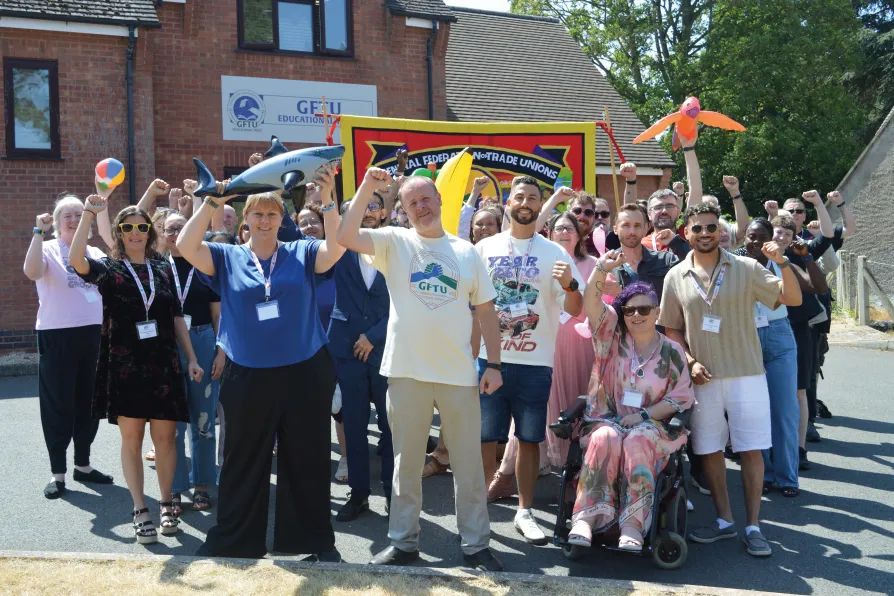
We have the alternative economics, histories of our struggles and the confidence to change the world
General Federation of Trade Unions assistant general secretary HENRY FOWLER reports on the final day from the GFTU’s residential Summer School at the Workers’ Retreat, Quorn Grange Hotel
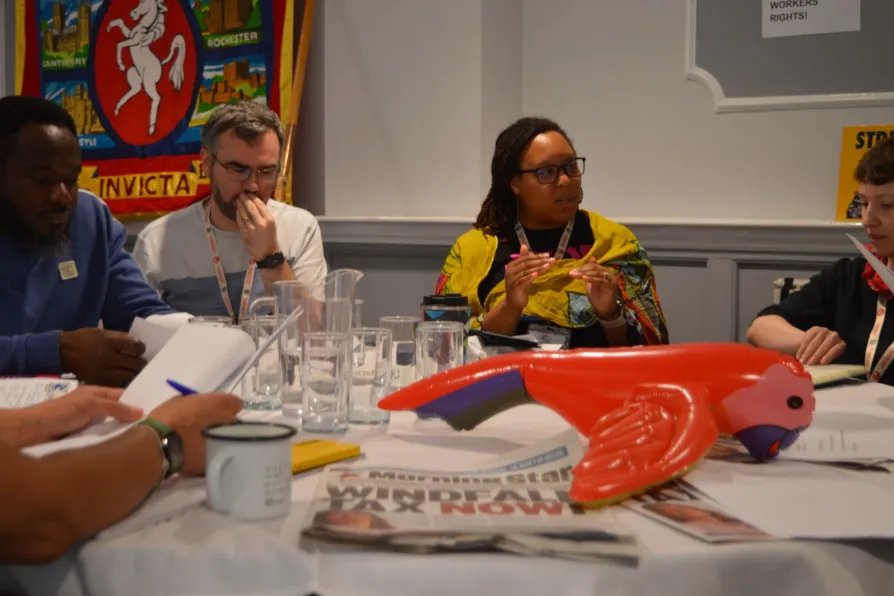
HENRY FOWLER, assistant general secretary of the General Federation of Trade Unions (GFTU), reports on Day 2 from the GFTU’s residential Summer School at the Workers’ Retreat, Quorn Grange Hotel
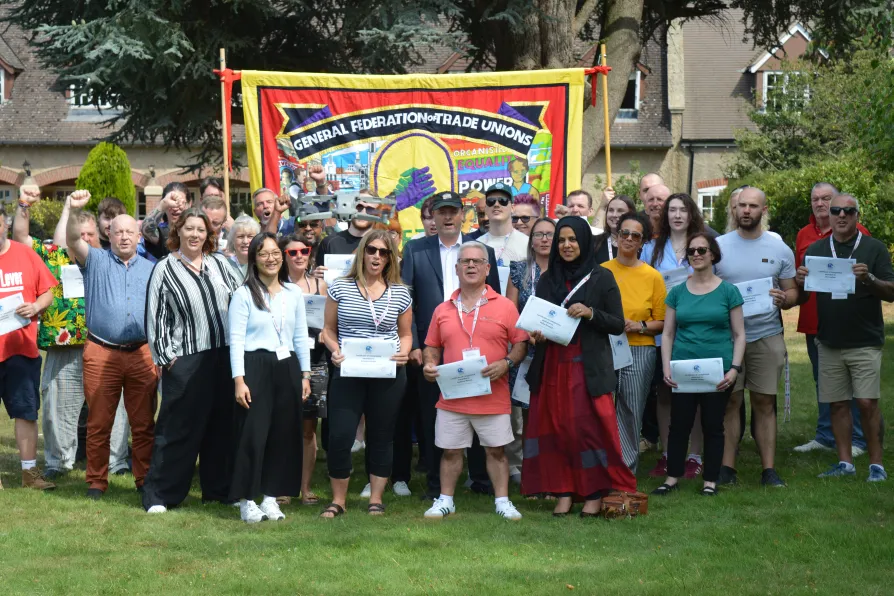
General Federation of Trade Unions president and bakers’ union general secretary, SARAH WOOLLEY, guides us through the GFTU’s Summer School happening this week at Quorn Grange Hotel
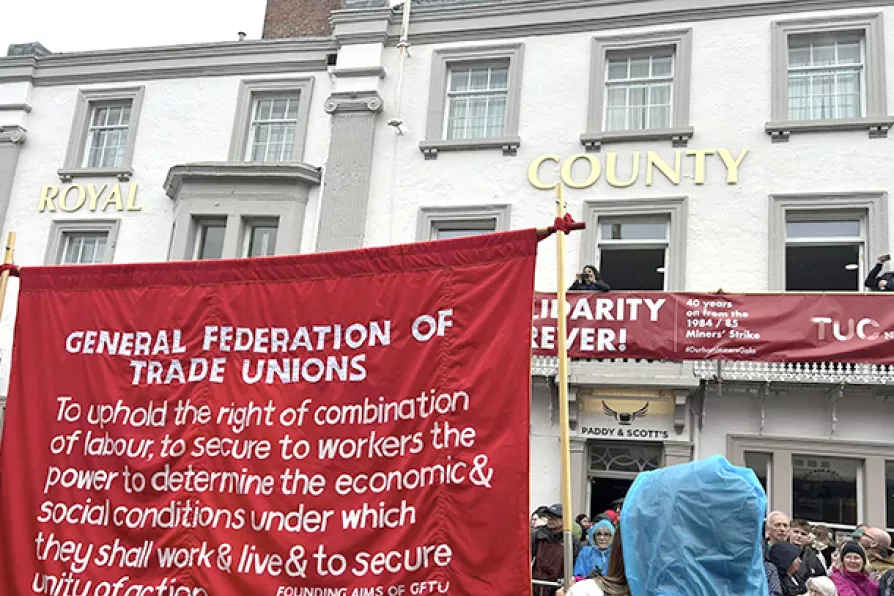
HENRY FOWLER outlines the GFTU’s new 2026-27 education programme and argues that investing in trade union education is essential to building worker power, developing leaders and strengthening collective action