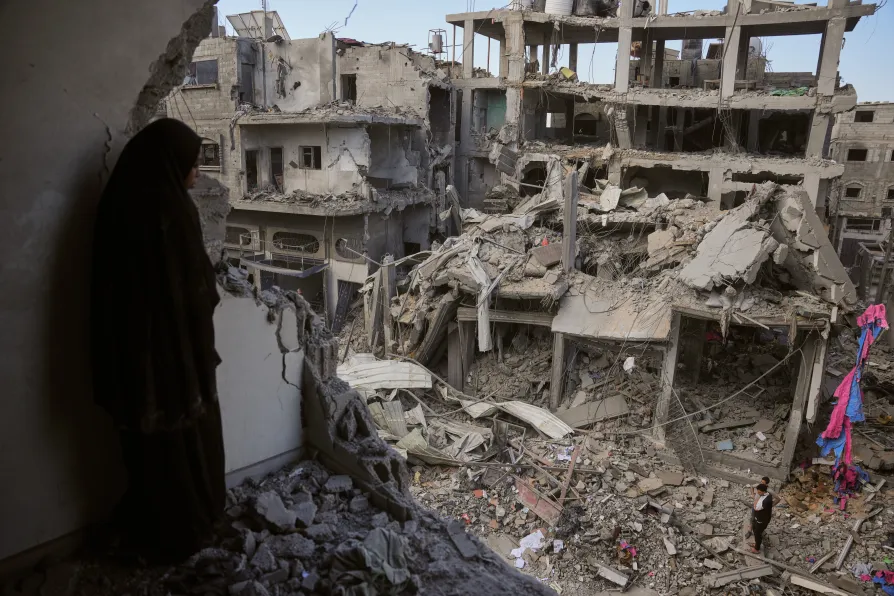
 Palestinians inspect the rubble of the Ismail family home, destroyed in Israeli airstrike at Al-Maghazi camp, in the central Gaza Strip, May 21, 2026





THE Palestinian Authority has been forced to withdraw the nomination for its permanent observer to the United Nations to be the next vice-president of the UN general assembly.
The nomination for Riyad Mansour was withdrawn on Thursday after the United States threatened to revoke the visas of Palestinian diplomats at the UN.
A nomination for Mr Mansour to be president was also previously withdrawn.
This is far from the first example of the US using its position as host of the UN to further its own foreign policy priorities.
In late April, Russian ambassador to the UN Vasily Nebenzya accused the US of continuing to abuse its status as the host country of the UN headquarters.
Mr Nebenzya said that despite the timely submission of documents, a representative of the Russian delegation had not been issued an entry visa to participate in the 48th session of the general assembly’s Committee on Information.
Ambassador Nebenzya expressed hope that the UN Secretariat would take comprehensive measures to end this politicised practice, including initiating arbitration proceedings.
Meanwhile, the representative overseeing the US-founded Board of Peace for Gaza, Nickolay Mladenov, has warned that the deteriorating status quo in the devastated Palestinian enclave risks becoming “permanent.”
Speaking on Thursday to the UN security council, Mr Mladenov put forward a roadmap detailing obligations for Israel and Hamas to implement a permanent ceasefire in Gaza.
He urged the council to use “every means at its disposal” to press Hamas to disarm, while also saying that Israel must uphold its commitment under a ceasefire agreed in October.
He said: “Let me say this clearly. The implementation cannot advance through Palestinian obligations alone.
“The continued killings and Israeli restrictions affecting humanitarian flows are not abstract issues.”
Mr Mladenov, a veteran Bulgarian diplomat, warned the council that “the risk is that the deteriorating status quo becomes permanent with a divided Gaza, Hamas holding military and administrative control over two million people across less than half the territory.
“Those people are likely to remain trapped in the rubble, dependent on aid with no meaningful reconstruction, because reconstruction financing will not follow where weapons have not been laid down.”
He added that the result would be “another generation growing up in tents in fear, with despair as the most rational thing for them to feel.”
He insisted that this was a scenario that Israelis, Palestinians and the region “should all fear and mobilise to avoid.”

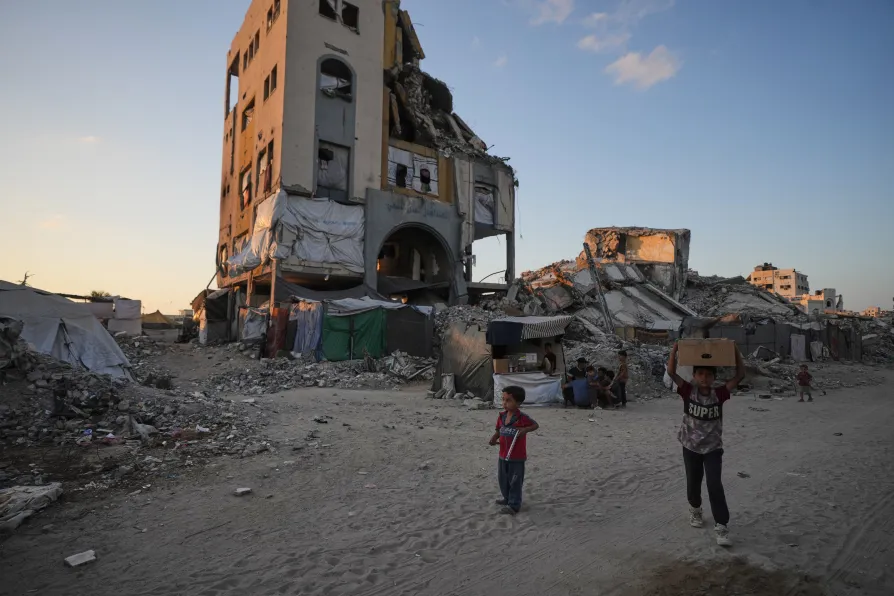
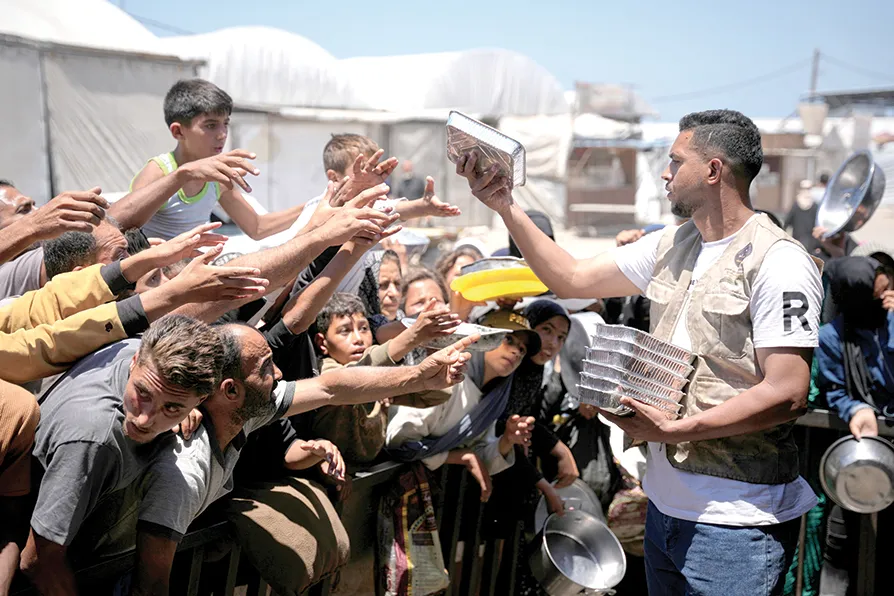
While international attention focuses on ceasefire frameworks, Israel is openly advancing plans for a permanent expansion of its control over Gaza, writes RAMZY BAROUD