
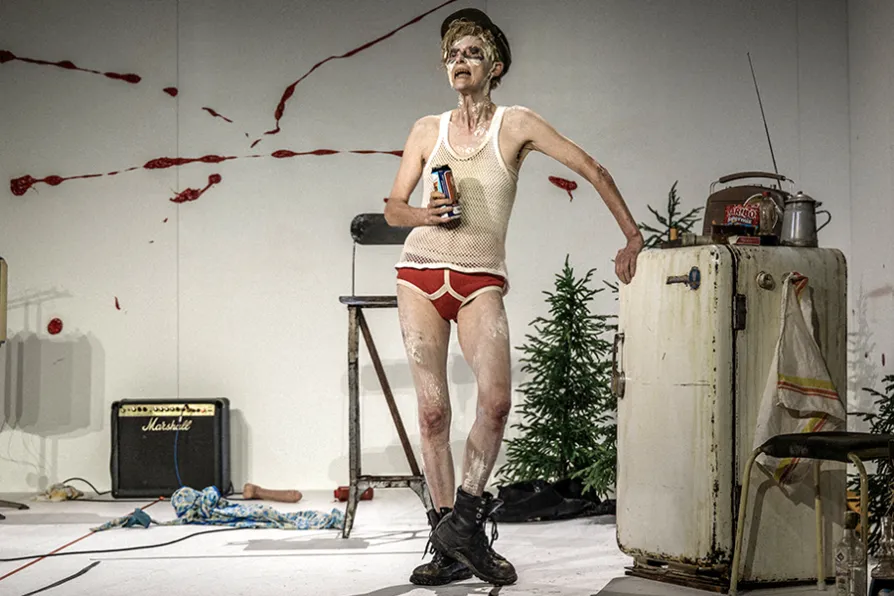
PETER MASON applauds the revival, 39 years later with the same team and cast, of Manfred Karge’s version of Brecht’s 100-year-old play, Mann Ist Mann

Nuts like Nixon
PAUL DONOVAN enjoys a brutally honest rags to riches memoir of the actor’s life, even if it clearly lacks any political insight
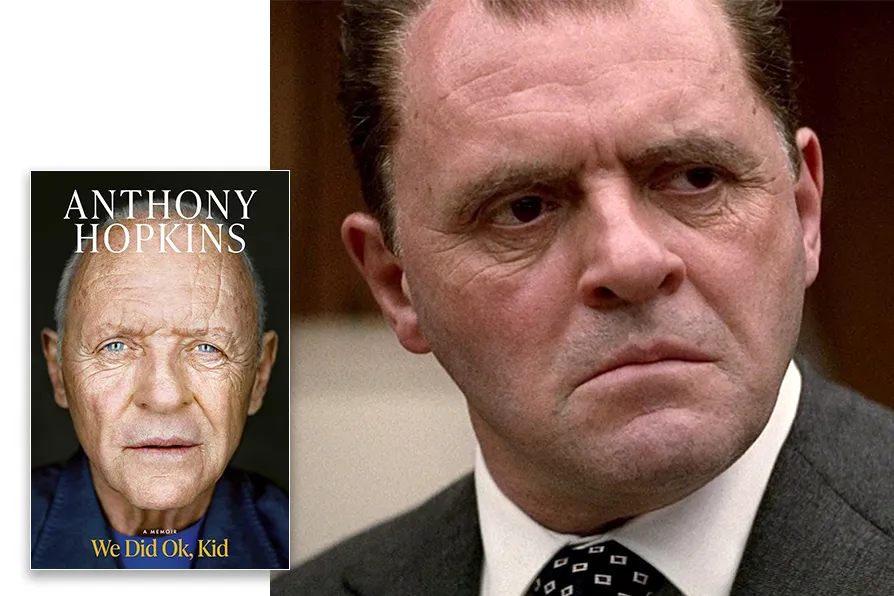
 NO LESSONS LEARNED: Anthony Hopkins as Nixon in Nixon (1995) [Pic: IMDb]
New releases from Biita Houdei, The Mary Wallopers, and The Tubs
New releases from Biita Houdei, The Mary Wallopers, and The Tubs
MAYER WAKEFIELD applauds a fearless attempt to bring to the stage the 1984 toxic gas disaster in Bhopal, India
ALEX HALL applauds the account of a dogged, traumatic and punishing campaign for justice that has lasted from 1998 to the present day
NICK WRIGHT laments the political bias of an epic attempt to tell the history of the liberation of France from the Nazis, that excludes both the decisive contribution of the Soviet Red Army, and of the French communist party itself





We did ok, kid
Anthony Hopkins, Simon & Schuster, £25
WORLD-RENOWNED actor Anthony Hopkins has produced a fascinating account of his journey through life, battling his demons along the way. A real rags to riches tale.
The story begins in the humble surroundings of life in post-war south Wales. He withdraws into himself at school, adopting a default position of “dumb insolence.” This continues for much of his life. The angry young man stance begins at school, continuing through national service, where he gets into many fights. He reads profusely and finds he has a real talent for acting. He has good fortune along the way, guided and helped by the likes of Laurence Olivier.
What makes the book such an engaging read is Hopkins’s brutal honesty, looking back. Something that, rather ironically, he abhors, having a mantra that is about always moving forward, looking for the next thing.
His failure to deal with his problems is regularly met by drinking. He becomes an alcoholic, and is warned in the early 1970s by a doctor that he will kill himself if he continues. The young Hopkins sees what the drink has done to fellow actors like Richard Burton, and stops.
Despite being in something of a mental health malaise, his acting career continues to soar, with films like Silence of the Lambs, the Elephant Man, Nixon, the Edge and the Father all being big hits.
Hopkins cannot understand why Oliver Stone wanted him to play Nixon, arguing that surely an American should play the role. But Stone says: “You are nuts like Nixon,” and so can captivate the essence of the man — which he did, brilliantly.
But the book does lack political insight. Aside from reading a book on Trotsky when at school, and in his rebellious phase, there is little else. Even on Nixon, he does not judge the man’s role in history. Nor is there anything on the ongoing imperialist actions of successive US governments. He becomes a US citizen in 2000.
But there are interesting insights into the acting profession. Confronting the old debate of theatre versus film or TV, he explains simply how theatre can become wearing, having to do the same performance night after night for weeks on end. Film involves just one or two takes, and moves on. There are important acting skills for both genres.
Another insight is into playing King Lear, that he believes can only be fully achieved when older. He compares his effort in 1986, aged 48, with his later much more accomplished and understanding performance at 79.
Not someone to court the limelight, it is easy to forget what a great actor Anthony Hopkins is, and how many films and plays he has starred in over the years. This element of undersell is important part of the book, and Hopkins has a most endearing, self deprecating style.
His second and particularly third wives Jennifer Lynton and Stella Arroyave have played important roles in helping him find his way, and in some ways, even saving him. Lynton helped get him through alcoholism while Arroyave helped him recognise himself. She points out when the couple are watching Martin Clunes playing Doc Marten that that could be Hopkins himself.
His first marriage to Petronella Barker, however, was a disaster, resulting in two years of fighting and a daughter from whom he remains estranged. And the lack of insight into Hopkins’s politics is disappointing. Early on, the rebelliousness promises something but it never happens. The path from son of a baker in Wales to multimillionaire actor living in California is largely unchartered territory.
Anthony Hopkins has produced an honest, engaging account of his journey through life. The insights into a glittering acting career are fascinating, but the strength of the book is in tapping into the battles we all have to get through and make sense of life. It is Hopkins’s openness about this element of his struggle that makes this book compelling.
