
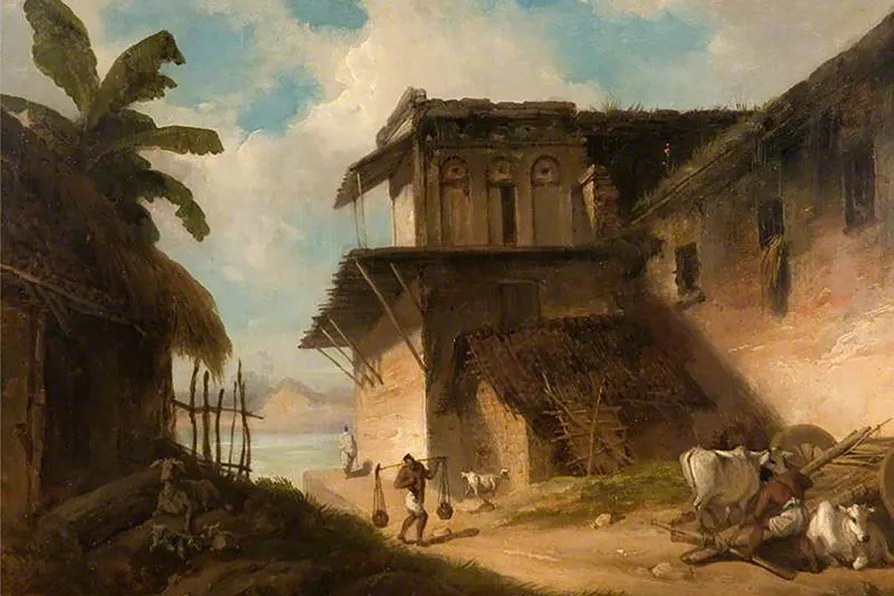
APURBA CHATTERJEE explains how British artists in India used the “picturesque” to reshape colonial landscapes and celebrate imperial power


The new poetry co-editor introduces herself
JENNY MITCHELL, poetry co-editor for the Morning Star, introduces her priorities, and her first selection
 Jenny Mitchell [Pic: Amber Perry]
PAUL DONOVAN welcomes a revival of Reginald Rose’s classic play that reminds us of the fundamental need for trials with juries
SIMON PARSONS applauds an exceptional performance of Wesker’s little-known play, by the same actor for whom it was written 45 years ago
ANDY HEDGECOCK and MARIA DUARTE review Late Fame, The Death of Robin Hood, Leviticus, and Gail Daughtry and the Celebrity Sex Pass
ANGUS REID recommends a uniquely accomplished documentary collage that contemplates our relation to the natural world
GORDON PARSONS enjoys Kant’s ‘mind-boggling’ theory of human reality: that we create the reality we experience





AS A new poetry co-editor on the Morning Star, I’m interested in poems that examine the personal and the political in a way that engages the emotions as well as the logical mind. There are several words that are important to me — freedom, identity, resilience and resistance.
My own work looks at the legacies of British transatlantic enslavement, and I’m keen to feature poems in the newspaper that also engage with the legacies and trauma of the political decisions that have shaped our world.
I’d like to see poems that do this in a subtle way — not grandstanding but with a sense of the deep-rooted damage that has been done to the collective on an historical level. This includes damage to family dynamics, collective mental and physical health and a right to education/work etc.
I’m particularly interested in poems that emphasise resilience and demonstrate the ways in which oppressors/patriarchs have also been wounded by their own aggression and greed.
As a poetry workshop facilitator, I often come across members of the community who may not have access to the traditional poetry world. This can still seem elitist and/or connected to an exclusionary academia.
Yet, the work I see in community settings — like libraries and family centres — is often hugely dynamic and deserving of a wider audience. I’d like to give a platform to this work, and to people who don’t yet dare call themselves poets. I’d also like to feature work by people who may have published a few poems but don’t yet have a collection. I believe the Morning Star offers a way to increase confidence, as well as visibility.
The poem featured here, Burden to the State, is by Imasha Costa. She lives and works in Cork City, and we met during my recent residency there as the Inaugural Poet-in-the-Community.
Imasha attended one of my workshops and I went on to offer her two one-to-one mentoring sessions. I was struck by the way she writes with such passion, particularly about a maternal connection to the traumas of colonisation.
In this poem she suggests the way in which the descendants of the colonised are often condemned to live out the economic enslavement of their ancestors, even if they now appear to have been welcomed to the land of the former oppressor.
Here are a few words from Imasha about Burden to the state: “It examines the way colonised people in Sri Lanka were promised that one day, when they travelled to Europe to live, they would be welcomed and offered freedom. But the poem makes it clear there is no freedom for migrants forced to jump through official hoops in order to get visas, work permits and other official documents provided by the state.”
Poetry submissions to thursdaypoems@gmail.com
