

 Latest editorial
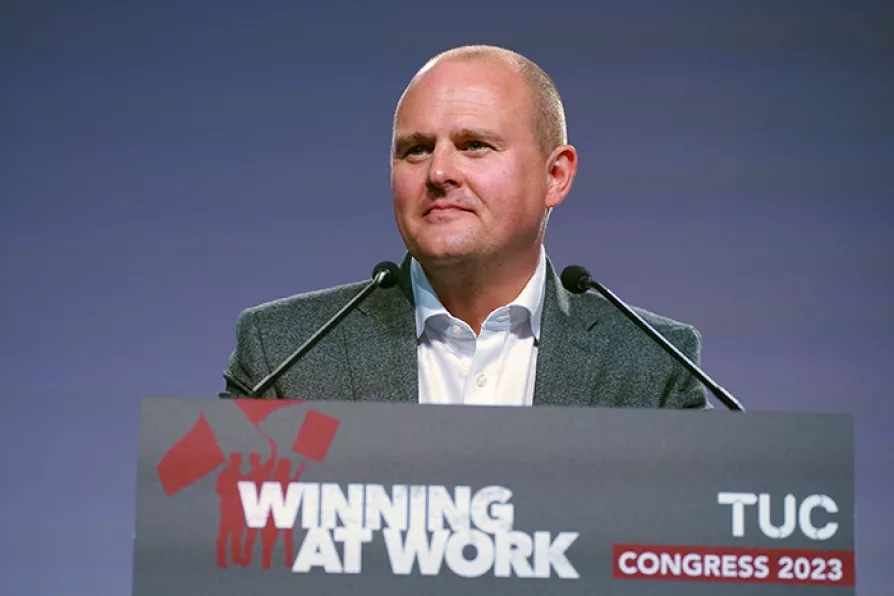 TUC general secretary Paul Nowak





THE TUC has been relentlessly upbeat about the Employment Rights Bill — now finally promulgated after weeks of filibustering by peers — saying that it marks a historic day for working people.
From April next year millions of workers will get sick pay from day one of their employment.
However, a worker starting a new job on the first of April will be without protection from unfair dismissal for six months, after the government gave in to pressure from employers and capital, given force by that concentration of ruling-class power that is the House of Lords.
The way in which the TUC frames its position in the never-ending battle to resist the power of capital gives us an insight into the way in which the unavoidable contradiction between workers and the employers is managed in Britain’s peculiar capitalist society.
The TUC reminds us that one in 10 workers are stuck in insecure work, including one million on zero-hours contracts. And it is true that the banning of exploitative zero-hours contracts means many of these workers can now expect greater job security with an automatic right to a new guaranteed hours contracts.
And it is true that better parental and bereavement leave and more protection for pregnant women,whistleblowers and victims of sexual harassment are valuable in themselves.
The surviving element of the demand for sectoral bargaining — the core component of the campaign to change the balance of class power at work — survives only as a mechanism for regulating pay in the social care sector.
There is an extension of time limits for claims to employment tribunals. And a new state body, the Fair Work Agency, is set up to offer some protection to the most vulnerable groups of workers and give some heft to employment protections as they presently exist.
These are modest improvements at the margins of the vast disparity in the relative power exercised by workers and employers. It is not, as the TUC says, a “huge upgrade in workers rights.”
We know what a huge upgrade in workers’ rights might look like.
It would be a full package of employment rights from day one and an end to fire and rehire. It would be grounded in compulsory sectoral bargaining that would mean that every worker would be covered by union agreements negotiated with the employers.
It would be buttressed by a fully staffed wages inspectorate with powerful investigatory and enforcement powers.
For workers the whole point of strengthening the legal and enforceable framework at work is to strengthen job security and provide wages sufficient to maintain a decent life. Under capitalism neither of these things are guaranteed.
All the material values created in society are created by workers but only a portion is returned in wages while the rest is retained as profit. And the money returns to the class of employers in the form of rent and mortgage payments, interest on debt and the profit margins on everything we buy.
And none of us are guaranteed a wage beyond the next month if our employer goes bust, sells out or decides to cash up and retire to a tax haven.
Successive Labour government have deliberately failed to repeal the full package of Thatcher’s anti-union and employment laws. Every time there is a small adjustment in the balance of power between workers and bosses it reminds us that the only guarantee for the human rights of a secure and productive job, decent wages and a full package of health, welfare, education, public services and housing lies in ending the political, social and class power of the capitalist class.
