APURBA CHATTERJEE explains how British artists in India used the “picturesque” to reshape colonial landscapes and celebrate imperial power


 Latest editorial

Le Carre classic in fine stage adaptation
PETER MASON applauds a stage version of Le Carre’s novel that questions what ordinary people have to gain from high-level governmental spying
 DISHEVELLED AND DISILLUSIONED: Rory Keenan as Alec Leamas in The Spy Who Came in from the Cold [Pic: Johan Persson]
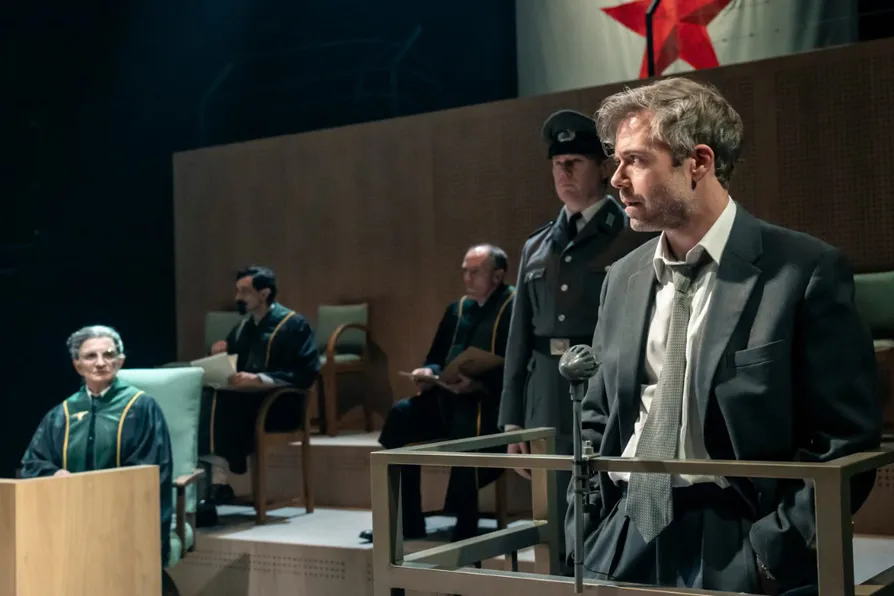
PAUL DONOVAN welcomes a revival of Reginald Rose’s classic play that reminds us of the fundamental need for trials with juries
SIMON PARSONS applauds an exceptional performance of Wesker’s little-known play, by the same actor for whom it was written 45 years ago
ANDY HEDGECOCK and MARIA DUARTE review Late Fame, The Death of Robin Hood, Leviticus, and Gail Daughtry and the Celebrity Sex Pass
ANGUS REID recommends a uniquely accomplished documentary collage that contemplates our relation to the natural world
GORDON PARSONS enjoys Kant’s ‘mind-boggling’ theory of human reality: that we create the reality we experience





The Spy Who Came In From The Cold
Soho Place Theatre, London
⭑⭑⭑⭑☆
DAVID ELDRIDGE’s fine adaptation of John Le Carre’s classic cold war-era spy novel, which debuted at the Chichester Festival Theatre in 2024, has now reached the West End, from where it will move to a long-running British tour.
The bare details of that schedule are proof alone of the new play’s success, emphasised by excellent attendances at Soho Place, the first purpose-built West End theatre to have been opened in 50 years.
Its impressively adaptable new auditorium offers an in-the-round layout for this production, which sometimes leads to difficulties in accessing crystal-clear hearing. But the large, flexible space that’s been created as a result helps to swing the action seamlessly between London and East Berlin during the height of East-West tensions in 1961.
With Rory Keenan recasting the main protagonist, British spy Alec Leamas, as an Irishman — thereby presenting him with an interesting whiff of semi-neutrality — other new subtleties appear that are absent from Le Carre’s 1963 novel, or even the 1965 film starring Richard Burton.
The background figure of Smiley, for instance, is brought more to the fore in this version, chiefly through the vehicle of Leamas speaking to him in his head, with his image simultaneously appearing in the gods or on the stage, while the character of Liz Gold, played by Agnes O’Casey, is expanded upon here to be steely and headstrong as the young British communist who unwittingly ends up betraying him.
Keenan, wearing the same clothes throughout to emphasise his dishevelment and disillusion, plays the lead role with boiling angst, portraying a world-weary and cynical man increasingly adrift in the shifting sands of espionage, unable any longer to discern what is real from what is artifice, yet also aware that he “mustn’t break the spell” of the deception he’s involved in.
Ably assisted by an admirable cast, he has the freedom, thanks to Eldridge’s watertight if dialogue-heavy framework, to paint Leamas’s personal story of drama and intrigue on a stout canvas that raises wider issues about the state and its purpose.
There’s no political element to this production, in the sense that there are no communist baddies or Western goodies, which is the way Le Carre intended it. Instead we get a thoughtful look at how much the state should be prepared to break its own rules — and go against general morality — in the “national interest.”
We’re also made to think about whether high-level governmental spying (as opposed to intelligence gathering, say, on terrorist threats) is in itself a useful activity, given its scope for double, triple or even quadruple crossing. While the likes of Leamas wheel away in their confusing spheres of deception, what, in the final analysis, do ordinary people gain from their murky activities? Are they even counterproductive?
Leamas acknowledges this possibility near the end, when it becomes clear to him that the British, in this particular post-war circumstance, “would rather kill a jew than a Nazi” if it suits an overall purpose — while the East Germans, thinking they’ve rid themselves of an enemy within, have in fact embedded one at the very top of their operation.
As the Berlin Wall rises out of centre stage at the finale and the play reaches its dramatic and deadly conclusion, all of these conundrums come to the surface, sending the audience away thoroughly entertained but also thoughtfully engaged.
Thanks to Eldridge, Le Carre’s story now has a worthy stage version to stand alongside the much-acclaimed book and film. In due course it may even come to be acknowledged as a classic too.
Runs until February 21. Box office: 0330 333-5961, sohoplace.org, then on British tour. For tour details see: spyonstage.com.

Similar stories
GEORGE FOGARTY is dazzled by a breathtakingly skillful puppet version of Shakespeare’s greatest love poem
JULIA THOMAS unpicks the mental processes that explain why book-to-film adaptations so often disappoint
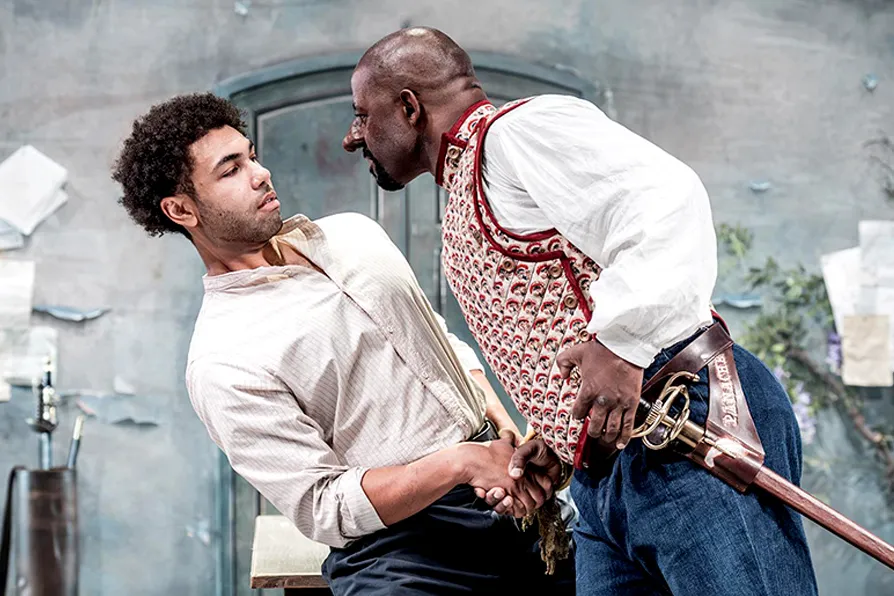
GORDON PARSONS is blown away by a superb production of Rostand’s comedy of verbal panache and swordmanship
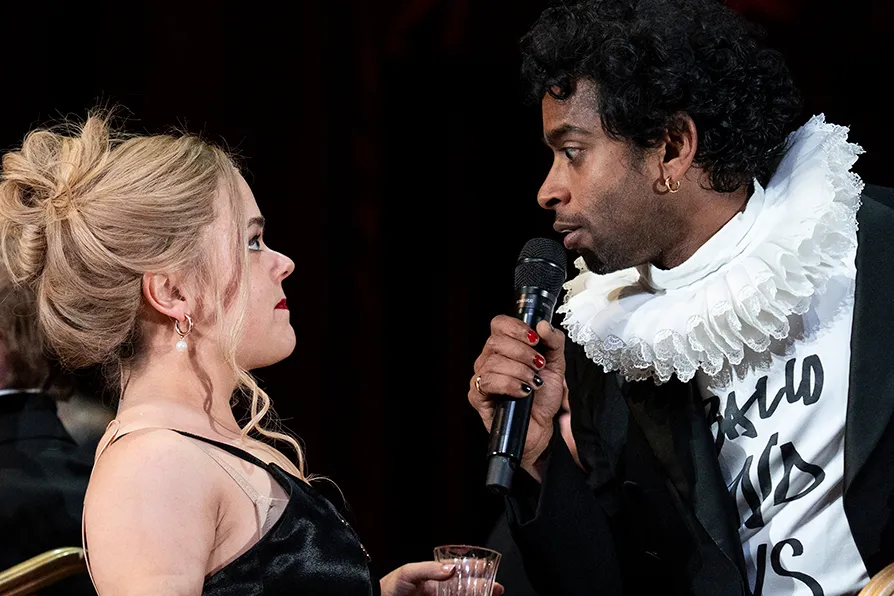
MAYER WAKEFIELD is gripped by a production dives rapidly from champagne-quaffing slick to fraying motormouth