

 Latest editorial
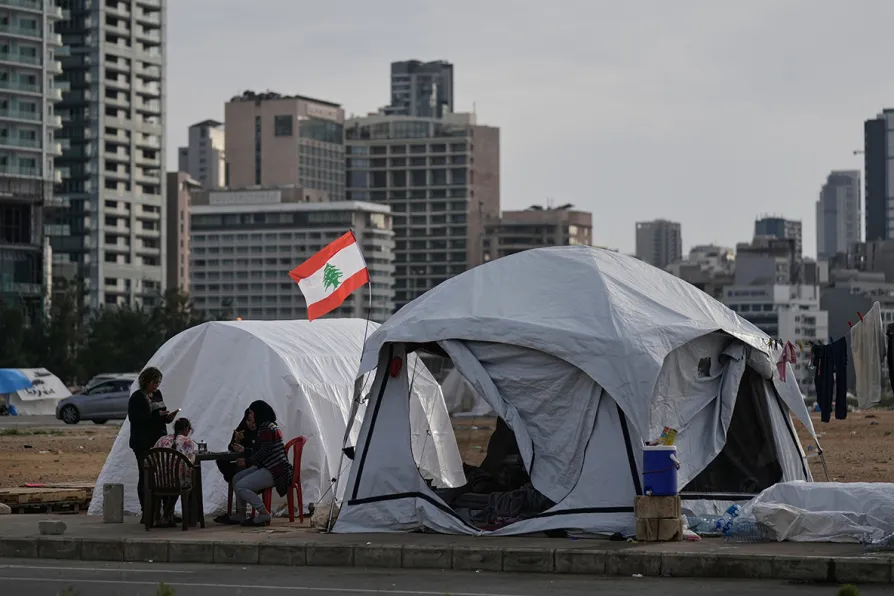 Displaced people who fled Israeli strikes in southern Lebanon sit outside shelter tents in Beirut, Lebanon, April 24, 2026






ISRAEL has continued to attack southern Lebanon and Gaza as it expands military sites across the region.
The Israeli army issued strike threats to residents in the Bint Jbeil district of southern Lebanon today, warning them to leave towards the Sidon district, just hours after it targeted areas north of the Litani River.
Attacks later fell on the towns of Zawtar al-Sharqiya and Qabrikha.
The attacks, which come despite a ceasefire, have caused a wave of displacement extending to neighbouring villages, leading to traffic on main roads linking Nabatieh, Sidon and Beirut, according to Al Jazeera.
The Israeli army claims to have destroyed more than 1,000 infrastructures used by Hezbollah in southern Lebanon, and confiscated “hundreds of weapons.”
The military said today’s operation was carried out by the Bislamach Brigade, which previously operated in Gaza.
Israeli forces also say they have established a “yellow line” in southern Lebanon, where entry is prohibited, similar to a measure in Gaza.
In Gaza, Israel continues to violate the terms of the ceasefire, and an air attack killed nine-year-old Adel Lafi al-Najjar in the east of Khan Younis, southern Gaza, the Palestinian Wafa news agency reported today.
A woman was also wounded by gunfire in northern Gaza, as Israeli artillery shelling and strikes targeted Beit Lahiya and Jabalia refugee camp.
Palestinian health authorities reported that hospitals across Gaza received one body and five injured people over the past 24 hours.
The number of Palestinians killed since the so-called ceasefire in October has risen to 818, bringing the death toll since Israel’s genocide began in 2023 to 72,594.
Israel is also blocking the entry of construction materials and temporary housing, bringing rebuilding in Gaza to a standstill.
Workers at the port have found a way to reuse some of the rubble left from the war, with child labourer Abedallah Alhissi telling Al Jazeera: “We came up with this idea when we used to go to the area of the Egyptian towers and find old blocks of concrete.
“They were being thrown away into the sea at the port.
“So, we started collecting the cement, and people heard about what we were doing and began coming here to work, because there are no other sources of income.”
