TUC president and POA leader STEVE GILLAN speaks to Ben Chacko on the eve of Congress 2026


 Latest editorial
Irish unity: an idea whose time has come
Trade union movement - in both Britain and Ireland - has the potential to become an active player in unity debate, argues LOUISE O’REILLY TD*
 Louise O’Reilly TD

DOUG NICHOLLS welcomes a turning point at this year’s Congress, where many motions call for a co-ordinated plan to revive British industry, a perspective outlined in his new book
HOPE VIRGO of campaign Dump the Scales warns MPs voting today they should be alert to the threat legalised assisted death poses to people with eating disorders
The Together Alliance is hosting two summits, North and South, to build power and plan action against the scourge of racism peddled by the right. DANIEL KEBEDE urges mass participation
The drift toward militarisation in Europe is not inevitable, left-wing and peace movements can preserve sovereignty and prevent war, says DÁIRE HUGHES MP
Whatever differences exist among international sympathisers of the Bolivarian revolution about its current trajectory, they should unite against the imperialist power that is the source of an enforced retreat, argues ROGER D HARRIS
Trade unions need to step up and force a turn in the policies of the labour movement to effectively confront the far-right threat, argues NICK WRIGHT





THERE has arguably never been a better time to advocate for Irish unity within the trade union movement. So why are some so timid?
This Monday, I will be attending the British Trade Union Congress in Brighton to speak at a fringe meeting hosted by the Labour Movement for Irish Unity Ireland 2030: Let the People Vote.
I welcome this opportunity as it is exactly the kind of active, timely debate that we need more of.
Let us be clear: the realisation of Irish unity is closer than at any point since partition. Those of us who favour a united Ireland have every reason to be optimistic about what reunification can deliver — from economic growth to shared prosperity and a better quality of life for workers across the island.
Yet it is deeply unfortunate that the trade union movement in both Ireland and Britain is not at the forefront of this conversation.
If 20th-century Irish history teaches us anything, it is that the mantra of “labour must wait” leads to ruin. The labour movement must lead, not follow. Trade unions are natural hubs for political discussion, offering a unique space for comradely, cross-community, inter-generational debate.
At a time when the iconic legacy of James Connolly has never been more popular across British and Irish trade unions, he nonetheless remains one of the most quoted but least read thinkers in labour history.
Anyone who lauds Connolly but still hesitates to advocate for Irish unity needs to do some serious reading!
Connolly was among the first to recognise that “the two currents of revolutionary thought in Ireland — the socialist and the national — were not antagonistic, but complementary.”
This is why, when Sinn Fein talks about a united Ireland, we are not just talking about ending the historic crime of partition; we are talking about creating a new Ireland that delivers on people’s daily needs. The national question is fundamentally a social question.
Unity cannot simply mean stitching two flawed states together. A united Ireland must be built on workers’ rights, better healthcare, affordable housing, and strong social protections.
As Connolly ably explained: “Our nationalism is not merely a morbid idealising of the past,” instead it is a guide to action, “capable of formulating a distinct and definite answer to the problems of the present and a political and economic creed capable of adjustment to the wants of the future.”
To pretend that we can achieve social justice while ignoring partition is unrealistic. Connolly would not sit out this national conversation, and neither should today’s labour movement.
As the momentum for unity builds, we must ensure that constitutional change reflects the priorities of working families. This demands a detailed planning process for how to merge two economies into an integrated model that places workers at the centre.
Sinn Fein firmly believes that strong trade unions and collective bargaining will be key to driving forward productivity and raising living standards to help facilitate any such transition.
We are presently living through an unprecedented cost of living crisis. Rising rents, soaring energy bills and the cost of everyday essentials are eroding wages and pushing families to the brink.
Irish workers, North and South, have never worked so hard and struggled so much.
In the South, ordinary people are shut out from the benefits of a supposedly strong economy. Meanwhile, in the North, the transformational Good Jobs Bill — which would end zero-hours contracts, strengthen union representation, and expand family leave — is presently being blocked by the DUP.
By obstructing this democratic process, the DUP are denying vital protections to workers from all communities — including their own constituents — despite widespread public support for the Bill.
We are clear, workers deserve better. Good government means fixing the broken economic model while simultaneously building for a united Ireland.
There now exists an unprecedented political consensus, among the majority of Irish political parties north and south, about the need to plan and prepare for constitutional change.
While this conversation will be led in Ireland, a parallel debate must be had in Britain.
The question must be asked what a new Britain looks like post-Irish unity. What obligations will the British government carry forward for the unionist community in the North of Ireland. What will jurisdictional transfer entail? What legacy costs will there be? What financial packages? And so forth.
It is not good enough for a British prime minister to declare Irish unity referendum is “off the table.” The people of Ireland are fed up with English politicians — with little more than a passing familiarity with our country — dictating what can and cannot be discussed.
Irish unity is an idea whose time has come. The challenge now is to ensure the rights of workers are not put on the back burner. Labour must not wait. We appeal to trade unionists and progressive voices in Britain to join us in plotting this pathway forward and to put Ireland firmly back on the agenda of the British left.
* Teachta Dala (TD) is a member of Dail Eireann, the lower house of the Irish parliament.
I hope this is reflected at Monday’s fringe meeting IRELAND 2030: Let the People Vote at TUC Congress, organised by the Labour Movement for Irish Unity (LMIU). Monday September 14, 6pm at Friends Meeting House, Ship Street, Brighton BN1 1AF. Speakers include: Louise O’Reilly TD (Teachta Dala), John McDonnell MP, Eddie Dempsey, general secretary of the RMT, Geoff Bell, LMIU, Dorothy Macedo, LMIU will chair.

Similar stories
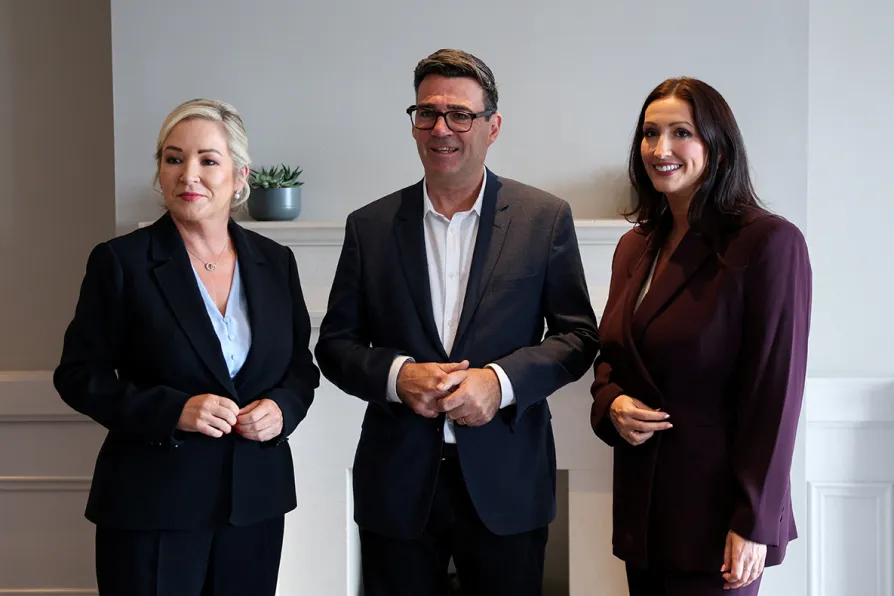
Despite Andy Burnham’s declaration defending the continued partition of the island, all major international and internal trends are converging to make Irish reunification inevitable
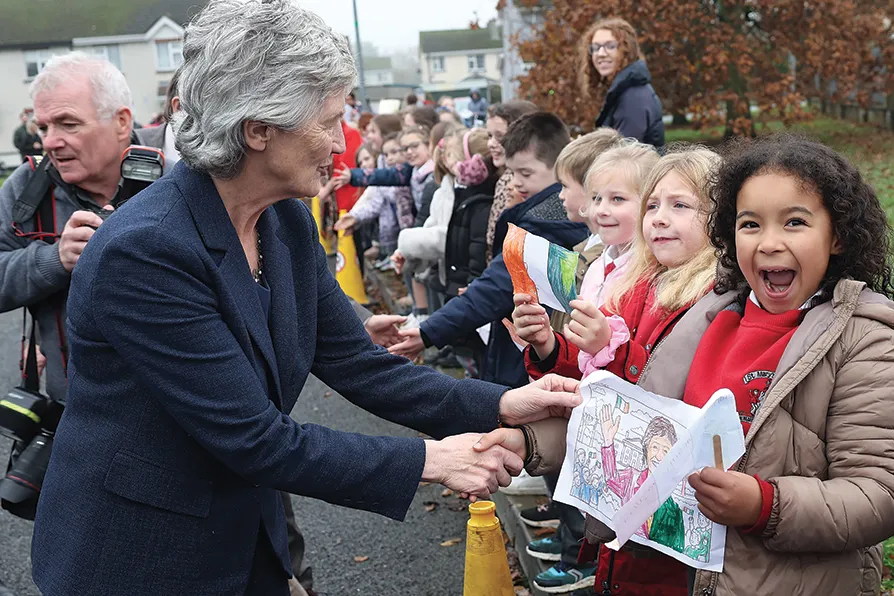
The unifying victory of Irish progressive forces in the presidential campaign should be a salutary lesson to the left in this country, argues MARY GRIFFITHS CLARKE
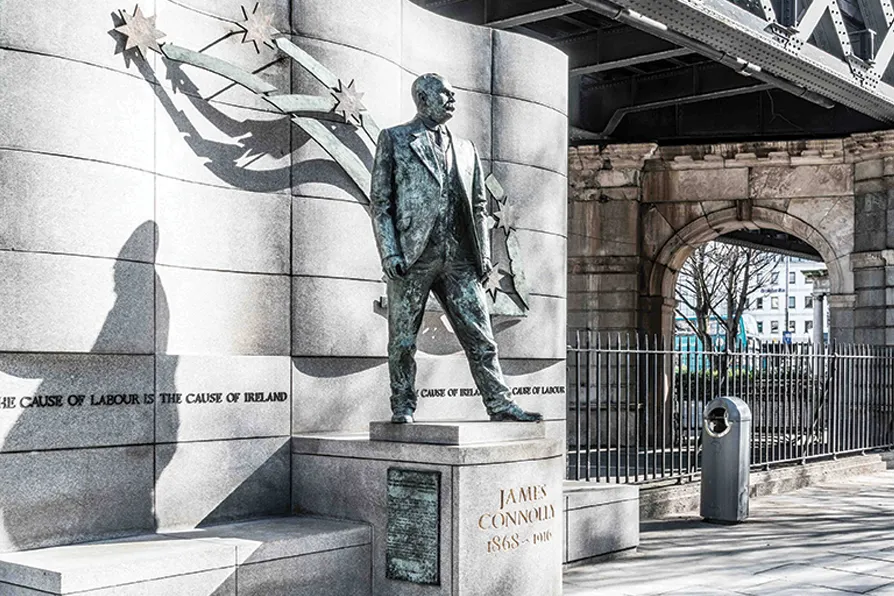
A new group within the NEU is preparing the labour movement for a conversation on Irish unity by arguing that true liberation must be rooted in working-class solidarity and anti-sectarianism, writes ROBERT POOLE
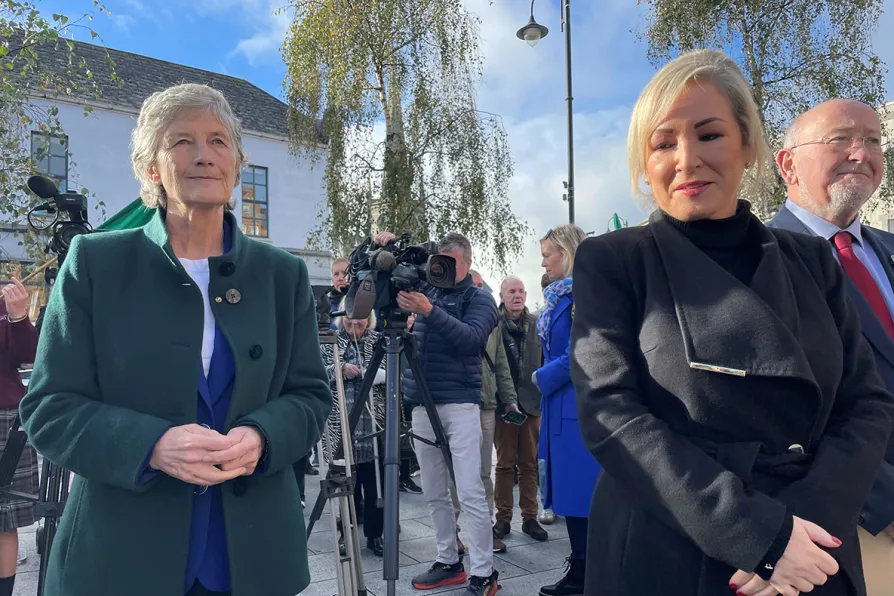
The independent TD’s campaign has put important issues like Irish reunification and military neutrality at the heart of the political conversation, argues SEAN MacBRADAIGH