PAUL DONOVAN applauds an intriguing multi-layered depiction, dominated by a stunning impersonation of Marilyn herself


 Latest editorial

I will bear witness to fascism
BILLY BRAGG on the role that music can play in resistance to state-sponsored violence
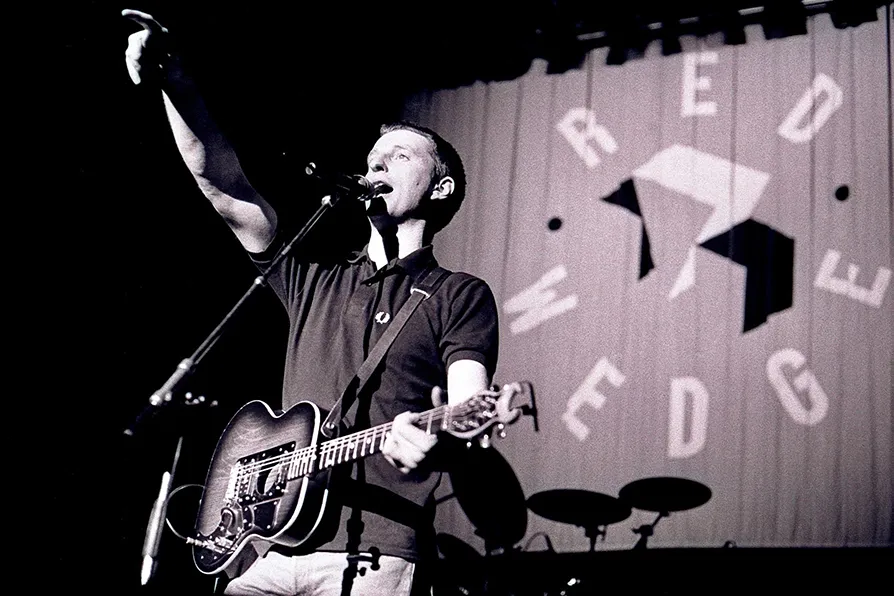 Billy Bragg singing for Red Wedge, 1986 [Pic: Steve Rapport]
LEO BOIX applauds an audacious, self-questioning film about grief, friendship and film-making
MARY CONWAY admires a brave and topical study of Armageddon that is, unfortunately, unable to come to a conclusion
ANDY HEDGECOCK, JAMES WALSH and JAMIE BRITTON review Hanging by a Wire, I Want Your Sex, The Pout-Pout Fish, and Rise of the Foot Soldier: Retribution
Chris Searle speaks to US pianist RAN BLAKE
The Bard hands out medals for his Edinburgh campaign and urges us to support The Men They Couldn’t Hang





Can music change the world? It’s a question I’m often asked. When I was a 19-year-old punk rocker following The Clash, I believed passionately that it could. On tour in 1986 with Paul Weller, Johnny Marr, the Communards and Junior Giscombe under the Red Wedge banner I did my damnedest to put that notion to the test. 40 years later, I recognise that music alone cannot achieve real change. It has no agency. However, it does have a role to play in the struggle.
Last week I wrote, recorded and posted online a song written in the wake of the murder of Alex Pretti. Called City Of Heroes, it celebrates the people in Minneapolis who have taken to the streets to resist the deportation of their neighbours by Trump’s Ice snatch-squads. The reaction I got from activists in Minnesota was overwhelmingly positive: “They’re trying to break our city, and it’s simply exhausting and traumatic all day, every day, but your song gave me renewed energy and some hope” wrote one. “It sounds dumb,” said another “but after hearing your song, I no longer feel helpless.”
These responses offer some insight into how music contributes to the struggle.
In seeking to explain how the people of Nazi-occupied Europe remained mostly passive as the Holocaust unfolded before them, historians have identified five categories of behaviour that manifest in the face of fascism.
The list begins with the perpetrators, those who instigate or participate in acts of violence, persecution or genocide. Then come the bystanders, who see what is happening and say nothing. It is estimated that 90 per cent of German people fell into this category during the Third Reich.
Next are the upstanders, those who do speak out, from the public protest of writing letters to newspapers and legislators, to small acts of defiance such as expressing their disquiet to friends and neighbours. Then come the resistors, those who undertake acts aimed at preventing the machinery of oppression from operating. Lastly come the rescuers, those who hide the targets of the regime or help them to escape capture.
Renee Good and Alex Pretti were resistors, and thousands like them continue to physically put themselves between the oppressor and the victim to prevent injustice. If artists are unable to join the resistors on the streets, we can still play a role as upstanders, sending a message of solidarity to those on the front line. The effect of such an intervention is reflected in the messages that I received from Minnesota. On a much larger scale, Bruce Springsteen was able to generate headlines around the world when he also released a song of solidarity with the Minneapolis resistance last week.
For those involved in the front line, such expressions of support have a salutary effect. The pressure of having to challenge state-sponsored brutality day after day can be dispiriting, especially if conducted in sub-zero temperatures. The songs of upstanders tell the Minneapolis resistance that they are seen, that they are not alone and that what they are doing is exceptional. Fortified in that knowledge, they return to the struggle with renewed determination.
After 40-odd years of trying to make a difference with my music, I’ve come to the conclusion that this is the power that music has. You can’t change the world by singing songs, but you can inspire people to believe that the world can be changed through their own commitment to the cause that you are singing about. What we need now are more young activist artists writing songs that turn bystanders into resistors.
